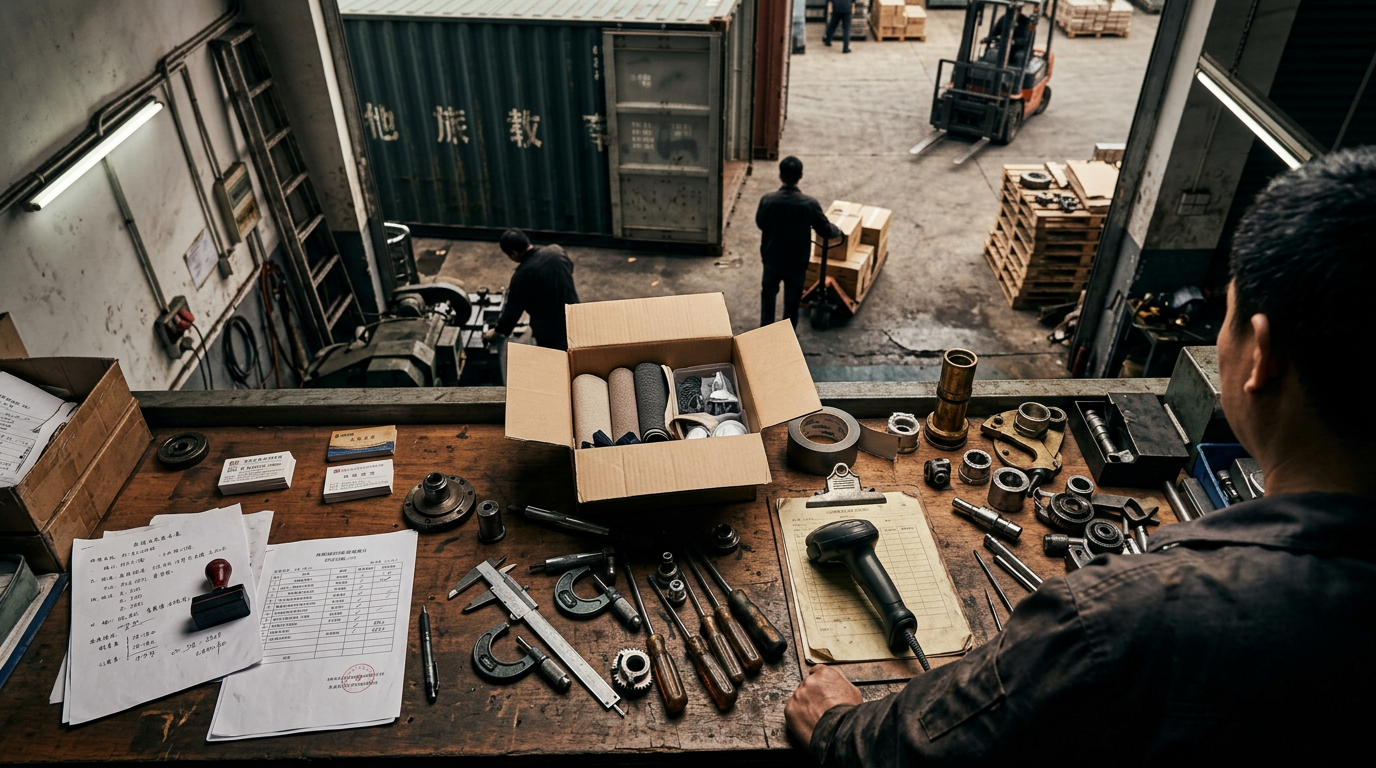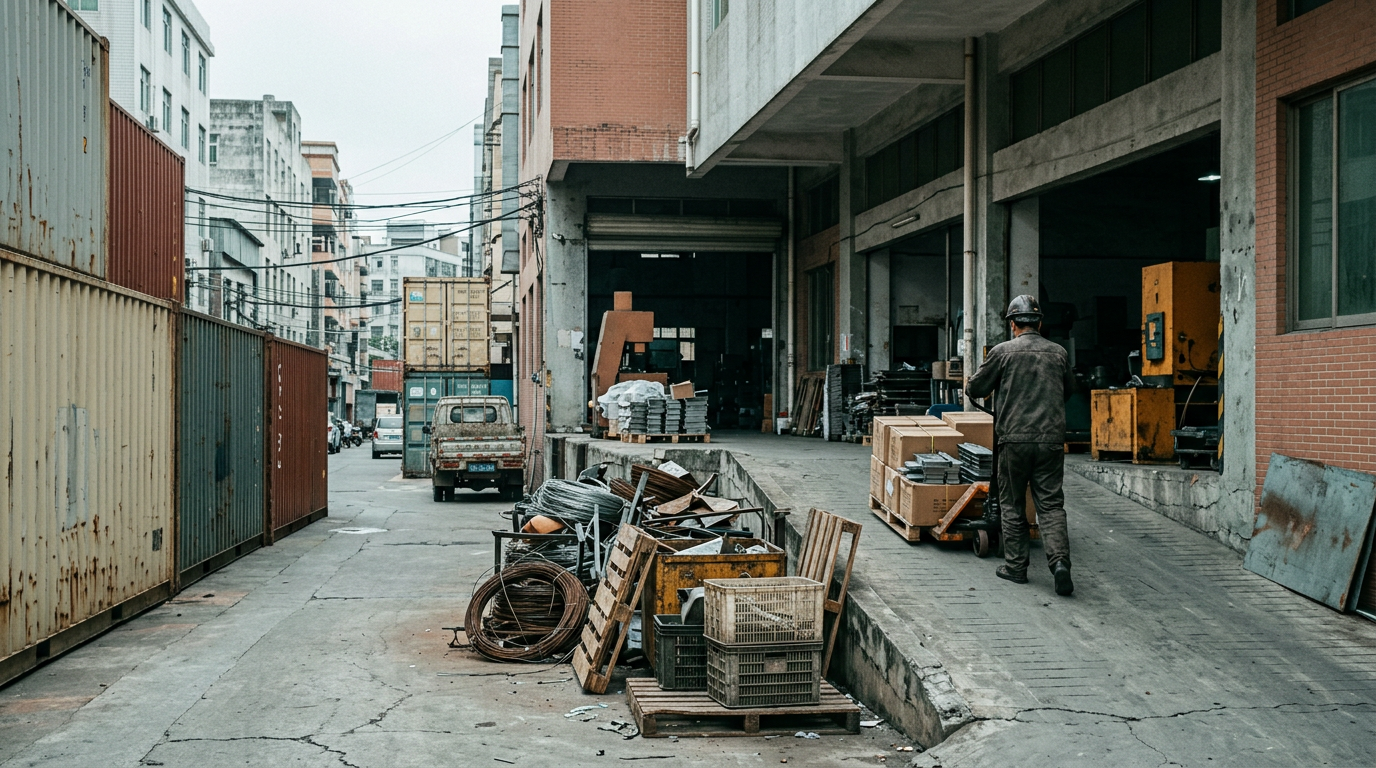
You have the proforma invoice. The samples look good. The quoted price is competitive. All that is left is to wire the 30% deposit. Your finger hovers over the button in your online banking portal. This is the moment of maximum risk for any importer sourcing from a new partner. Sending thousands, sometimes tens of thousands, of dollars across the world to a company you have only met through email and Alibaba feels like a leap of faith. This is precisely why a structured process to verify a supplier in China is not an optional extra; it is a fundamental part of professional procurement.
Many importers place their trust in platform-level checks, like Alibaba's 'Gold Supplier' status. This is a mistake. A Gold Supplier badge is primarily a paid marketing feature. It means the company has paid Alibaba a subscription fee and has had its legal existence confirmed via a basic check of its business license. It does not verify that they own a factory, that they have a quality management system, or that they are capable of producing your product to specification. Relying on it is like hiring a contractor because they have a nice-looking van. It tells you very little about the quality of their work.
The risk of skipping proper verification is total loss. We have seen it happen. A German appliance brand, seeking a new manufacturer for a line of bespoke kitchen gadgets, found a promising supplier in Ningbo. The communication was excellent, the English was fluent, and the samples were perfect. They wired a $25,000 deposit for tooling and the initial production run. The supplier's emails started to bounce. The phone number was disconnected. The address on their profile turned out to be a shared office space in a downtown skyscraper. The money was gone. More insidious, however, is the supplier who doesn't disappear. Instead, this trading company takes your deposit and finds the absolute cheapest workshop in a remote part of Guangdong to produce your goods, with no process control or compliance oversight. The products arrive and fail to meet CE or RoHS standards, leaving you with a container of unsellable, non-compliant inventory and a major financial write-off.
When a legitimate supplier hides critical information, like the fact they are a trading company subcontracting production, the most common failure point is consistency. The perfect samples you approved may have been made by one factory, while your mass production is run at another, cheaper facility. This leads to variations in material, color, fit, and function between batches. Small-batch consistency can be managed by a good trading company, but for runs exceeding 10,000 or 20,000 units annually, the cracks in the system begin to show. The core issue is a lack of direct control. You cannot implement a corrective action plan or discuss process improvements with an intermediary who has no direct authority over the factory floor. They become a bottleneck for communication, not a facilitator.
So, how do you identify a potentially problematic supplier before you are committed? The first step is a basic document and background check, which you can do yourself. Look for these clear signals and red flags:
1. Inconsistent Information. The company name on their Alibaba page, their proforma invoice, their email signature, and their website should all match perfectly. Check the address. Is the address listed on their business license in an industrial zone, or is it a single room in a commercial office building in downtown Shenzhen? Use Baidu Maps to look at the satellite and street view of the address. If you see a skyscraper, you are likely dealing with a trading company, not a factory.
2. Banking Details. This is a critical check. The beneficiary company name on the bank account for your TT payment must be the exact same company name as on the business license. It should be a corporate account, not a personal one. If they ask you to pay a different company, especially one based in Hong Kong, or an individual's account, stop immediately. This is a massive red flag for either a scam or a tax avoidance scheme that exposes you to risk.
3. Communication and Transparency. Are they evasive when you ask for documents like an ISO 9001 certificate or a recent social audit report (like BSCI or Sedex)? Do they have excuses for why you cannot visit the factory? A common line is 'we are in the middle of a major audit for another big client' or 'our factory is relocating'. While sometimes legitimate, these are often delaying tactics. A proud, capable factory is almost always happy to show off its facility.
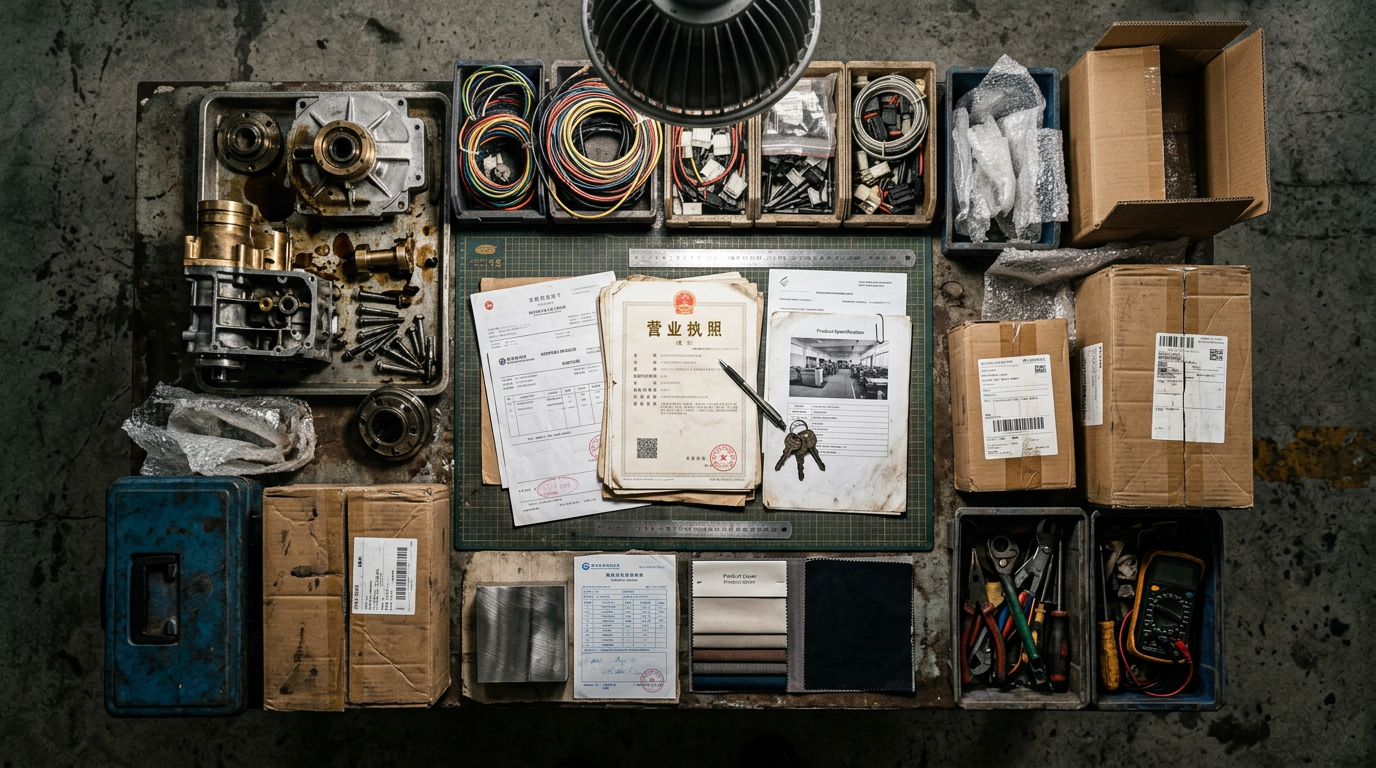
The central document in any China supplier verification process is the business license, or *yíngyè zhízhǎo* (营业执照). A business license is a legal document issued by the Chinese government that confirms a company's legal existence and right to operate. It does not, however, confirm that they can manufacture a specific product. For that, in some regulated industries like food packaging or medical devices, a separate production license (*shēngchǎn xǔkě zhèng*) is required. When you receive a copy of the business license, you should focus on the 'Business Scope' (经营范围, *jīngyíng fànwéi*). Look for words like 'production' (生产, *shēngchǎn*) and 'manufacturing' (制造, *zhìzào*). If the scope only lists terms like 'wholesale', 'retail', 'trade', or 'consulting', you are dealing with a trading company.
Solving the verification challenge requires a methodical, multi-stage approach. You cannot do everything at once. The key is to layer your checks, applying progressively deeper levels of scrutiny as the financial commitment increases. Think of it as a funnel, filtering out weak candidates early.
First, before you even request a quotation, perform the basic digital screening. Spend 30 minutes cross-referencing the supplier's various online presences. Check their Alibaba profile, website, and any trade show listings. Do the names, addresses, and phone numbers align? This simple step costs nothing and can eliminate the most obvious fraudsters.
Second, during the negotiation and sampling phase, request the core documents. Ask for a clear copy of the business license. If relevant to your product, ask for their ISO 9001 certificate and any social compliance audit reports. Check that the beneficiary bank account name matches the business license name. This documentary check is a non-negotiable step before you even consider sending a tooling deposit or down payment. The refusal to provide these documents is a sufficient reason to walk away.
Third, and most importantly, before you send the first mass production deposit (typically 30% TT), you must conduct an on-site audit. There is no substitute for having a qualified person physically visit the facility. This is the definitive way to verify a supplier in China. A basic supplier verification audit, which typically costs between USD 300 and USD 600, is an inexpensive insurance policy against a multi-thousand-dollar loss. An auditor will go to the factory address, confirm its existence, verify the business and production licenses, take photos of the facility and production lines, assess the number of workers, and check for basic quality system implementation. A factory audit verifies the supplier's systems and capabilities; a quality inspection, done later, verifies the quality of your specific goods.
The process of a supplier audit is straightforward. An auditor travels to the stated factory location. They begin by meeting the management and requesting the original copies of key documents—the business license, any certifications like ISO 9001, and social compliance reports like BSCI. They verify these against the copies you received. Then, they conduct a walking tour of the entire facility, from raw material warehousing to production floors with their SMT lines or injection moulding presses, through to the finished goods storage area. They will observe processes, interview a few line workers, check if quality control stations are in place, and assess the general state of maintenance and organization. This physical verification provides a level of certainty that no amount of document checking can achieve. You learn not just *if* they are a factory, but *what kind* of factory they are.
Here is an insight that most new importers miss: the distinction between 'factory' and 'trading company' is not always as clear-cut as it seems, and 'factory' is not always better. There are many highly professional, technically proficient trading companies in China that provide immense value. These are not the deceptive intermediaries described earlier. Instead, they act as integrated sourcing offices. They often have their own engineering and quality assurance teams, and they manage a portfolio of vetted, specialized factories. The key difference is transparency. A good partner will be open about their model. They will tell you, 'We use three different factories for your product range, here are their details, and you are welcome to audit them.' A bad actor pretends the small assembly workshop they operate is the entire operation, while secretly subcontracting the most critical processes.
Therefore, the goal of your China supplier verification process should not be to simply find a direct factory at all costs. The goal is to find a capable, compliant, and transparent partner, whether they are a factory or a specialized trading company. Disqualifying a world-class trading company because they do not own the factory is a common mistake that can limit your options. The real test is their willingness to open their supply chain to scrutiny. If they let you or your agent audit the actual manufacturing site, their legal structure is less important than their operational transparency and capability.
This is where having a team on the ground becomes indispensable. Distinguishing between a value-add integrator and a low-value intermediary requires local knowledge and experience. At Procubility, our Shenzhen-based team embeds this rigorous verification into our core sourcing process. When we qualify a new supplier for a client, we do not just check documents from our office. We go to the factory, whether it is an electronics plant in Dongguan or a furniture maker in Foshan. We walk the floors, we talk to the line supervisors, we review the maintenance logs on the CNC machines, and we assess their real-world capacity and quality culture.
This on-site presence allows us to build a supplier network that is not just verified on paper, but proven in practice. We understand the nuances—which certifications are meaningful for a given product, what a reasonable production capacity looks like for a 200-worker factory in Bao'an, and how to spot the signs of financial distress or an over-reliance on subcontracting. This process to verify a supplier in China is the foundation upon which secure, resilient supply chains are built. It mitigates risk long before the first dollar is sent, allowing our clients to focus on growing their business with confidence in their production partners.
Ultimately, our role is to serve as our client's trusted team in China. This extends beyond initial verification into ongoing management. We handle OEM project development, ensure continuous compliance with evolving standards like the EU's CSDDD or CBAM, and manage the entire end-to-end quality control and logistics process. By integrating deep, on-the-ground supplier verification with comprehensive project management, we ensure that our SME clients in Europe, North America, and beyond can access world-class manufacturing without the risks and complexities of managing it from a distance.