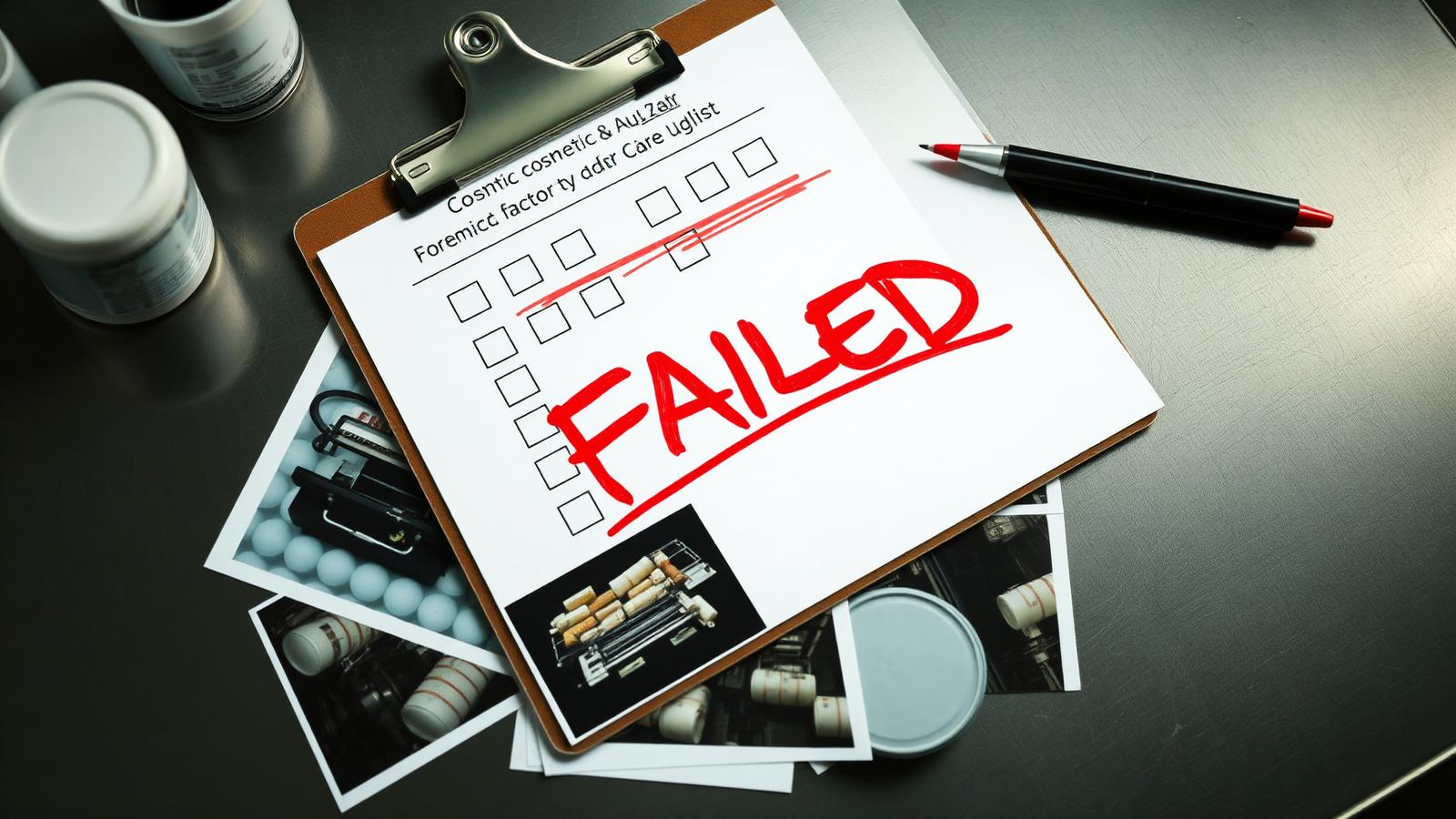
A standard factory audit checklist marked FAILED in red over photos of what was missed

Risk Intelligence · Audit Methodology

A standard audit passes the supplier. We don't.

Tick-box audits were designed to satisfy procurement processes, not to find fraud. They check what factories know they will be checked on. Forensic audits check what they don't expect — and that is where the real risk lives.

Why tick-box auditing fails

Factories rehearse for the audit. Forensics catches what they didn't rehearse.

Most third-party audits are announced 5-10 days in advance, follow a published checklist, and visit during day-shift only. The factory has time to clean the floor, brief the workers, hide the second line, refresh the certificates and stage the inventory.

The auditor leaves with a green report. The buyer wires the deposit. Six months later, the actual production reality emerges — and it does not match the audit.

Forensic audits invert the model: unannounced visits, AIC and payroll cross-checks, night-shift observation, material-flow reconciliation, and serial-level traceability. The factory cannot rehearse for what it does not see coming.

What standard audits miss

Six failure modes a tick-box audit will never surface.

01

Shell Companies with Real Showrooms

  • Standard audit checks the showroom, not the AIC registry behind it
  • 12-person trading shells routinely pass capacity audits
  • We pull the legal entity, beneficial ownership, and capital before the visit
02

Hidden Subcontractors

  • Day-shift line is genuine; the rest of your order leaves at night
  • Standard audit never returns after dark
  • We run 48-hour gate observation and traffic correlation
03

Stage-Managed Worker Interviews

  • Workers briefed and pre-selected; standard interviews yield rehearsed answers
  • Payroll database and timecard reconciliation reveals the real picture
  • We audit payroll forensically, not socially
04

Reused Material Certificates

  • Standard audit accepts the cert. Forensic audit traces it to the homogeneous-material level
  • Lab pull on a random unit confirms or breaks the cert
  • Drift versus the sealed baseline is quantified per shipment
05

Rehearsed QC Records

  • AQL reports back-dated and uniform — a forensic tell
  • Statistical fingerprint analysis reveals fabricated inspection data
  • Live measurement on the line replaces paper review
06

The Friendly Auditor Problem

  • Local auditors paid by both sides routinely soft-pedal findings
  • We are paid only by the buyer, never by the supplier
  • Independence is not a value statement — it is the audit methodology

What a forensic audit looks like

Five days, four investigators, one defensible report.

  1. Step 01

    Desk forensic

    AIC pull, beneficial ownership, bank reconciliation, prior-shipment data review.

  2. Step 02

    Unannounced visit

    No notice. Day-shift floor walk, machinery audit, payroll reconciliation.

  3. Step 03

    Night observation

    48-hour gate observation, sub-tier mapping, traffic correlation.

  4. Step 04

    Lab + dossier

    Random unit lab pull, sealed-baseline comparison, dossier delivered with risk score.

Free download

Audit your audit. Then audit your supplier.

The 25-point red-flag checklist is what a forensic-grade audit looks for — and what a tick-box audit ignores.

Get the red-flag checklist (PDF)

  • The 25 forensic checks tick-box audits skip
  • Independence and methodology criteria
  • Sample evidence dossier from a real audit

No spam. Unsubscribe anytime.

Stop paying for audits that pass the wrong factories.

Book a forensic audit