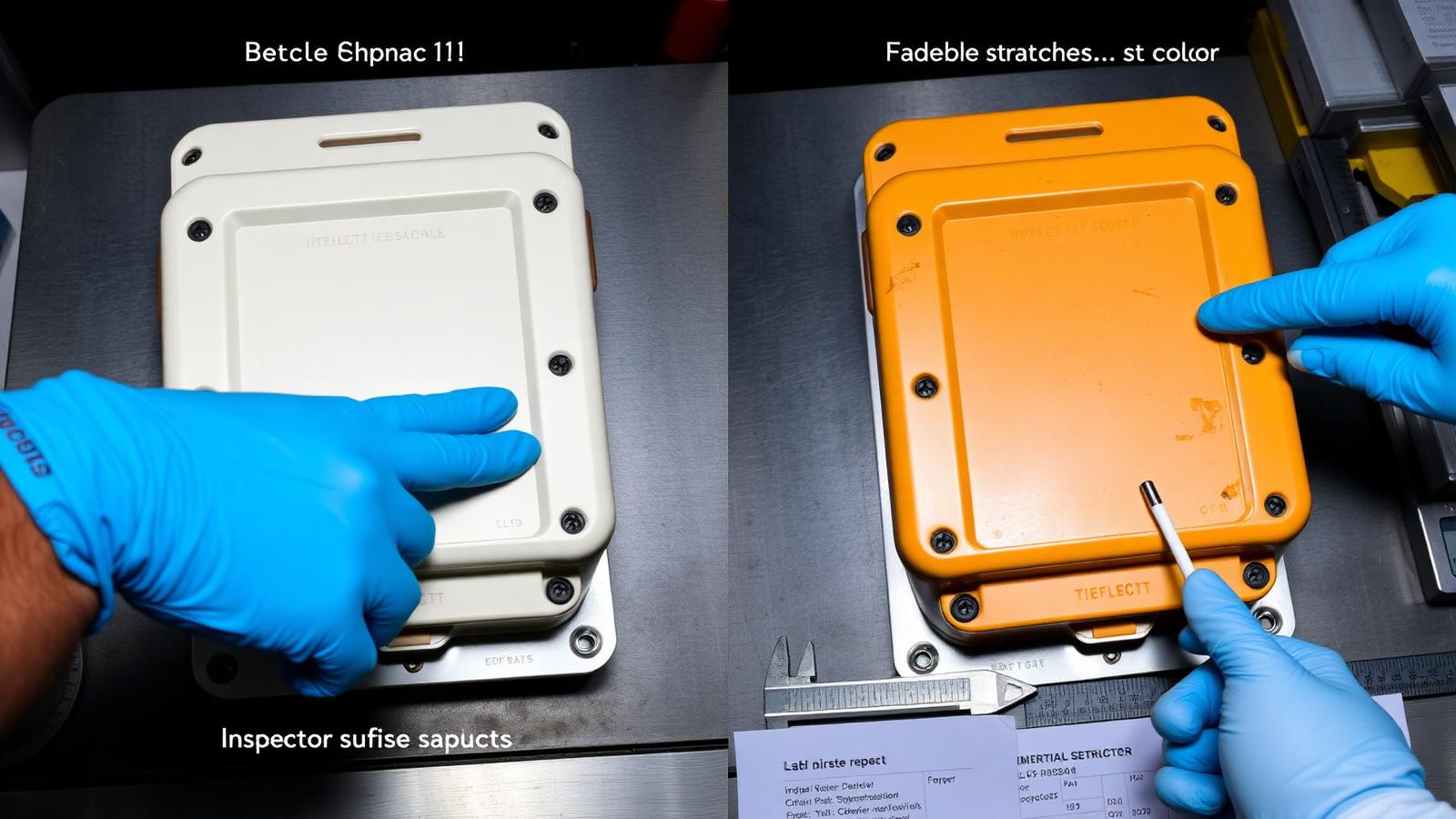
Inspector comparing first-batch and sixth-batch units side by side, showing visible material degradation

Risk Intelligence · Material Drift

Your second shipment is worse than your first. That's not bad luck.

Chinese factories quote on margin they can only earn by quietly degrading your product over time. Quality fade is the single most predictable failure mode in repeat sourcing — and the most preventable.

Why fade is structural, not accidental

The first order is sold at a loss. The fade pays for it.

To win your business, the factory quotes a price they cannot sustainably hit. The first order is built to spec, sometimes at a loss — that's the honeymoon.

From the second order onward, the BOM is quietly recalibrated. Plastic resin grade drops. Steel gauge thins. Coatings shorten. PCBA components are cross-shopped. Each change is too small to fail your incoming inspection — but they compound.

By the sixth order you're shipping a different product, the supplier is making target margin, and your customer return rate is climbing.

Where fade hides

Five layers where degradation is invisible at goods-in.

01

Raw Material Substitution

  • Resin grade switched: virgin → recycled blend → off-spec regrind
  • Steel/aluminium gauge thinned by 5-10% per shipment
  • Coating thickness reduced below spec — passes initial test, fails after 6 months
02

Component Cross-Shopping

  • Original PCBA component replaced with cheaper functional equivalent
  • Critical screws, bearings, springs sourced from lower-grade tier-3 vendor
  • Battery cells re-graded from A to B without notification
03

Process Shortcuts

  • Curing time reduced; bonding strength drops below spec
  • Heat-treatment cycle shortened to push throughput
  • Final-finish steps merged or skipped on the night shift
04

QC Sampling Manipulation

  • Inspection samples cherry-picked from the day shift only
  • Out-of-tolerance units quietly rerouted to the export carton
  • AQL reports back-dated and signed off without measurement
05

Documentation Drift

  • Material certs reused from the first shipment for every subsequent batch
  • Test reports reissued with new dates but identical readings
  • REACH/SVHC declarations not refreshed against the latest substance list

How we stop the fade

Catch drift on the line — not in your warehouse.

  1. Step 01

    Baseline lock

    Golden sample retained, BOM and material certs sealed against the first PO.

  2. Step 02

    In-line inspection

    Independent inspector on the line at 10/40/80% production milestones.

  3. Step 03

    Lab pull

    Random unit pulled and lab-tested against the sealed baseline every shipment.

  4. Step 04

    Drift report

    Quarterly fade index — supplier-level scorecard you can act on or escalate.

Free download

Stop fade before it ships, not after it lands.

The 25-point red-flag checklist includes the material, process and documentation drift signals that catch quality fade before it costs you customers.

Get the red-flag checklist (PDF)

  • Material substitution detection sheet
  • In-line QC milestone protocol
  • Quarterly fade-index template

No spam. Unsubscribe anytime.

Lock the spec. Inspect on the line. Catch the fade.

Set up in-line inspection