You have found a promising factory on a B2B platform. The emails are prompt, the English is good, and the price is competitive. It feels like a breakthrough. Yet, a quiet unease persists before you send that first 30% deposit. This is a common and sensible feeling for any SME importer. Committing to a new partner thousands of miles away is an act of faith, but it should not be a blind one. The quality of your entire enterprise can hinge on the partner you choose, making the initial phase of working with a China supplier the most critical.
The risk of inadequate vetting is not abstract. Consider the experience of a German appliance brand we encountered. They had vetted a supplier for a new line of high-end coffee grinders. The samples were perfect. The audit report looked clean. They placed a 20,000-unit order. Halfway through the production run, they discovered their 'supplier' was a trading company in Shenzhen that had subcontracted the order to a cheaper, unvetted factory in Dongguan. This second factory, trying to improve its margin, switched to a lower-grade stainless steel for the burr grinders. The change was invisible to the eye, but the grinders dulled after just a few months of use, leading to a flood of warranty claims and catastrophic brand damage. The initial supplier disavowed responsibility, blaming the subcontractor, who had already dissolved.
This kind of failure is preventable. The gap between a reliable, long-term partner and a disastrous one can be closed by a structured approach to due diligence. Effective China supplier vetting is not about suspicion; it is about clarity. It begins by asking a few direct, insightful questions long before you discuss pricing for a specific order. Their answers—or lack thereof—will tell you almost everything you need to know.
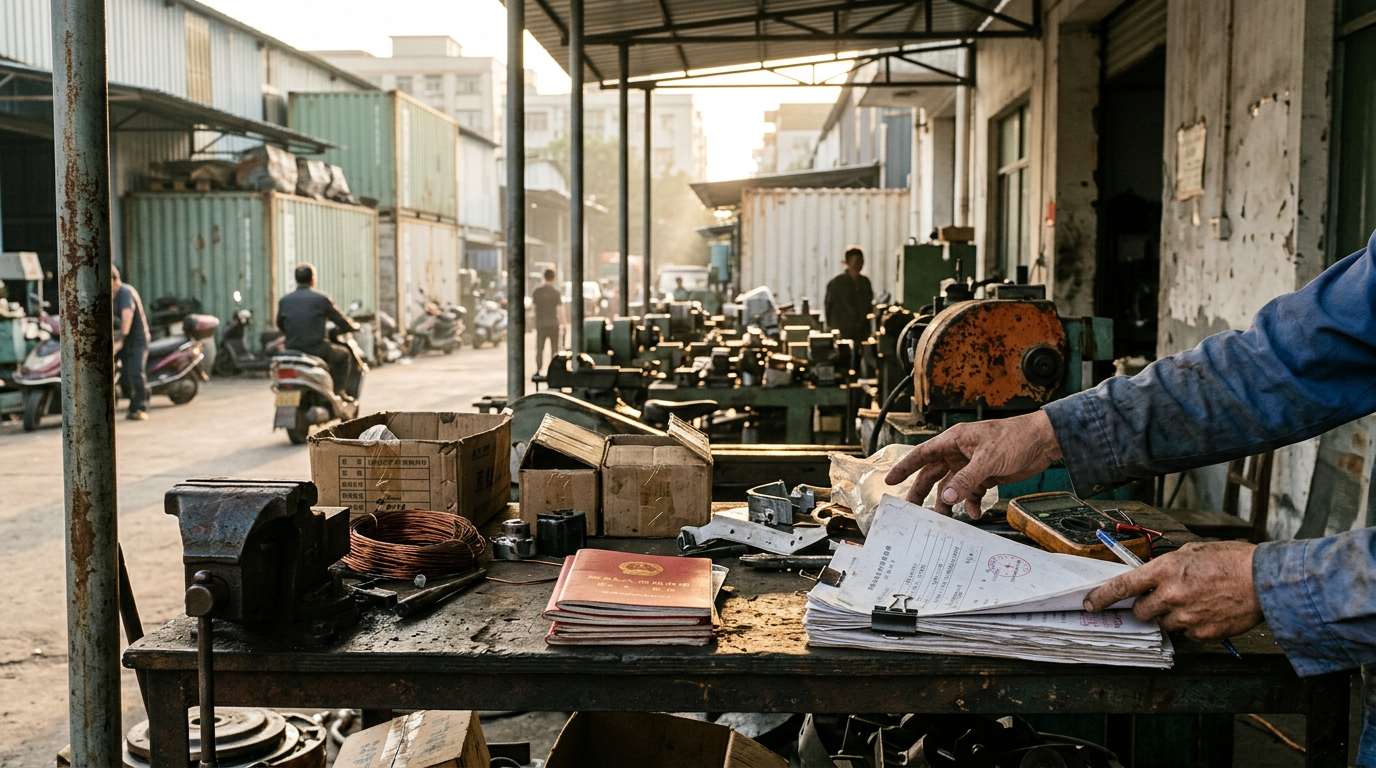
1. Who is the legal owner of this facility, and are you a manufacturer or a trading company? This is the foundational question. Many entities present themselves as factories but are actually trading companies, agents, or assemblers with no real control over production. The only way to be certain is to ask for their business license (营业执照, or 'yíngyè zhízhào'). This document names the legal representative and, crucially, lists the official business scope. A true manufacturer’s license will explicitly state 'production' (生产) or 'manufacturing' (制造). A trading company’s scope will be limited to 'trade' (贸易), 'wholesale' (批发), or 'retail' (零售). If the name on the license does not match the company name on their invoice and Alibaba profile, you need to understand why. This simple check cuts through 90% of the ambiguity.
2. What is your real production capacity and current utilization? Every supplier will claim they can handle your volume. You need to verify this. Go beyond the topline number. Ask for specifics: how many SMT lines for electronics, how many injection moulding presses and their tonnage for plastics, how many CNC machines for metal parts. Ask how many skilled workers are on the factory floor, not including office staff. A 300-worker factory in Bao'an operating on a single shift has a very different output from a 100-worker factory running three shifts to meet a deadline. Understanding their real capacity helps you gauge how important your business is. If your 20,000-unit annual order represents 50% of their output, you will have their full attention. If it is 1%, you are a low priority and will be the first to be delayed.
3. Can you provide your complete documentation for compliance and quality systems? A single, expired ISO 9001 certificate is not enough. A professional supplier accustomed to serving clients in Europe or North America will have a well-organized file of current compliance documents. Depending on your product, ask for their BSCI or SMETA audit reports for social accountability. For product safety, request specific test reports like CE for Europe, or reports showing compliance with RoHS for electronics and REACH for chemical safety. For food-contact items, FDA or LFGB reports are non-negotiable. Hesitation or an inability to produce these documents is a major red flag. It suggests their primary markets are domestic or less-regulated regions, and they are unprepared for the rigors of your market.
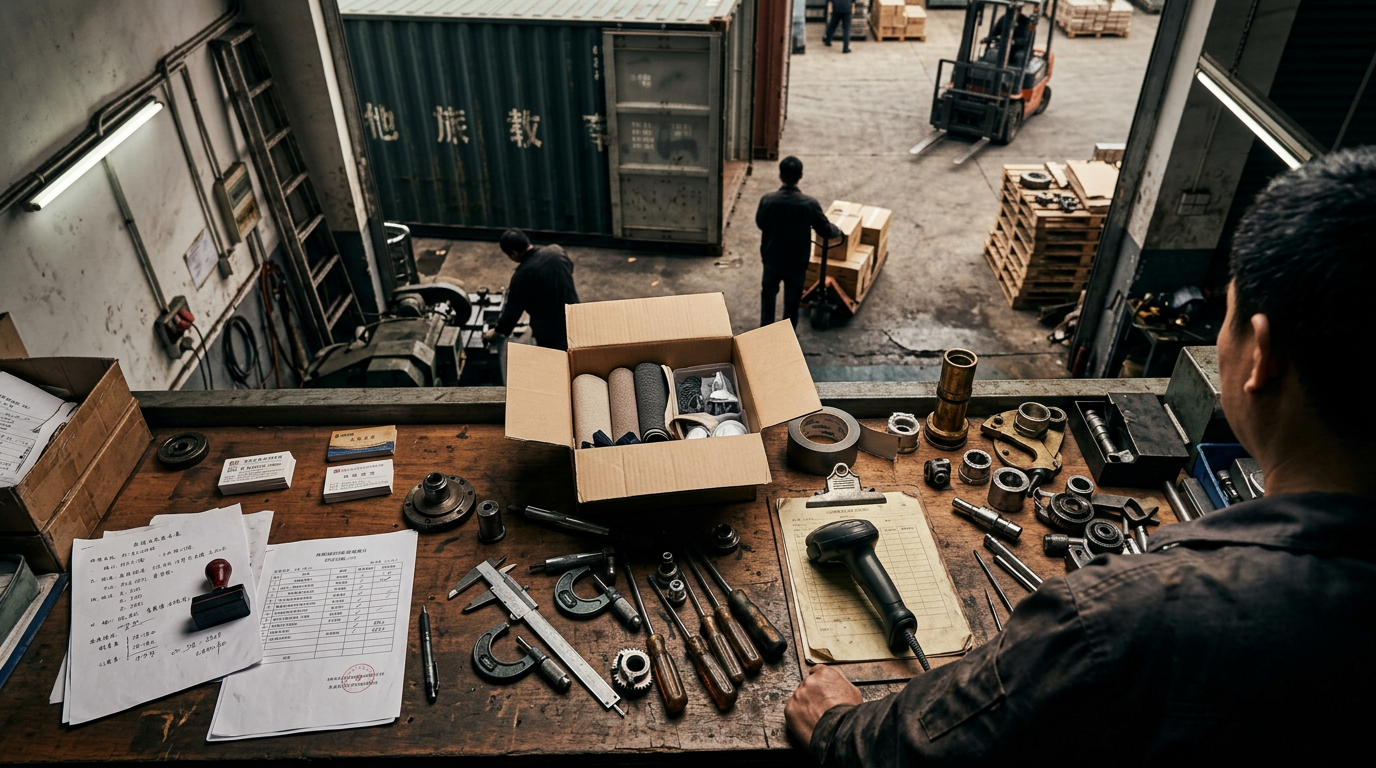
4. Please describe your quality control process, from IQC to OQC. Vague answers like 'we have a QC team' or 'we do 100% inspection' are insufficient. A mature factory has a systematic process. The response you want to hear should include specific stages. Incoming Quality Control (IQC) is the check on raw materials and components before they even enter the production line. In-Process Quality Control (IPQC) involves checks at key stages of assembly. Outgoing Quality Control (OQC), or Final Quality Control (FQC), is the final check before goods are packed. Ask what AQL (Acceptable Quality Limit) standards they use, what testing equipment they have on-site, and if you can see a sample QC report for a similar product. This demonstrates a process-driven approach to quality, not just a reactive one.
5. If our third-party inspection finds defects above the agreed AQL, what is your standard procedure? This question tests their integrity and partnership mindset. It moves the conversation from the ideal scenario to the reality of production, where issues inevitably arise. An amateur or dishonest supplier will become defensive, promise it will not happen, or deflect. A professional partner will have a clear, pre-defined process. Their answer should include steps like quarantining the failed batch, conducting a root cause analysis to understand the failure, and presenting a corrective action plan. They should also clearly state their policy on rework, replacement, or providing credit for defective goods. A supplier who can discuss this calmly and professionally is one you can likely trust when things go wrong.
These five questions form a powerful initial screening tool. The process of working with a China supplier should follow a clear sequence. First, use these questions to filter your long list of potential suppliers down to a short list of two or three. Second, request the key documents mentioned—the business license, ISO 9001, and a recent social audit report like BSCI. Verify them. Third, if the order value is significant, a pre-order factory audit is the only way to confirm that the reality on the factory floor matches the documents. This entire process must be completed before you issue a purchase order or transfer funds for tooling or a deposit. It front-loads the work but dramatically de-risks the entire sourcing relationship.
Experienced importers learn a counterintuitive lesson about quality control. While many buyers focus their energy and budget on the final, pre-shipment inspection, the most leveraged QC point is actually at the very beginning: Incoming Quality Control (IQC). A factory’s discipline in testing and verifying its raw materials and components is the best predictor of final product quality. A supplier trying to cut costs will not do it on the assembly line where it is visible; they will do it by accepting a cheaper, uncertified batch of plastic pellets, steel, or electronic components. Once that subpar material is in the production flow, no amount of final inspection can fix the underlying problem of poor durability, inconsistent color, or a failed safety test. A strong IQC process is the hallmark of a mature and reliable manufacturer.
Asking these questions provides a baseline of confidence, but true verification requires on-the-ground presence. This is the core of Procubility’s model. Our Shenzhen-based team conducts this level of China supplier vetting every day. We don’t just ask for the business license; we visit the facility to confirm it matches the address and scope. We walk the production lines to assess real capacity and observe the IPQC process in action. By managing this end-to-end process—from initial supplier qualification and OEM development to on-site quality control and logistics—we provide our clients with a reliable, transparent, and compliant manufacturing base in China.