A shipment lands in Rotterdam. It has all the right paperwork, it seems. The products bear the CE mark. But a random customs inspection flags a material for testing, and it fails. The goods are blocked, storage fees accumulate, and your retail partner is threatening penalties. The frustrating reality for many importers is that European Union compliance issues rarely begin at the port of entry. They begin thousands of kilometers away, on a factory floor in Ningbo or Dongguan, often months before a single unit is shipped. Finding a reliable EU compliance China supplier is less about the certificates they show you and more about the systems they operate.
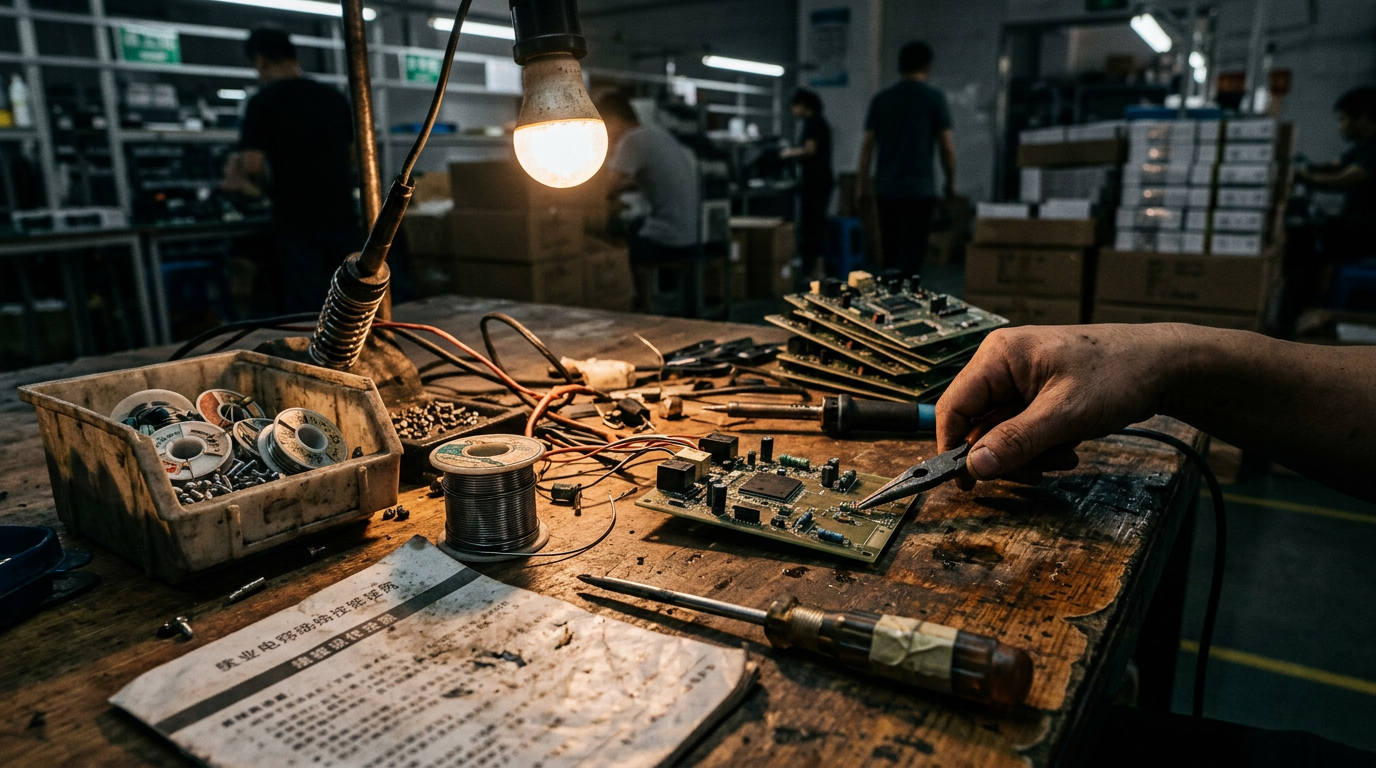
The core risk is driven by economics. A supplier provides a golden sample that passes every test. It forms the basis of your technical file for CE marking. You sign off. Then, during mass production, the factory’s purchasing manager faces pressure to reduce costs. They substitute a specified LG-brand ABS plastic for a cheaper, locally produced equivalent with no verifiable REACH documentation. Or they switch to a solder that contains restricted levels of lead to save 0.01 USD per unit, violating RoHS. The product still looks and functions identically. The CE mark is still dutifully printed on the housing. But its legal basis is gone.
This scenario is not theoretical. We’ve seen a Dutch importer of children's toys face a full product recall because the paint used on a late production batch contained a restricted phthalate. The original batch, tested and approved, was compliant. But a cost-saving change by a subcontractor, hidden from our client, rendered 20,000 units legally unsellable in the EU. A CE marking from a China supplier is only as reliable as the material traceability and process control that supports it. When a supplier hides these changes, the importer carries all the risk.
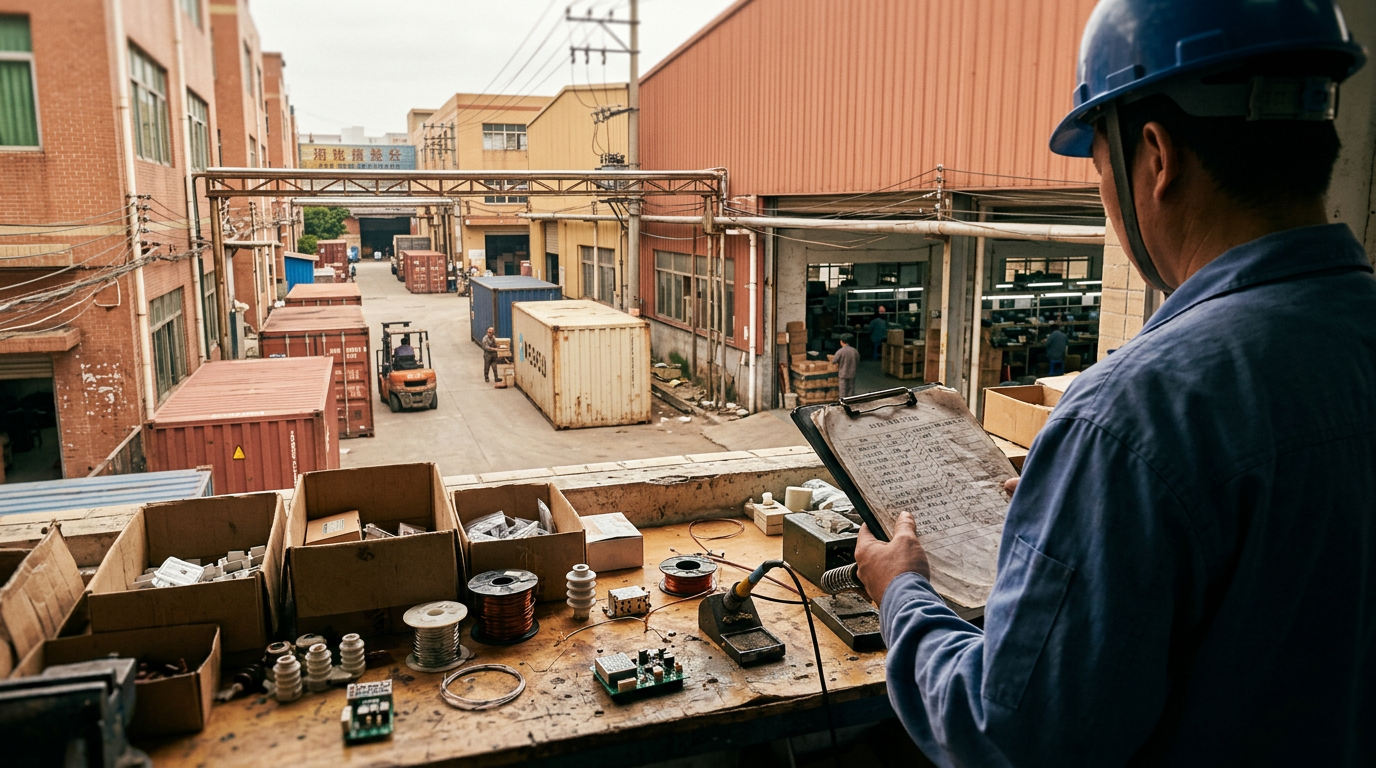
Identifying these risks requires moving beyond surface-level document collection. A factory audit is a critical tool, but it must go deeper than checking for an ISO 9001 certificate on the wall. The first signal of a problem is a weak documentation chain for incoming materials. A good factory logs and tests what it buys. A risky one cannot produce the underlying paperwork for its own components. EU compliance in this context means having a verifiable paper trail from raw material to finished good. The supplier’s final Declaration of Conformity is the last link in that chain, not the first.
When on-site at a potential supplier, here is what to look for:
1. Bill of Materials (BOM) Detail. A compliant factory’s BOM will specify not just the component type but the brand and part number (e.g., 'Capacitor, 10uF, Murata, GRM series'). A vague BOM ('10uF capacitor') is a red flag, as it gives the factory license to substitute at will.
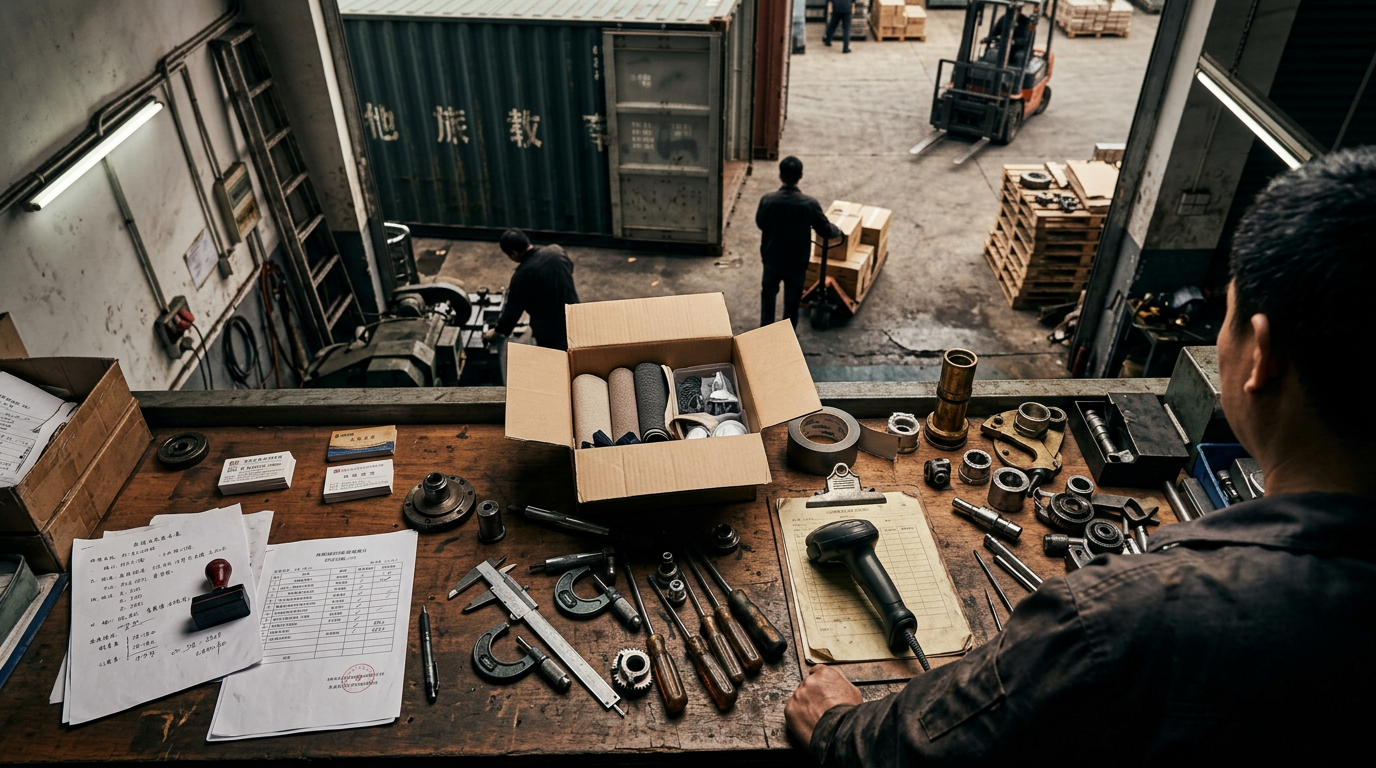
2. Incoming Quality Control (IQC) Process. Look for a dedicated IQC station where materials are inspected upon arrival. Do they have equipment to test materials, like an XRF analyzer for RoHS checks? Or do boxes move directly from the delivery truck to the production line? The absence of a robust IQC process means they are trusting their sub-suppliers blindly—and asking you to do the same.
3. Sub-supplier Documentation. Ask for the REACH or RoHS certificates for three critical components on your BOM. A strong EU compliance China supplier will have these organized and available. A weak one will make excuses, claim they are confidential, or provide certificates that don't match the actual parts being used.
The solution is to make compliance an explicit, contractual part of the manufacturing process. Before issuing a purchase order or paying a deposit, define a 'Compliance Technical File' as a key deliverable. This is a binder, physical or digital, that must be completed and approved by you *before* mass production starts. It should contain the supplier's Declaration of Conformity, the main product test reports, the finalized BOM, and, critically, the material certificates and test reports for all key components and raw materials. This contractually obligates the factory to prove its upstream sourcing is compliant.
Verification cannot wait until the final pre-shipment inspection. By then, non-compliant materials are already inside your products. The most effective control point is a 'Pre-Production Meeting' held on-site after the deposit is paid but before the assembly line starts. During this meeting, your representative should physically inspect the materials staged for your production run and check them against the approved component list in your Compliance Technical File. Pull a reel of capacitors or a bag of plastic pellets and compare the part numbers. For high-risk products, take a sample and send it to a lab for verification. This single step prevents 90% of material substitution problems.
A common misunderstanding among Western buyers is that the English-speaking salesperson they communicate with has direct control over the production process. Often, they do not. That salesperson works for a trading company or in a sales office in Shenzhen, while the actual factory might be hundreds of miles inland. Their primary incentive is to make the sale. The factory's production manager, however, is judged on hitting a target cost. This operational and incentive gap is where compliance failures are born. The salesperson promises a RoHS-compliant power adapter; the factory manager saves two RMB by using non-compliant solder. Without on-site verification, the importer is the last to know.
This focus on upstream transparency is becoming even more critical with new EU regulations. The Corporate Sustainability Reporting Directive (CSRD) and its enforcement arm, the CSDDD, will require large EU companies to conduct deep due diligence on their supply chains regarding environmental and human rights impacts. The effects will ripple down to SME importers, who will be asked by their enterprise customers to provide more data. Separately, the Carbon Border Adjustment Mechanism (CBAM) already requires importers of specific goods like steel and aluminum to report and pay for the embedded carbon emissions from production in China. Fulfilling CBAM in China requires suppliers to provide verifiable production data. This is a new frontier of compliance that is entirely dependent on factory-level transparency.
Securing a product that is genuinely compliant with EU regulations requires boots on the ground. It involves validating the supplier's systems far beyond a simple factory audit and verifying that those systems are followed for your specific production run. From our base in Shenzhen, the Procubility team manages this entire workflow for our clients. We build the compliance framework into the sourcing process, audit suppliers for their real operational capabilities, and perform the on-site checks before and during production that ensure the product you specified is the product that gets made. We handle the complexities of documentation, quality control, and logistics, ensuring your goods arrive in the EU without any costly surprises at the border.