Lighting & art glass · Middle East · 7 min read
How We Found the Factories Behind a Premium Chandelier Brand in China
A Middle East lighting importer asked us to find the factory behind a premium art-glass chandelier brand. Using certification records, company registries, customs data and product-photo matching, we traced its assembly site in Guzhen, Zhongshan and identified three likely workshops, without contacting any supplier.
This is a real Procubility engagement. Client and supplier names are withheld where confidentiality requires it; the investigation sequence and material findings are preserved.
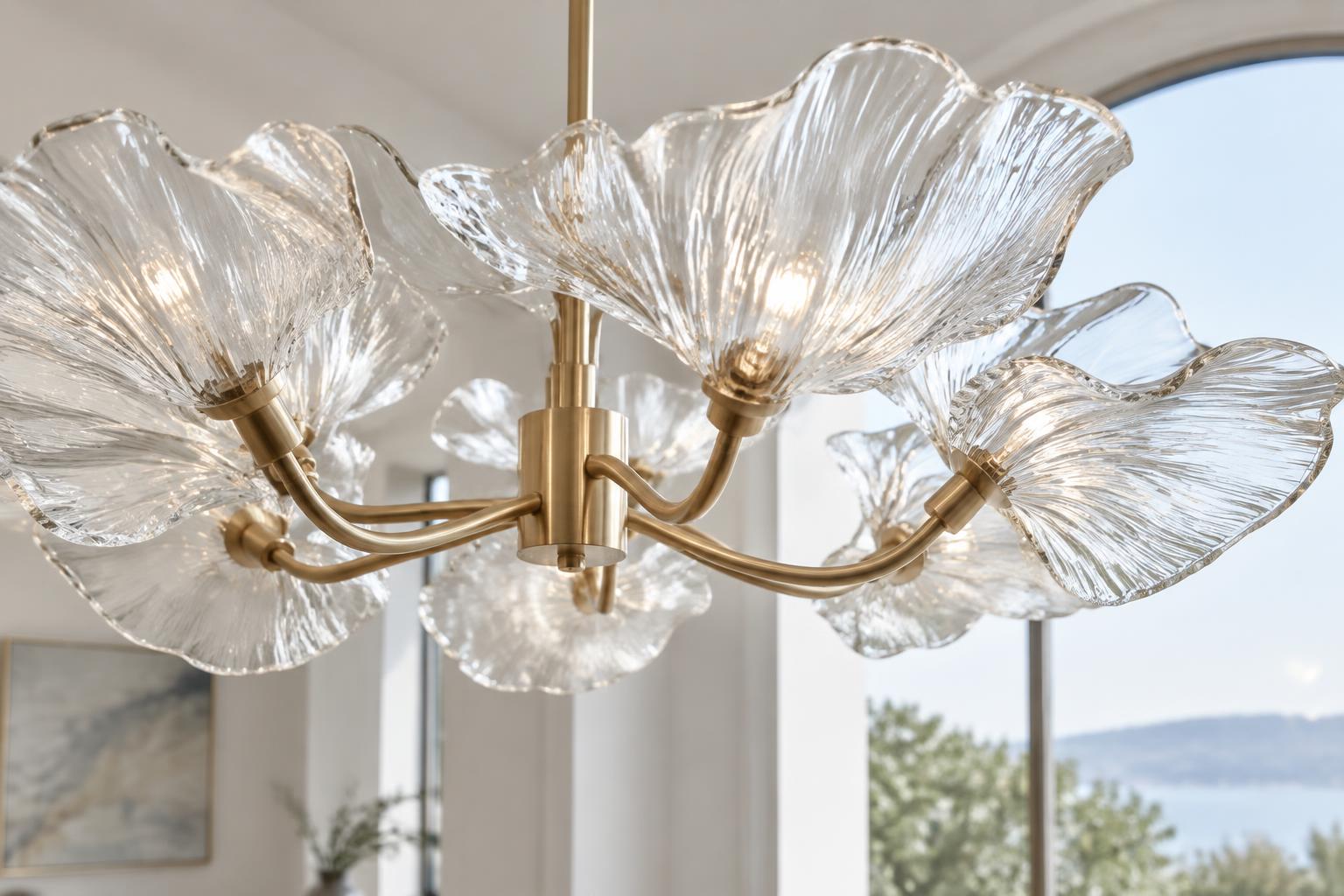
Illustrative chandelier image; not a photograph of the confidential client's product.
The problem
What the importer was facing.
A glass and lighting importer in the Middle East had found a chandelier brand whose glass parts were made with unusual precision and finish. He wanted to work with the same factory to produce his own glass designs, and asked us one question: who actually makes these products in China?
The brand made this hard. It is designed in Europe, sold as a premium label, and presents itself as running its own exclusive factory. Its website gives no supplier names. The client also believed more than one factory was involved, but had no way to check.
This is a typical reverse manufacturer identification problem. China's decorative lighting industry includes a network of specialist workshops, spread across several towns, that each do one craft well. A brand's "factory" can mean many different things.
The investigation
How we verified what was actually happening.
We worked only from records and published material, and contacted no supplier. The investigation did not involve an on-site visit or outreach to the brand's workshops.
First, product certification records. The brand publishes its export conformity certificates. These showed who is legally declared as the manufacturer and where the production site is, and recorded a production-site audit.
Second, the address itself. Using company registry data and public listings, we checked what is at the declared production address and which other companies are registered there.
Third, company and trade records. We cross-checked mainland and Hong Kong company registrations, trademark filings, customs shipment records and the companies' own websites and job ads, to see which local workshops had matching products, phone numbers, locations and export history.
Fourth, image forensics. We compared the brand's product photos against catalogues published by Guzhen workshops, looking for the same original photo shoot rather than similar-looking designs.
No single source was accepted as proof by itself. Each finding was graded as verified (registry, certificate or shipment-level evidence), corroborated (several independent sources agree) or assessed (reasoned inference).
The findings
What the records and product-photo evidence showed.
The certification record named the brand's own entity as the manufacturer, rather than an anonymous third-party factory. Its declared production site is in Guzhen, Zhongshan, a major Chinese lighting-production cluster.
The declared site was a leased unit inside a shared, multi-storey industrial building that also houses several unrelated lighting companies—not evidence of a standalone factory owned by the brand. The report assessed it as an assembly, wiring, testing and packing cell.
We identified the most likely final assembler through several independent links to that address, including location within the building, matching contact details and its own export records of glass lighting parts.
Two further workshops were matched through the brand's own product photography. In one case the brand's catalogue photo was the same exposure that appears on a workshop's site, with the workshop's watermark still visible there. Both workshops have their own export or certification history. An identical photograph is an important lead, but does not by itself prove a supply contract or ownership of the design.
The report also mapped likely upstream component specialisms: cast and blown art glass, cut crystal, ceramics, brass and steel fabrication, outsourced plating, and LED parts and drivers from nearby lighting towns. These cluster-level leads were distinguished from confirmed brand-specific relationships.
What we did not claim: we found no purchase order, invoice or packing list tying the brand to any named workshop. We told the client this plainly, and marked every name with its confidence level.
The outcome
What changed after the evidence was reviewed.
The client received a 17-page report with a supply-chain map, the identified workshops and their published business contacts, and a practical 30-day plan to test the findings through quotations and technical checks. The confidential report is not reproduced here.
The plan started with a quotation test: send two specific catalogue items with exact dimensions to the named workshops, without mentioning the brand. The specificity of their responses would help test product familiarity; response speed alone would not prove manufacturer status. It added three technical screening questions on mould life, cast versus blown glass, and where gold finishes are plated, plus a proposed one-day visit to four sites in Guzhen. These were recommended next steps, not completed visits or confirmed production orders.
The wider lesson for buyers: an "exclusive factory" claim needs evidence, not automatic acceptance. In decorative lighting, the practical manufacturing capability often sits at component level, with workshops making the glass, crystal and metal. Reverse manufacturer identification can produce a well-supported shortlist and a verification plan, without guaranteeing a supplier relationship, permission to reproduce a design, or the same production quality.
Procubility's role in this engagement was independent, buyer-paid supplier intelligence—not purchasing, resale or representation of the workshops.
Other investigations

Industrial Machinery · Germany / EU
Hidden Subcontracting: 40% of Production Was Leaving the Factory at Night

Smart Home / Consumer Electronics · Nordics / EU
Ghost Factory: Deposit Stopped 24 Hours Before the Wire

Home & Lifestyle · Netherlands / EU