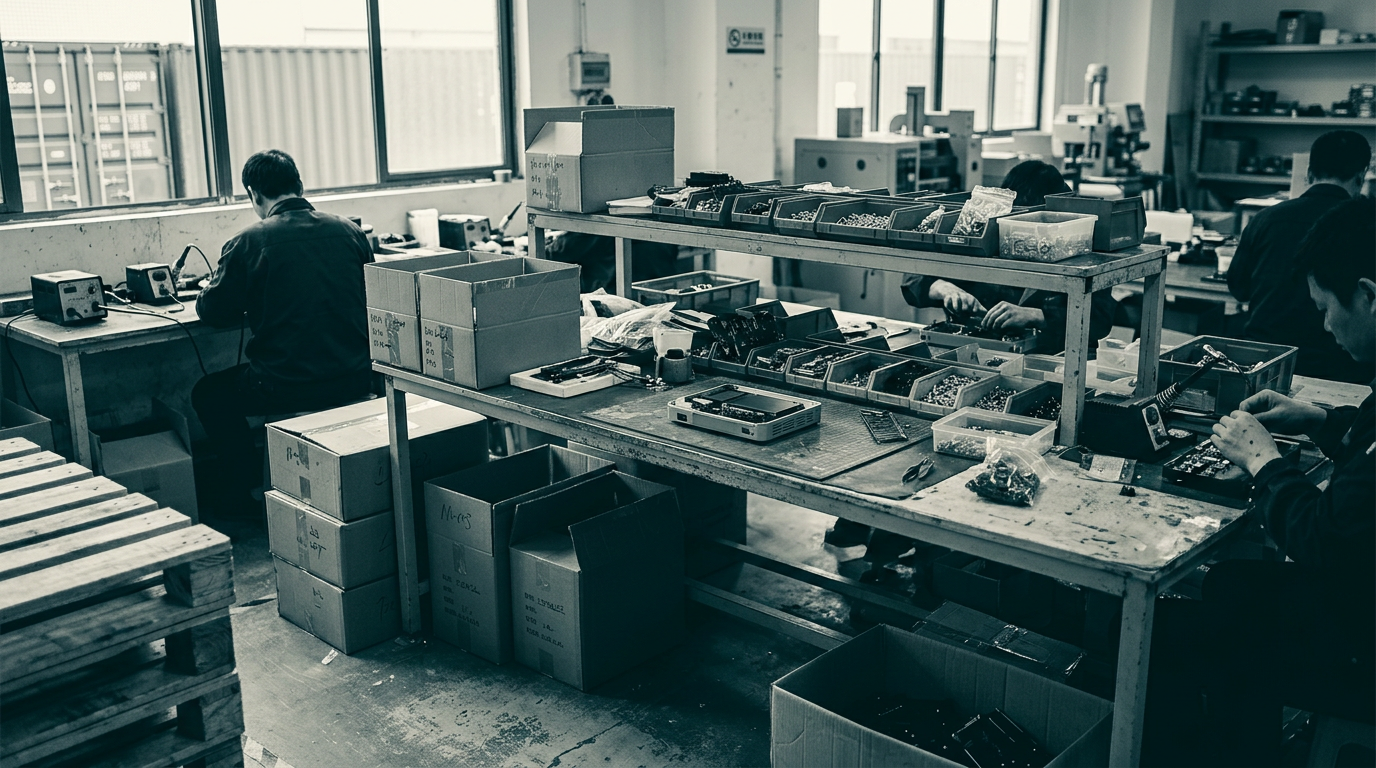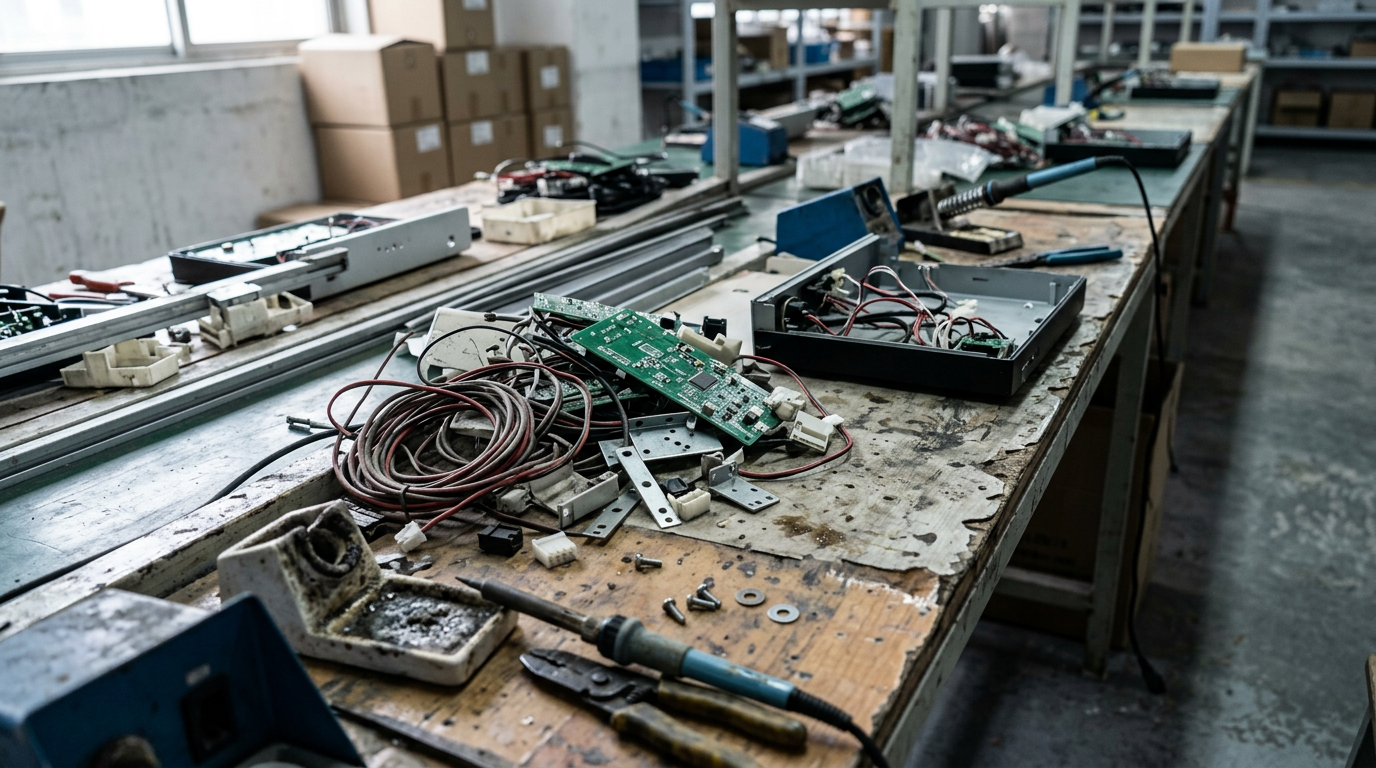
You visit an industrial park in Dongguan or Shenzhen, walk through a clean workshop with active SMT lines and modern CNC machines, and meet an engineering team that answers every technical inquiry with confidence. You approve the golden sample, sign the proforma invoice, and wire the tooling deposit. Six months later, the commercial shipment arrives in Rotterdam or Long Beach. The enclosures show uneven seams, the anodised finish rubs off after three days of handling, and failure rates during batch testing spike past eight percent. The factory claims the variance is standard commercial tolerance. In reality, your goods were never made inside that audited building. You have run straight into the persistent problem of hidden subcontracting in China.
Subcontracting in Chinese manufacturing means an arrangement where the primary supplier delegates manufacturing operations to an outside third party. Unauthorised subcontracting occurs when this delegation happens without the buyer's prior knowledge, inspection, or written consent. Factory managers do not take this step out of malice; they do it because of basic capacity economics. When order volume surges ahead of seasonal shipping windows, or when a factory takes on work outside its mechanical capability to secure a deposit, management faces a hard choice: admit their production limits and lose the contract, or silently farm out assembly to an informal satellite workshop down the road. They almost always choose the latter.
The operational risk is substantial. To understand what can happen, consider a hypothetical scenario involving an industrial lighting distributor importing die-cast fixtures from an established vendor in Ningbo. The primary facility held ISO 9001 certification and submitted valid material test certificates showing compliant aluminum alloy with proper copper thresholds. Midway through the production run, the vendor received an urgent, higher-margin domestic contract. To free up its die-casting presses, the vendor quietly handed the distributor's secondary batch to an unvetted local casting shop. That shadow shop melted down recycled scrap ingot with excessive iron content. When the fixtures reached end customers in Germany, housing brackets cracked under normal thermal cycling, CE safety declarations became worthless, and the distributor faced a mandatory safety recall under European product safety laws.
Hidden subcontracting in China creates severe compliance vulnerabilities that go far beyond superficial cosmetic defects. When an unapproved workshop manufactures your goods, your documented quality chain breaks. Audited quality management systems no longer govern scrap rates, worker training, or machine calibration. Regulated raw materials lose their chain of custody, which invalidates documentation like RoHS compliance reports, REACH declarations, and FDA food-contact certifications. With the EU Corporate Sustainability Due Diligence Directive (CSDDD) tightening supply chain accountability, importers cannot afford blind spots. If customs authorities or market surveillance inspectors demand proof of origin, an unverified shadow workshop leaves you legally exposed with unsellable inventory.
Detecting unauthorised subcontracting requires observing subtle operational clues on the shop floor and during packaging inspection. Importers and field inspectors should check for these physical warning signs:
1. Carton markings and internal shipping tape: Master cartons bearing secondary company logos, obscured supplier codes, or packaging tape from an unrelated logistics provider. 2. Inconsistent tooling stamps: Parts from a single production run that display different mould cavity numbers, mismatched font styles, or varying date-code stamps. 3. Incoming delivery slips: Domestic freight waybills showing finished assemblies arriving at the primary factory from an external county rather than raw material stock arriving from a certified mill. 4. Idle machinery during scheduled production: Expensive injection moulding presses or CNC milling centres standing cold and unpowered while pallets of finished components mysteriously fill the warehouse floor. 5. Discrepancies in work-in-progress logs: Daily routing cards on the assembly line that skip critical manufacturing steps, indicating that sub-assemblies were dropped off fully fabricated by an outside vendor.
Beyond packaging and shop floor markings, document reconciliation reveals what the eyes might miss. An operational plant leaves an unavoidable paper and utility trail. If a supplier claims to manufacture forty thousand stamped metal housings each month, their raw sheet coil delivery notes must match that gross weight, accounting for stamping scrap. Requesting copy receipts of raw material purchase orders and factory electricity bills provides concrete proof. Running ten heavy stamping presses round the clock consumes massive electric power. When utility consumption is negligible while declared production output remains high, unauthorised subcontracting is the only plausible explanation.
Preventing this problem begins well before wiring your initial deposit. The most reliable safeguard is a clear Manufacturing Services Agreement (MSA) containing an explicit clause that bans unauthorised subcontracting across all assembly, finishing, and component fabrication processes. The contract must define subcontracting rigorously: delegating surface treatment, painting, or PCB assembly to a third-party facility without written buyer pre-approval constitutes an immediate contractual breach. Specify that unapproved outsourcing gives the buyer the right to cancel the order immediately, demand a full refund of tooling and production deposits, and impose fixed liquidated damages. Ensure your agreement designates Chinese courts or an established regional arbitration body, such as the Shenzhen Court of International Arbitration, so the terms remain legally enforceable.
Legal terms alone will not stop a determined factory manager; they must be paired with on-site verification throughout production. Before mass production begins, tie each manufacturing stage to the exact factory address registered on the supplier's Chinese business license and production license. Schedule unannounced during-production inspections (DUPRO) while the assembly lines are running. Mandate that your inspection partner check semi-finished goods while still on the conveyor lines, rather than reviewing pre-packed cartons staged in the loading bay. If production is shifted off-site, an auditor standing on the physical line will spot the missing production run immediately.
As a practical operational matter, remember this distinction: a factory audit verifies systems and physical capacity, while a quality inspection verifies finished goods at a single moment in time. Importers frequently make the mistake of treating a successful initial audit as permanent insurance against hidden subcontracting in China. Factory capacity is fluid. A workshop with open capacity in March may be completely overbooked by September. When factory capacity tightens, the risk of shadow production rises sharply. Maintaining supply integrity requires verifying not just that the supplier owns the right machines, but that those specific machines are the ones cutting, moulding, and soldering your product on the day of manufacturing.
Procubility provides independent, buyer-paid supplier verification, factory audits, and production inspections across Shenzhen, Dongguan, Foshan, Ningbo, and major industrial centers throughout China. We do not accept factory commissions or trading markups, ensuring our operational reporting reflects the reality on the factory floor. When you need to verify that your purchase orders are produced where promised and under verified conditions, our on-site inspection teams give you complete visibility before final payments leave your account.