You have found a promising new partner on a sourcing platform. The samples are good, the price is competitive, and communication has been smooth. Now, their finance department sends a proforma invoice with a request for a 30% T/T deposit to begin production. This is the moment of truth for countless importers. It’s the point where a digital relationship must translate into financial trust. The core question is simple but critical: how do you truly verify a supplier in China before you send thousands of dollars across the world?
The risk is not just about outright fraud, though that happens. We worked with a US-based brand that found a supplier in Yangjiang for a new line of kitchen knives. The supplier’s online profile was impeccable—an eight-year “Gold Supplier.” After receiving good samples, the brand sent a $25,000 deposit. Communication slowed, then stopped. The address they had turned out to be a mail-forwarding service in a Guangzhou high-rise, not a factory. This scenario isn't just a lost deposit; it represents months of lost time, a delayed product launch, and a complete breakdown in the supply chain.
More common than overt scams is fundamental misrepresentation. The English-speaking contact you’ve been dealing with may work for a trading company, not the factory itself. While some traders are valuable, this structure adds a margin, complicates communication, and obscures your view of the production floor. An even greater risk is undisclosed subcontracting. Your audited and approved factory might accept your order, then farm it out to a smaller, cheaper, and non-compliant workshop down the street to improve their margin. When the supplier you chose is not the one making your goods, you lose all control over materials, processes, and quality. This is why effective China supplier verification is a foundational step for managing operational risk.
Many importers believe that platform-level designations, such as Alibaba's "Gold Supplier" status, are sufficient. They are not. A Gold Supplier badge primarily signifies that a company has paid an annual membership fee to the platform. It confirms their legal existence via a basic check, but it is fundamentally a marketing feature. It does not verify their manufacturing capability, their quality management systems, or whether they are a factory versus a trading company. To properly verify a supplier in China, you must move beyond platform metrics and conduct your own due diligence, starting with their core legal documents.
The first and most important document to request is the supplier's Business License (营业执照, Yíngyè Zhízhào). Any legitimate company will provide a clear copy without hesitation. A refusal is an immediate red flag. When you receive it, you don't need to be a lawyer to perform a basic check. Focus on these key areas:
1. Business Scope (经营范围, Jīngyíng Fànwéi): This is the most critical field. Look for the characters for “production” (生产) or “manufacturing” (制造). If the scope is limited to words like “trade” (贸易), “wholesale” (批发), or “retail” (零售), you are dealing with a trading company.
2. Company Address (地址, Dìzhǐ): Copy the registered address into a map service. Does it point to a known industrial zone in a city like Dongguan or Ningbo? Or does it lead to a desk in a commercial office building in downtown Shenzhen? A mismatch between the address and the claimed factory status is a serious warning.
3. Legal Representative (法定代表人, Fǎdìng Dàibiǎo Rén): Note the name of the individual legally responsible for the company. This name should match the person signing your contracts, or there should be a clear, documented authorization for the signatory.
Beyond the business license, the next level of inquiry depends on your product. A business license confirms a company is a legal entity; it does not confirm they are legally permitted to manufacture a specific type of product. This is the function of a Production License (生产许可证, Shēngchǎn Xǔkězhèng). These are required for many regulated product categories, including medical devices, many electronics, and food-contact materials. If your supplier is making baby bottles, they must have a production license for that specific product category. Asking for it, along with their ISO 9001 certificate and any social compliance reports like BSCI or Sedex, quickly separates professional manufacturers from opportunistic traders.
So, how to check a Chinese supplier systematically before sending a deposit? Follow this sequence. First, perform the desktop audit described above: obtain and analyze the business license, cross-reference the address, and request quality system certifications and any relevant production licenses. If these documents are in order and the supplier's claims seem consistent, the next step for any significant order (e.g., over $15,000) or complex product is a simple, on-site supplier verification audit. This is a targeted, low-cost physical check to confirm reality matches the paperwork. It must be done before the first wire transfer is sent.
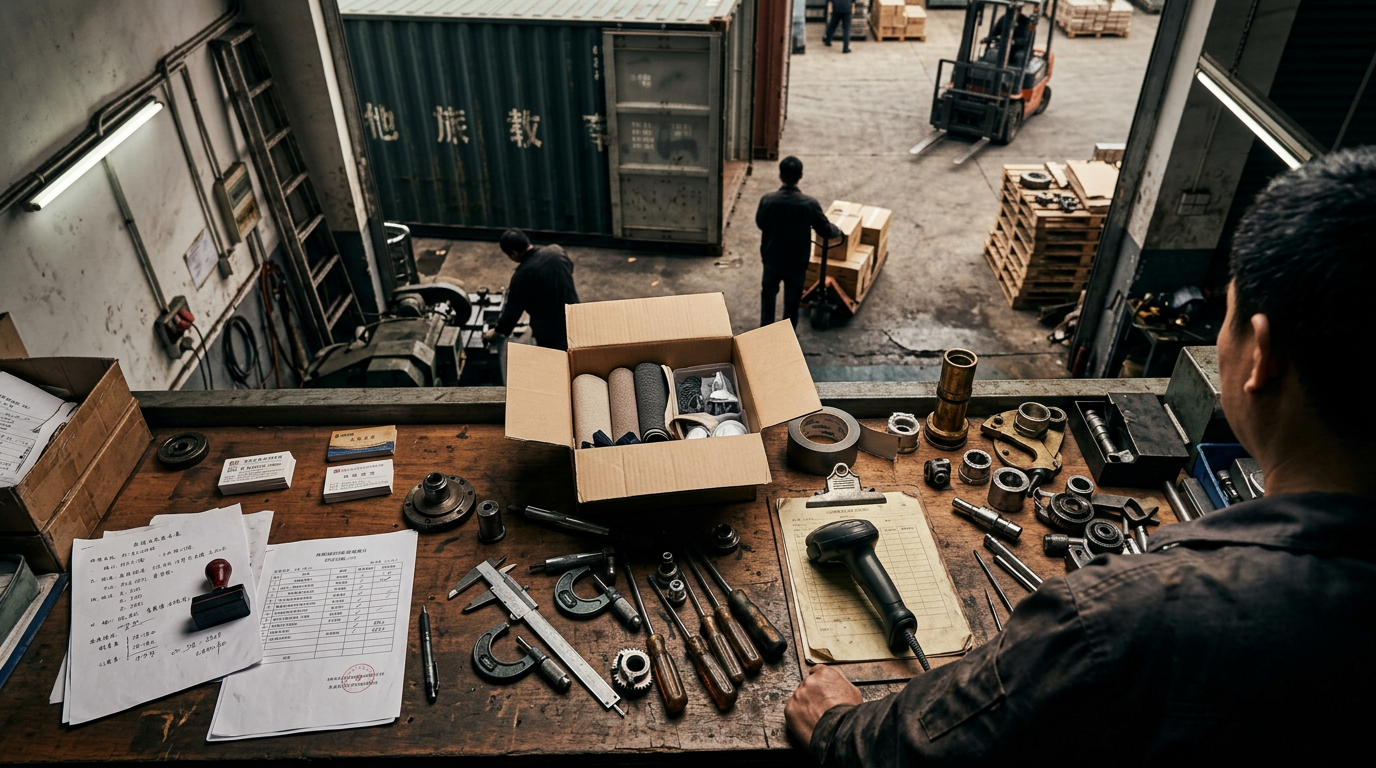
A basic supplier verification audit is not a deep dive into technical processes. Its purpose is singular: to confirm the supplier is who and what they claim to be. An auditor physically travels to the registered factory address. They take timestamped photos of the factory gate with the company name, the reception desk, key production lines (like SMT lines or injection moulding presses), and the warehouse. The auditor verifies that the business license hanging on the wall is the same one you were sent electronically. This simple, boots-on-the-ground exercise confirms the factory exists, is operational, and is the entity you are contracting with. It is the most cost-effective insurance policy against scams and major misrepresentation.
Here is an insight from years on factory floors: a supplier can be both a factory and a trading company, and it might not be a red flag. Many large, legitimate manufacturers in the Pearl River Delta establish separate Hong Kong or Shenzhen-based trading companies to handle their export sales and finances. You might find the factory's name is 'Foshan Nanhai Hardware Works Co., Ltd.' but the Proforma Invoice is from 'Foshan Sourcing Solutions Ltd.' The key is transparency. Ask them to clarify the relationship. Often, the two companies share a legal representative or have a formal service agreement. A professional supplier will explain this structure clearly. A deceptive one will be evasive. The refusal to clarify the link is the real warning sign.
This process of due diligence—from document analysis to on-site verification—is the bedrock of a secure and resilient supply chain. It requires local presence, language capabilities, and a practical understanding of how Chinese businesses are structured. At Procubility, our Shenzhen-based team integrates this verification into every new sourcing project. We conduct on-site audits to ensure our clients in North America, Europe, and Australia are partnering with capable and transparent manufacturers, not just a name on a website. Building a supply chain on a foundation of verifiable fact is the first step to long-term success.