Every procurement team working with Chinese manufacturers reaches an impasse when deciding how to qualify a new vendor. The commercial instinct is to move fast, relying on digital corporate registries, business licenses, bank account names, and video calls. These electronic checks take forty-eight hours and cost very little. Yet seasoned buyers know that paper legitimacy does not guarantee manufacturing reality. Choosing between remote desk research on a supplier and an on-site verification in China is not an either-or proposition, but a question of understanding which evidentiary standard answers which operational question.
A remote inquiry verifies corporate identity, legal registration, registered capital, and litigation history. Physical verification determines whether that corporate entity owns the machinery, retains the workers, and controls the production floor where your goods are built. Conflating the two creates blind spots. An overseas importer can easily spend weeks reviewing pristine export licenses, immaculate ISO 9001 certificates, and clean credit reports, only to send a deposit to an entity that has never operated a single production line.
Consider a hypothetical scenario involving an electronics brand sourcing smart home sensor enclosures. The buyer conducted remote screening on a supplier registered in Shenzhen, verifying its unified social credit code against the National Enterprise Credit Information Publicity System. The corporate record confirmed twelve years of operational standing, twenty million yuan in registered capital, and no administrative penalties. The company held export rights and provided a corporate bank account that matched its registered legal name. Relying solely on desk research, the buyer transferred an eighty-thousand-dollar tooling deposit for custom plastic injection moulds. Two months later, first-shot samples failed basic dimensional tolerances. When an engineer finally visited the registered manufacturing address in Baoan, they found a twenty-person trading firm operating out of a shared commercial office suite. The actual tooling and moulding had been subcontracted to an unvetted workshop in Dongguan that lacked coordinate measuring machines, environmental controls, and skilled toolmakers.
The risk in this scenario was not financial fraud in the criminal sense. The business entity was legitimate, the company existed legally, and the funds reached the named corporate entity. The failure lay in assuming that official corporate documentation proves shop-floor capability. What records settle and what only a visit settles are distinct categories of proof, separated by the physical threshold of the factory gate.
Desk research settles legal status, corporate lineage, and administrative history with high certainty. When looking at Chinese corporate filings and official databases, remote investigation answers concrete legal baseline questions:
1. Does the entity legally exist under Chinese company law, and is its business status active rather than revoked or suspended? 2. Who are the legal representative, the ultimate beneficial owners, and the registered shareholders? 3. What is the scope of business approved by the local Administration for Market Regulation, and does it include manufacturing or merely wholesale and domestic trade? 4. Does the enterprise hold direct equity ties or common directorships with other factories, raw material suppliers, or known export agencies? 5. Are there active court judgments, enforcement proceedings, frozen bank accounts, or repeated labour disputes filed against the enterprise?
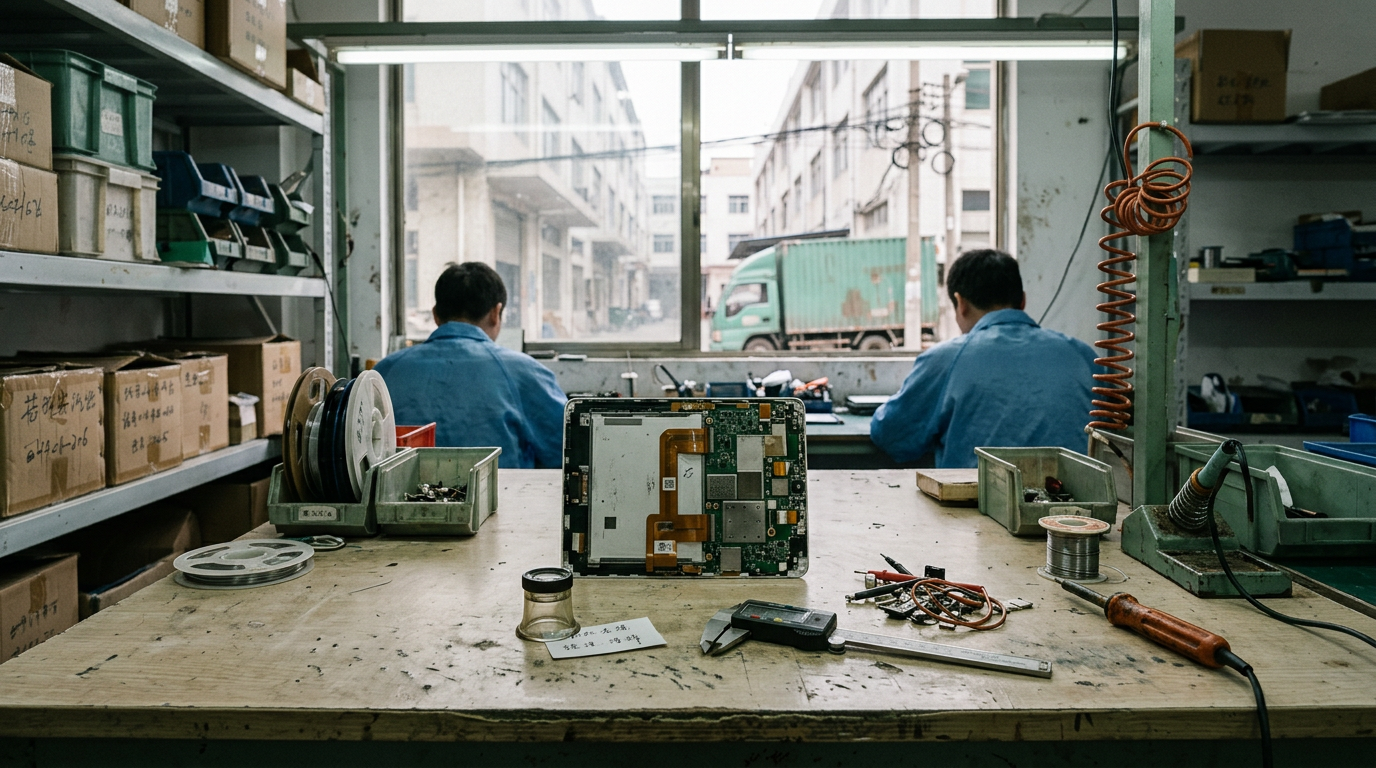
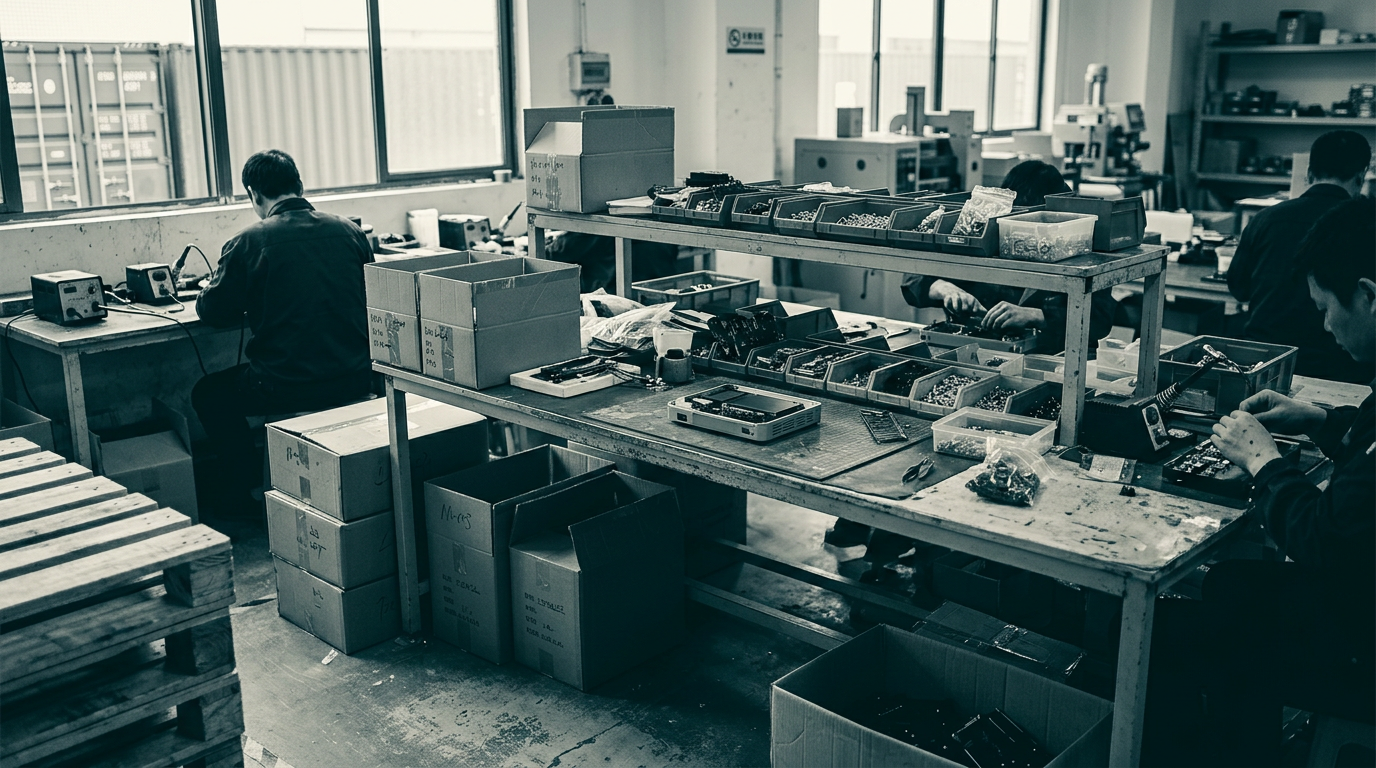
These findings are invaluable for weeding out shell companies, intermediaries masking as direct manufacturers, and suppliers under severe financial distress before you commit engineering hours. However, remote records cannot prove physical custody or production hygiene. Only an on-site verification in China settles whether the equipment listed in marketing collateral physically exists, whether the machinery is operational or sitting idle, and whether the company employs the assembly staff shown in presentation decks. A site visit confirms whether production lines run according to ISO 9001 process sheets, whether incoming raw materials possess authentic mill test certificates, and whether the enterprise maintains working environmental test chambers or simply outsources reliability testing to third parties without oversight.
To deploy capital efficiently, buyers must balance the cost and speed trade-offs inherent in these methods. Remote investigations require minimal expenditure and provide turnaround within one to three business days, making them the appropriate filter for screening longlists of ten or twenty candidate vendors. Running an on-site factory audit on every prospective supplier drains budgets and delays sourcing cycles. Conversely, skipping the physical visit before releasing a tooling balance or a thirty-percent production advance exposes the buyer to catastrophic operational risk.
The solution is a structured two-stage qualification sequence executed before commercial exposure escalates. First, initiate remote desk research immediately after preliminary price quotations align with target landed costs. Use public registry data, customs records, and trademark databases to eliminate intermediaries posing as original equipment manufacturers, entities with adverse court judgments, or operations whose registered scope excludes manufacturing. Execute this before signing non-disclosure agreements or sharing proprietary CAD drawings.
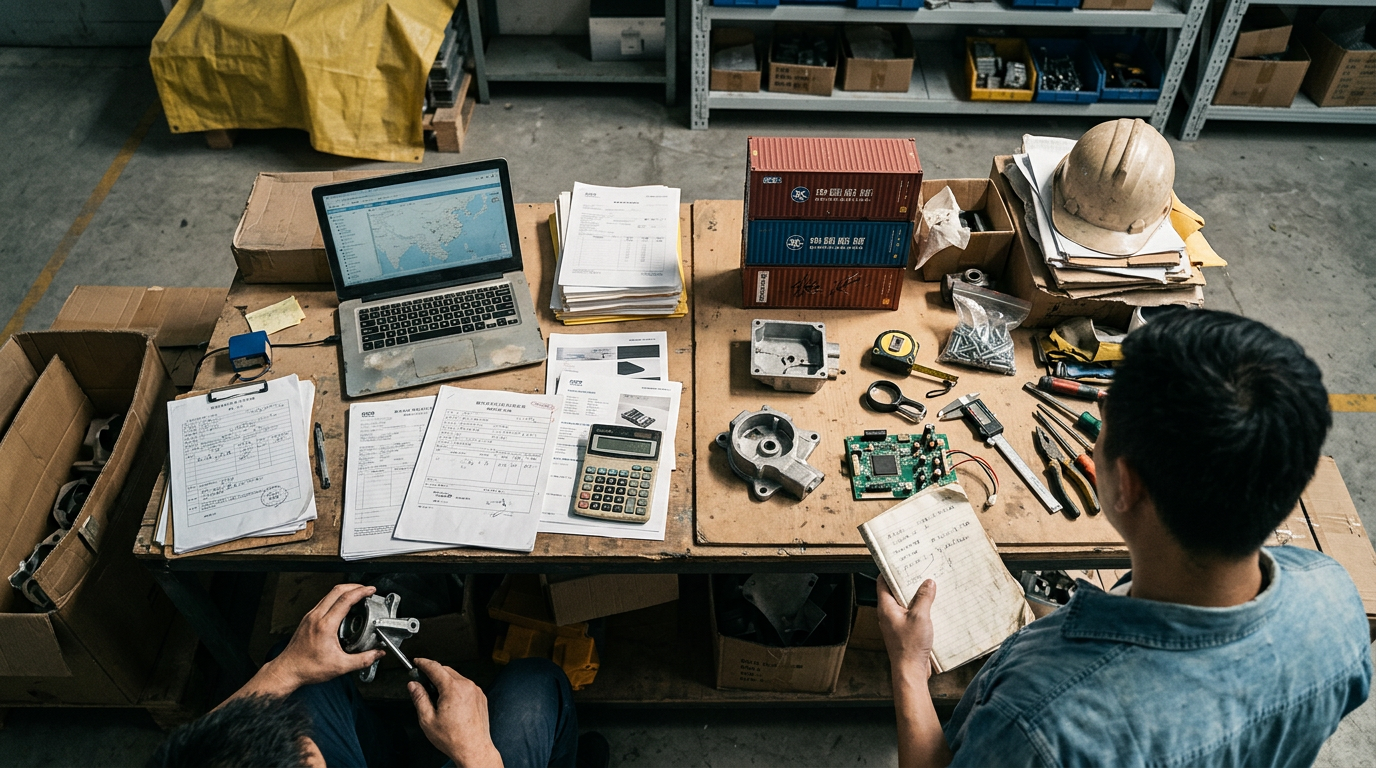
Second, mandate an on-site verification before transferring tooling payments or releasing purchase orders for mass production. The physical visit should audit machinery serial numbers against maintenance logs, inspect raw material stores, review operator work instructions, and confirm warehouse inventory. If the physical audit reveals that key production steps like surface treatment, CNC machining, or SMT assembly occur off-premises, the supplier must disclose those secondary facilities for direct inspection before production begins.
An important operational distinction lies in how Chinese manufacturing clusters operate. In hubs like Dongguan, Foshan, and Ningbo, a legal corporate boundary rarely matches the physical production footprint. A tier-one vendor may legally control a clean assembly room while relying on three unlisted sister facilities across the district for metal stamping, anodizing, and final packaging. Desk research will show you the parent entity and its shareholding structure. It will not show you that the stamped aluminium parts are trucked through rain on open flatbed carts between independent subcontractors. Only a physical auditor walking the transfer route and inspecting incoming staging bays catches systemic quality risks that never appear on a balance sheet.
Remote corporate screening and factory floor audits are complementary tiers of due diligence. One establishes whether a business partner has the legal standing to enter an enforceable commercial contract; the other establishes whether that partner has the physical capacity to deliver acceptable parts on schedule. Procubility delivers this complete clarity through buyer-paid supplier verification, forensic company investigations, and rigorous factory audits across mainland China, ensuring your sourcing decisions rest on verified ground reality rather than digital assumptions.