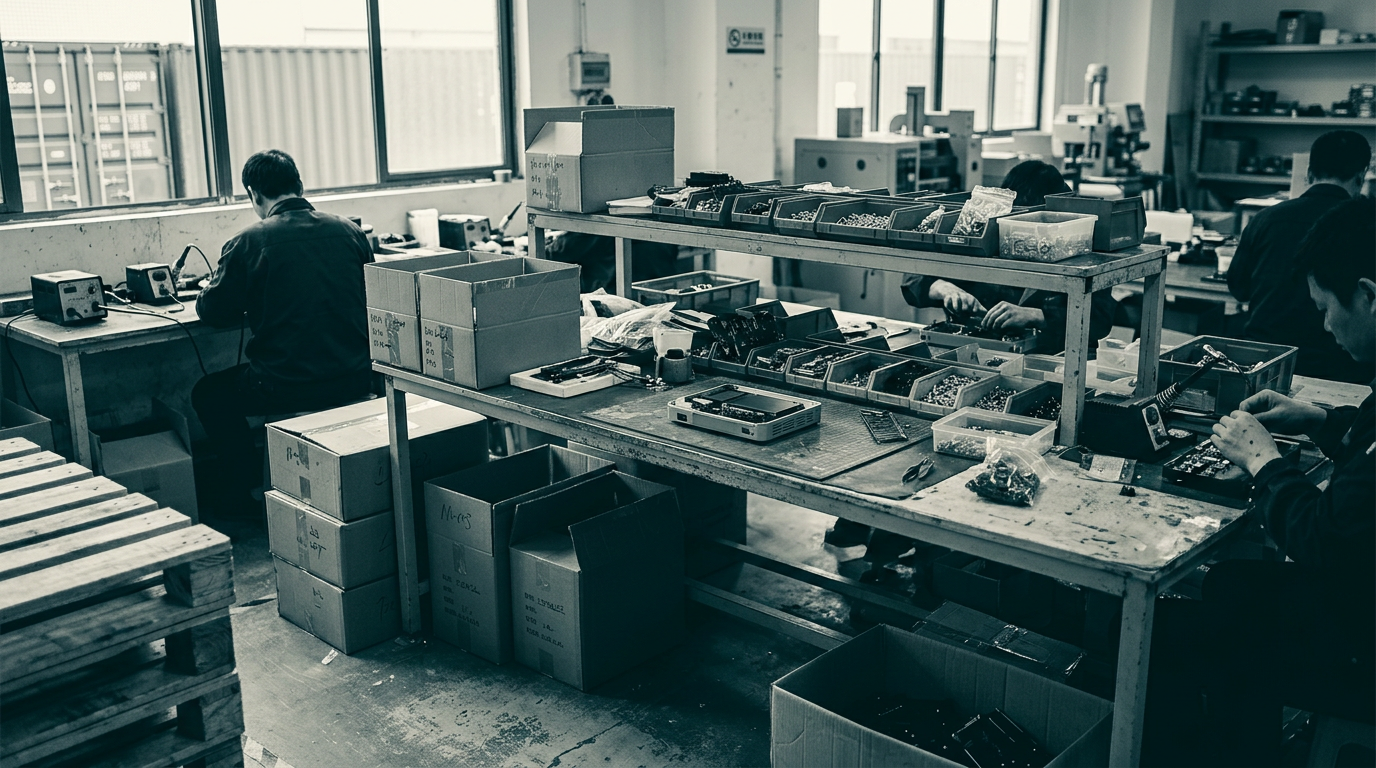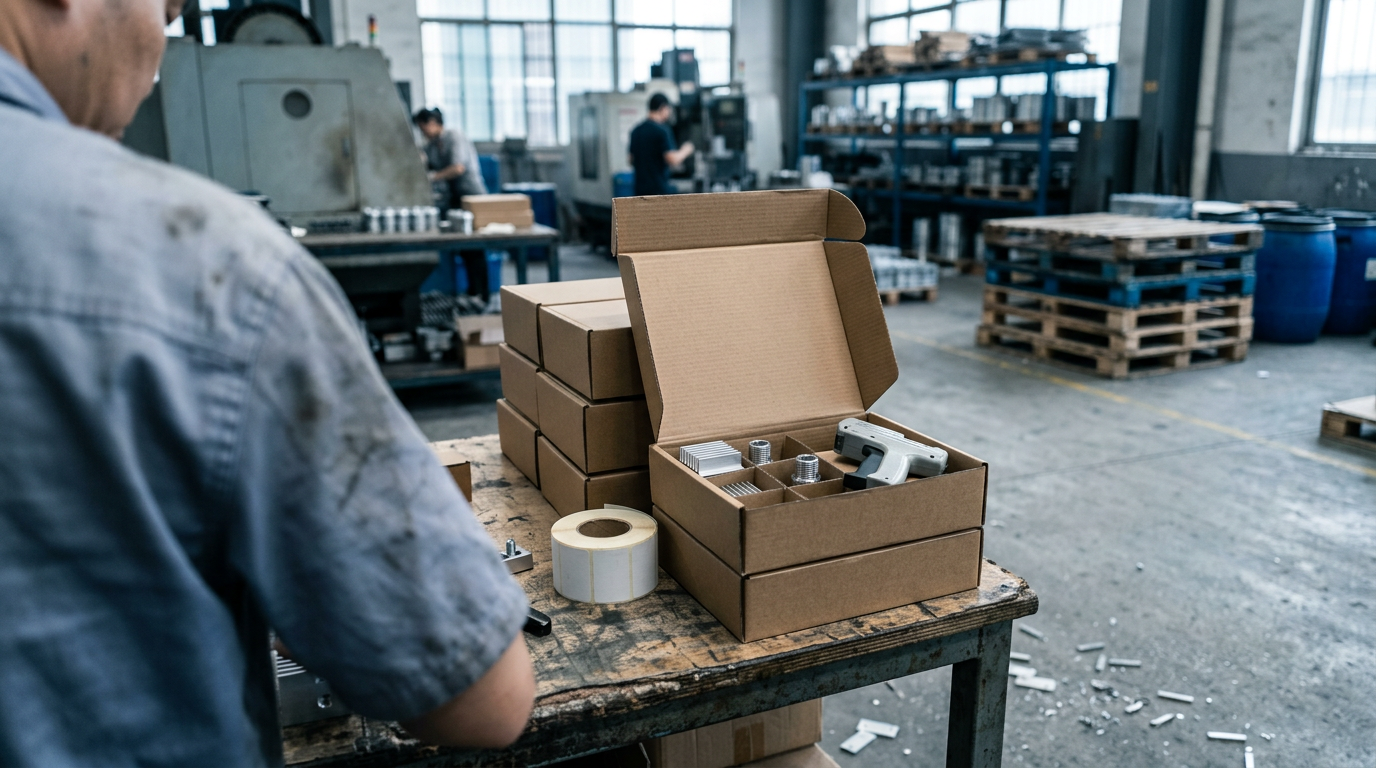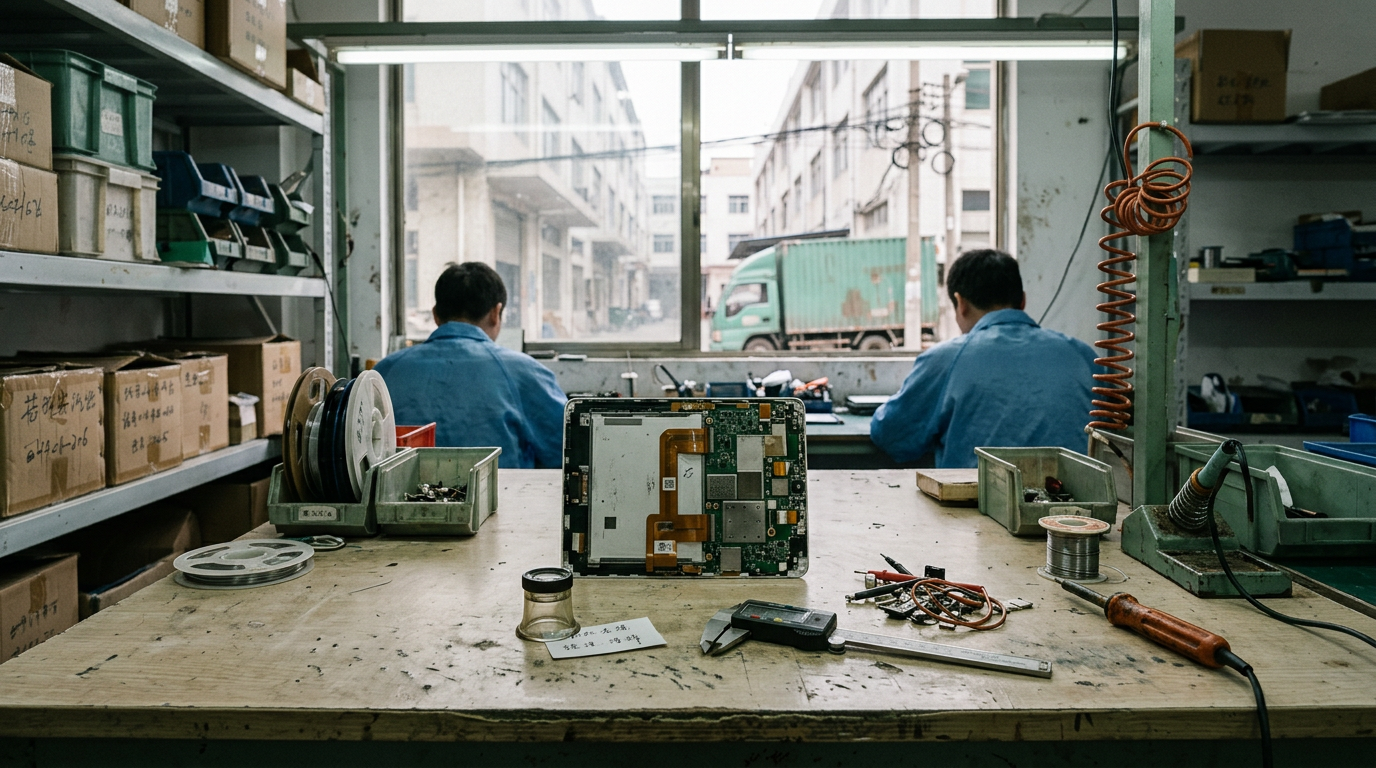
Importers frequently encounter finished goods they wish to source directly, whether discovered on competitor retail shelves in Europe, at major trade fairs in Guangzhou, or via digital wholesale platforms. The entity presenting the product is often an export broker, trading agency, or domestic brand licensee that refuses to disclose the source factory. When buyers seek to identify real manufacturer partners directly, the core challenge of reverse manufacturer identification is separating the commercial entity named on the proforma invoice from the industrial facility that casts, moulds, stamps, or solders the actual hardware. Navigating between commercial paper companies and actual manufacturing facilities requires rigorous physical and forensic scrutiny, particularly when high-volume production or custom tooling investments are at stake.
In global supply chains, opacity is often a deliberate business model. Intermediaries protect their trading margins by obscuring factory identities, stripping supplier labels, and repacking shipping cartons before goods depart Chinese ports. Yet no physical manufacturing process occurs in an evidentiary vacuum. Industrial fabrication leaves tangible, legal, and operational breadcrumbs. To identify real manufacturer operations behind a physical product, an importer must move past commercial sales literature and examine the material, regulatory, and corporate evidence generated along the production path. The goal is to establish unbroken provenance from the raw resin, metal billet, or bare printed circuit board to the finished carton.
The financial and operational risks of dealing with a hidden producer are substantial. Consider a hypothetical scenario where an overseas buyer attempts to replicate a specialised industrial valve sourced through an export agent in Ningbo. The agent claims to own a precision casting plant in Zhejiang. The buyer transfers a 30 percent tooling deposit based on glossy photographs and marketing claims. Months later, the first production batch reveals porous metal casting, dimensional drift, and sporadic pressure test failures. Because the buyer lacks direct contact with the casting shop, they cannot inspect the raw billets, audit the CNC machining fixtures, or review mill test certificates. The trading agent blames machine calibration but refuses on-site access to protect their markup. The buyer remains trapped between escalating quality defects and an invisible subcontractor who holds zero contractual accountability to the end customer.
The most direct clues reside within product and packaging evidence. Tooling marks provide indelible records of where and how an item was made. Plastic injection moulding press tools almost universally incorporate date clocks, cavity indices, and internal resin recycling codes debossed into interior ribs or unexposed structural walls. While an intermediary can easily apply a silk-screened logo to the exterior casing, retooling interior mould plates is prohibitively expensive and routinely neglected. Packaging materials offer complementary data. Secondary master cartons, internal corrugated dividers, and polyethylene protective bags often carry factory warehouse barcodes, pallet labels, regional box-maker certificates, or environmental production permits indicating the precise municipal district where packaging was converted, stamped, and packed.
Markings and certification traces provide an authoritative bridge from the physical object to the legal manufacturing entity. International product standards require formal accountability that cannot easily be assigned to a shell company. When conducting reverse manufacturer identification, focus on specific regulatory filings: 1. Mandatory safety file numbers: Electrical goods sold in North America or Europe display UL file numbers, FCC Grantee codes, or TUV mark certificates. Querying these public compliance databases directly reveals the registered factory site where the safety testing was approved. 2. Chemical and material compliance records: Detailed laboratory test reports for CE directives, RoHS screening, and REACH substance compliance list the corporate name and physical testing address of the manufacturing applicant rather than a sales agency. 3. Factory system certifications: Genuine ISO 9001, IATF 16949, and BSCI social audit reports must identify the audited physical premises, specifying workshop addresses, scope of production, and worker headcounts.
When potential company names, addresses, or license numbers are uncovered, the next phase demands structured corporate and commercial research. China maintains centralised corporate transparency platforms, primarily the National Enterprise Credit Information Publicity System (GSXT), supplemented by commercial registries like Tianyancha and Qichacha. By examining an enterprise's official unified social credit code, an importer can read its registered business scope. A legitimate manufacturing facility will hold clear permissions for production, processing, and assembly, accompanied by mandatory environmental impact assessments and factory premises registrations. A pure trading intermediary will display a scope restricted to wholesale, retail, consulting, or export agency services, completely devoid of industrial manufacturing rights.
Cross-referencing commercial shipping databases provides empirical corroboration. Public bill of lading data, export declaration histories, and container manifest filings link Chinese export entities to overseas consignees. By tracing the historical shipments of a target product type out of specific ports like Yantian, Ningbo-Zhoushan, or Nansha, investigators can map export volumes against declared factory capacity. This corporate investigation must be executed before approving purchase orders, wiring tooling deposits, or releasing telegraphic transfers. Attempting to identify real manufacturer connections after capital has been committed forfeits commercial leverage and leaves the buyer vulnerable to unauthorized subcontracting, unannounced material substitution, and sudden lead time inflation.
A seasoned practitioner maintains a sharp operational distinction: final assembly is not synonymous with complete manufacturing. In electronics hubs across Shenzhen and hardware centers in Dongguan or Foshan, a facility describing itself as the manufacturer may simply operate a manual packing bench and a basic screw-driving line. The high-value engineering—such as SMT board placement, metal stamping, or precision CNC tooling—is often contracted out to specialized tier-two workshops across neighboring industrial parks. To truly identify real manufacturer capability, an importer must determine whether the target facility controls critical process parameters or merely manages the consolidation of purchased assemblies. Knowing who controls the tooling moulds and technical drawings dictates who truly commands the quality of the product.
It is equally important to understand why some reverse manufacturer identification cases stay unresolved. In highly fragmented sectors, such as domestic plastic housewares in Taizhou or basic hardware in Yongkang, manufacturing networks operate with high informality. A product may be assembled across transient workshops sharing rented injection moulds, with component procurement coordinated informally through cash transactions. The finished goods may be cleared through customs using an unrelated third-party export conduit that possesses no operational knowledge of the goods. Furthermore, when multinational brands commission original design manufacturers under strict confidentiality agreements, components are intentionally stripped of all vendor markings, and supply chains are partitioned through multi-layered holding entities. Under such conditions, public records and physical traces hit structural dead ends that desk research alone cannot penetrate.
When commercial supply chain stability requires verified operational reality, remote document checks must be validated against ground truth. Procubility delivers buyer-paid supplier verification, forensic supplier investigations, and comprehensive on-site factory audits throughout China's primary manufacturing regions. Operating with complete financial independence from suppliers, we inspect factory floors, verify machinery ownership, validate production licenses, and trace the real manufacturing sources behind critical products before you commit capital.