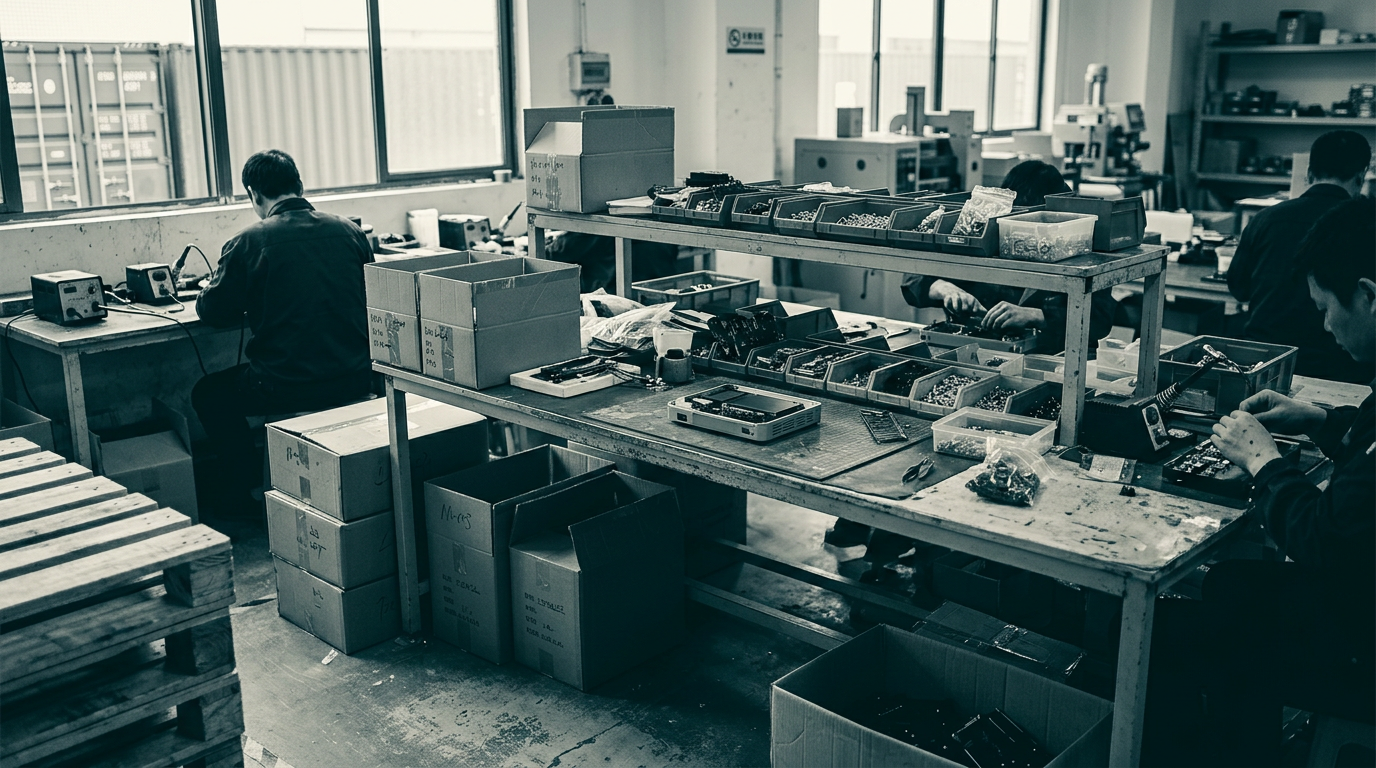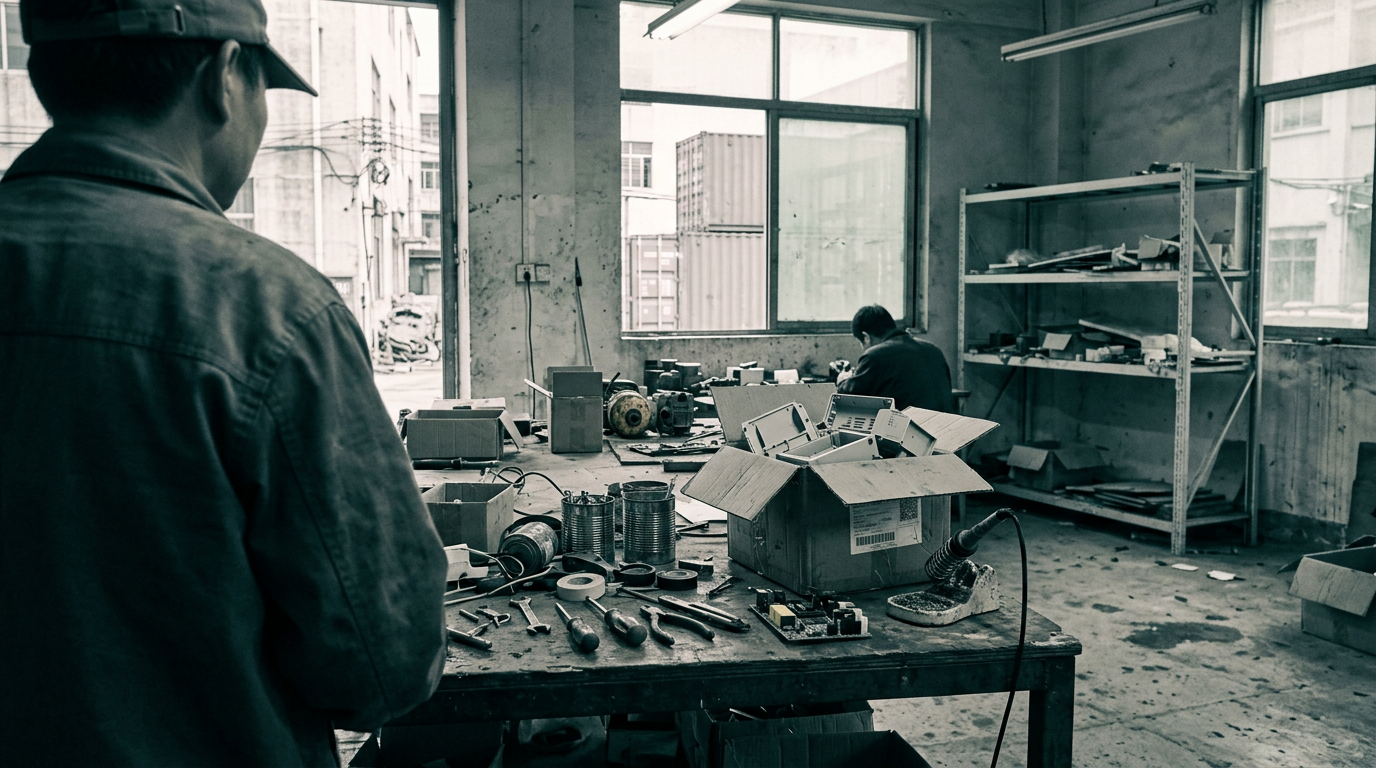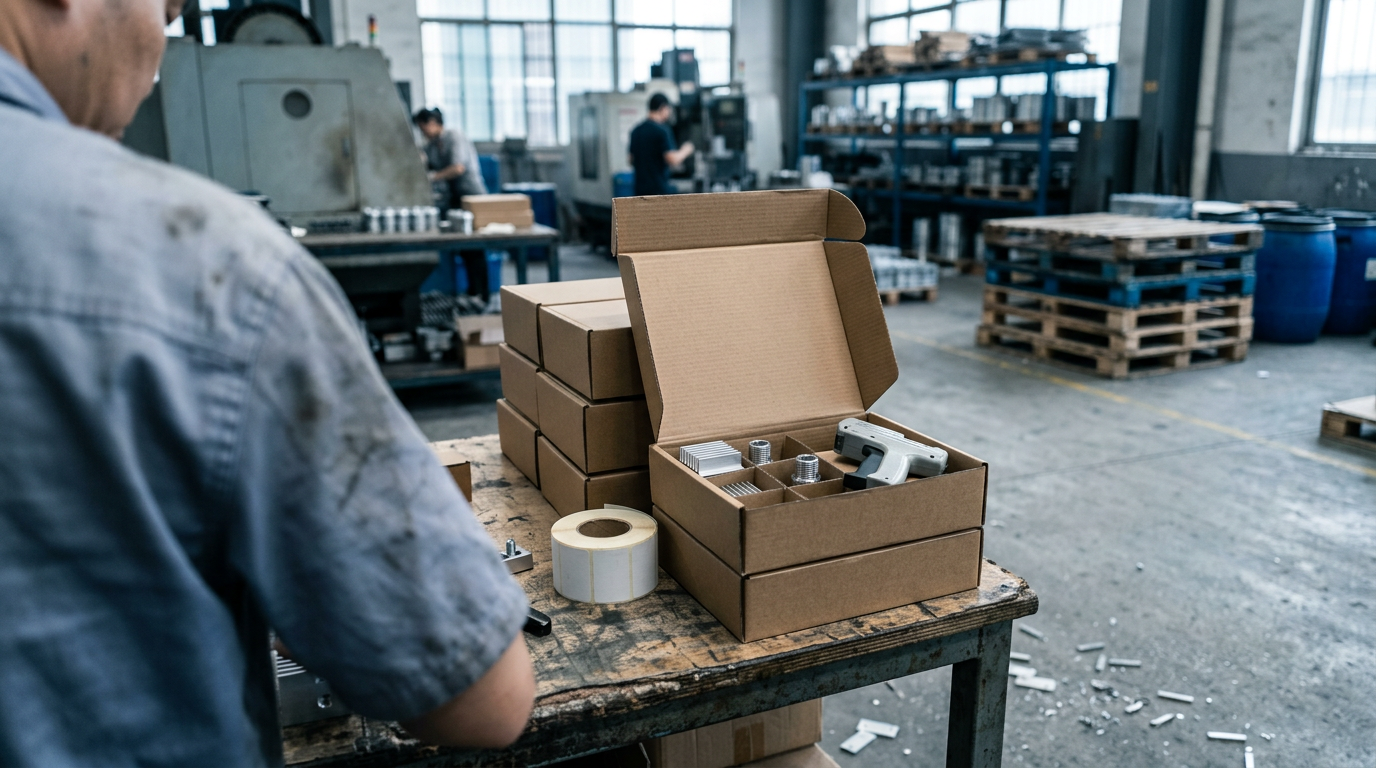
On digital sourcing portals and booth displays at the Canton Fair, almost every supplier presents itself as a direct producer. You see photographs of spotless assembly halls, long rows of CNC machines, and staff wearing branded smocks. Yet across industrial hubs from Bao'an in Shenzhen to Chang'an in Dongguan, a significant share of these storefronts belong to intermediaries. When a trading company pretending to be a manufacturer enters your supply chain under false pretenses, your commercial risk shifts immediately. You believe you are speaking to the engineers who calibrate the tools and mix the resins. In reality, you are talking to a sales agent sitting in an office tower three districts away, relaying your specifications through WeChat to a workshop you have never seen.
The motivation behind this deception is straightforward. Importers have spent two decades trying to eliminate middleman margins. Procurement teams now mandate factory-direct relationships to secure competitive unit costs and direct technical oversight. Trading firms know that admitting their intermediary status often disqualifies them from initial requests for quotation. Making a fake factory claim keeps them in the bidding. They borrow facility photographs from their sub-vendors, lease shelf space in an associate's assembly bay for client walkthroughs, or register an entity name containing words like precision manufacturing or industrial technology despite holding only a commercial trading license.
Consider a hypothetical scenario involving an importer of die-cast aluminum enclosures based in Foshan. The buyer finalized a contract with a vendor who claimed to own an eight-press die-casting facility. When the initial production run arrived in Rotterdam, surface porosity exceeded acceptable thresholds, and critical screw bosses cracked under nominal torque. The buyer demanded immediate tooling modifications. Because the vendor was a trading company pretending manufacturer rather than the facility owner, they could not alter the tool path or adjust the dwell pressure themselves. Instead, they had to negotiate with the actual casting shop, which prioritized its own direct accounts. Modifications stalled for seven weeks, replacement parts missed the shipping window, and the buyer incurred demurrage and factory downtime costs that wiped out their annual product margin.
Cost and operational control degrade quickly once an intermediary conceals the production floor. Middlemen naturally protect their margin by shopping orders around to different subcontractors when domestic raw material prices shift. If the price of ADC12 aluminum ingot or virgin ABS plastic rises in Guangdong, an undisclosed trading house may transfer your molds to a cheaper, lower-tier workshop without notification. Batch consistency breaks down. Tooling maintenance schedules lapse. More critically, modern regulatory frameworks like EU CSDDD, CBAM, and US supply chain traceability rules require verified documentation from the actual point of production. If you cannot identify the real factory chimney, you cannot collect credible emissions data, material test certificates, or social compliance audits.
Detecting a fake factory claim requires examining administrative filings and commercial habits rather than trusting showroom displays. In China, corporate identity is defined by the unified social credit code and the official business license issued by the State Administration for Market Regulation. A manufacturing enterprise possesses a registered scope of business that explicitly includes production, processing, or assembly. A pure merchant generally holds a business scope restricted to wholesale, retail, import, and export of goods. If the word manufacture does not appear within the registered business scope, the entity does not operate a legal factory at that registered location.
Beyond official company registers, specific operational patterns reliably indicate an undisclosed trading intermediary: 1. The registered capital is small, often under one million RMB, with zero social security contributions listed for factory floor labor in corporate annual filings. 2. The primary company address points to an office building, commercial plaza, or residential high-rise rather than an industrial park or designated manufacturing zone. 3. Plant tour requests meet hesitation, excuses about proprietary client designs, or demands that buyer personnel meet at an off-site restaurant before visiting the premises. 4. Technical questions regarding machine cycle times, mold cooling channel layouts, or SMT feeder configurations are answered with long delays while the salesperson consults external contacts. 5. Quality documentation such as ISO 9001 certificates or test reports bear the name of an unrelated legal entity, often explained away as a parent company or a dedicated subsidiary.
Uncovering the truth should happen well before you release funds. The correct sequence begins before issuing a formal purchase order or transferring a tooling deposit. Request the Chinese business license, verify the unified social credit code directly against the National Enterprise Credit Information Publicity System, and demand copies of utility bills or environmental impact assessments that tie the company name to an industrial street address. Require your vendor to provide the exact physical address of the production line where your tools will run. If they refuse to state the manufacturing location in the master services agreement before you pay the standard thirty percent telegraphic transfer advance, halt the transaction.
When you discover that your supplier made a fake factory claim after orders have commenced, you do not necessarily need to terminate the relationship overnight. You must, however, renegotiate terms from a position of factual clarity. Strip out the hidden manufacturing margin by resetting baseline pricing against actual factory rates. Insist on a three-party disclosure or an addendum that grants your representatives unhindered access to the sub-vendor's floor for pre-shipment inspections and process audits. If the trading entity manages raw material logistics, consolidates multi-component orders from different regions, or absorbs domestic currency fluctuations, their service has tangible commercial value. What you cannot tolerate is paying factory-direct rates while receiving neither factory transparency nor middleman accountability.
An operational distinction exists between a professional trading partner and an entity masking its true nature. Transparent trading companies play a useful role in Chinese manufacturing corridors. They manage minimum order quantities for small buyers, bridge language barriers, and handle inland trucking across industrial belts like Zhejiang or Jiangsu. A trading company pretending to be a manufacturer, by contrast, relies on structural opacity to extract rent. They prevent you from auditing the factory, obscure raw material traceability, and restrict your engineering team from speaking directly with tooling technicians. Sourcing directly is not always mandatory, but knowing who actually presses the buttons on the machine floor is non-negotiable for product safety and regulatory compliance.
Procubility conducts independent, buyer-paid supplier verification and on-site factory audits across Shenzhen, Dongguan, Foshan, Ningbo, and adjacent manufacturing hubs. We cross-reference municipal registration databases, inspect physical workshop facilities, and verify production machinery to ensure overseas buyers know precisely who is building their product before commercial capital is committed.