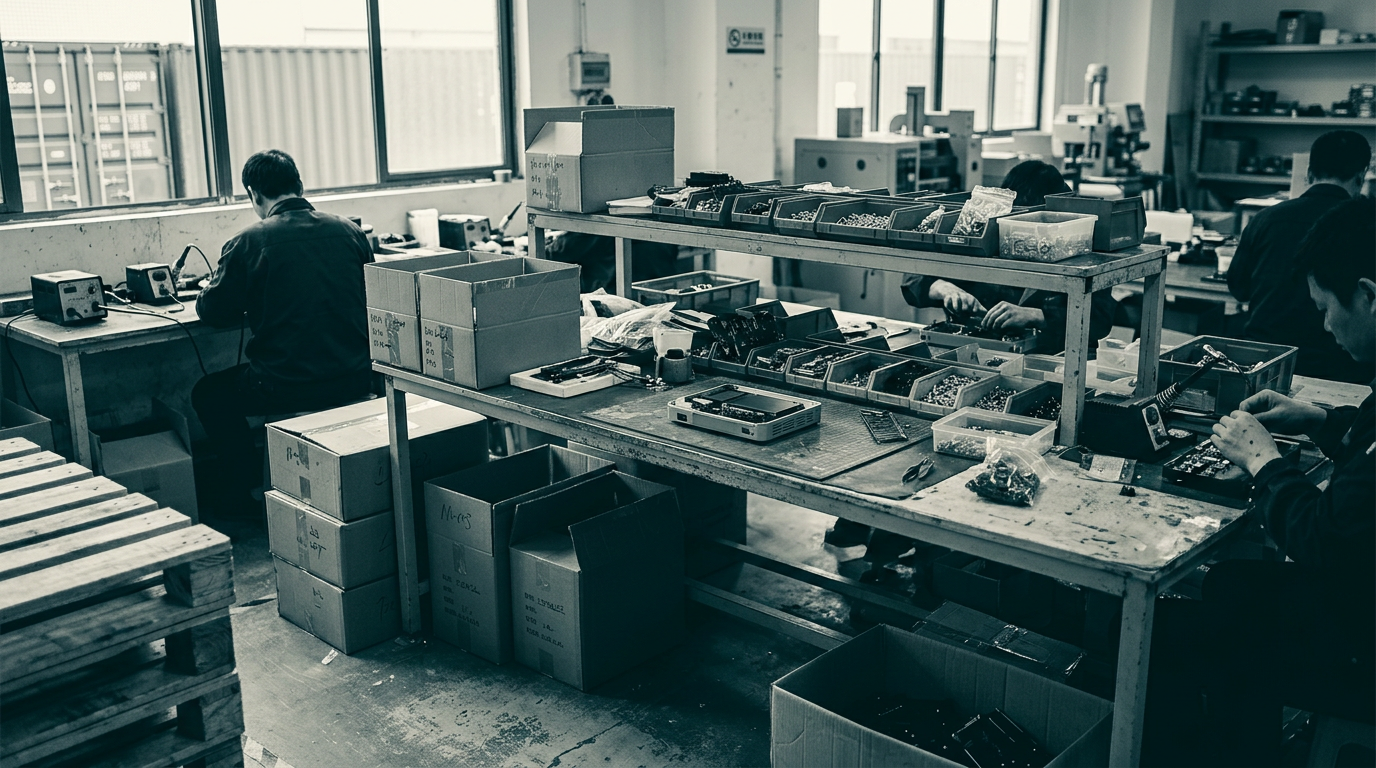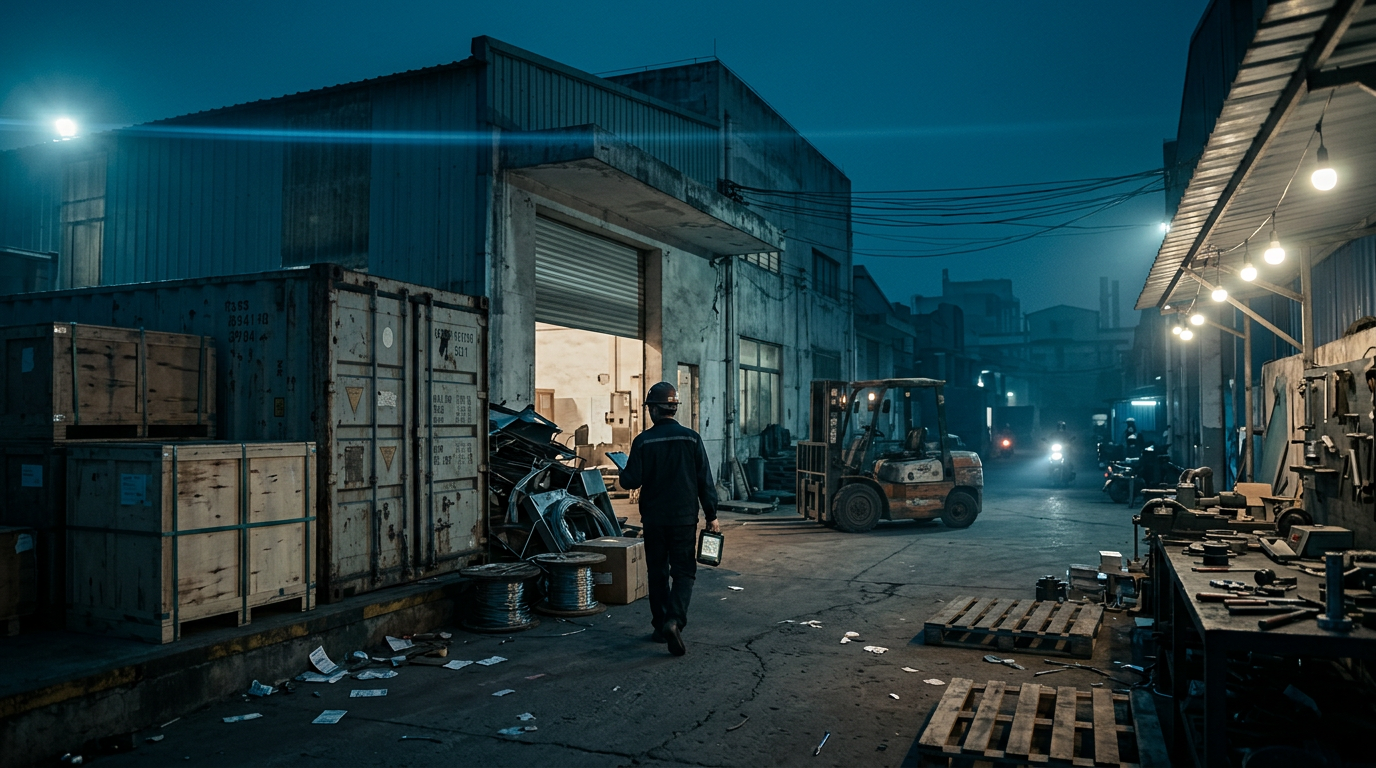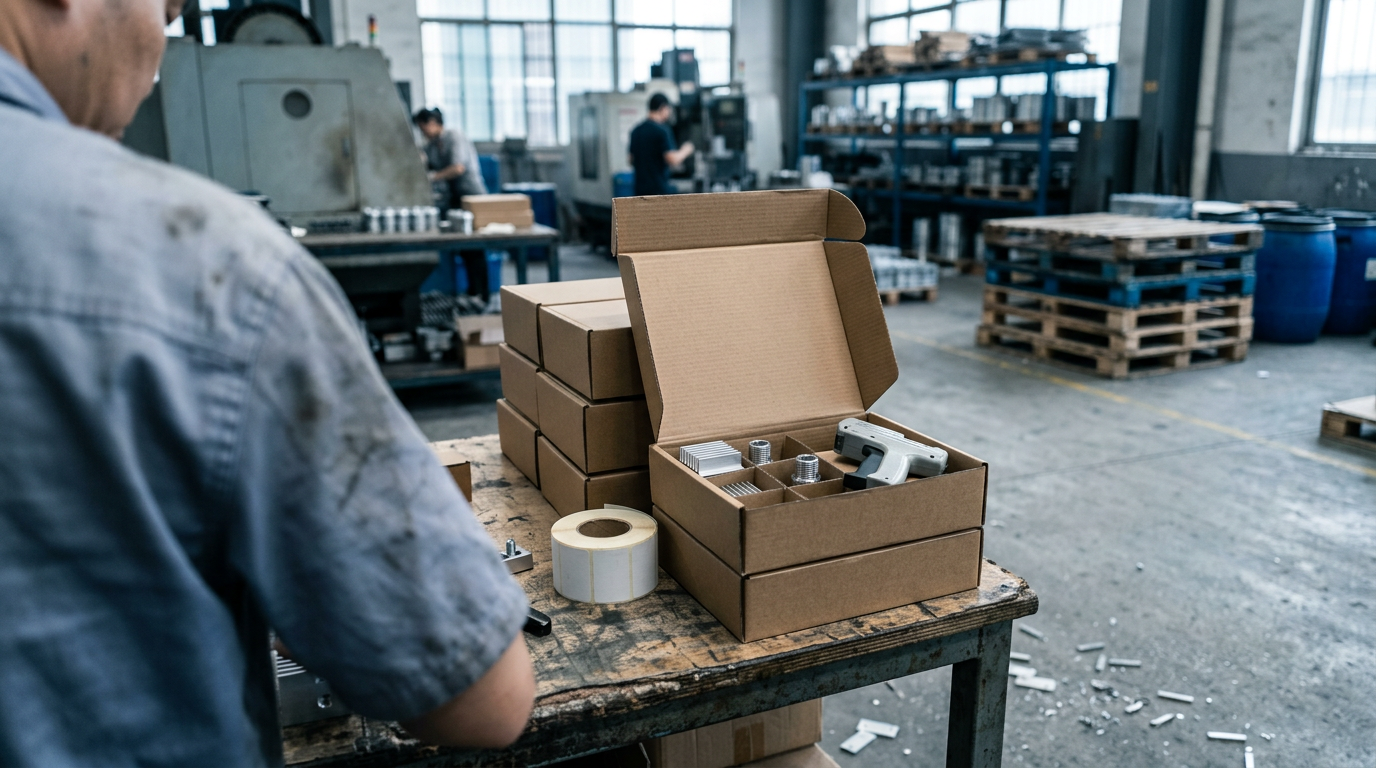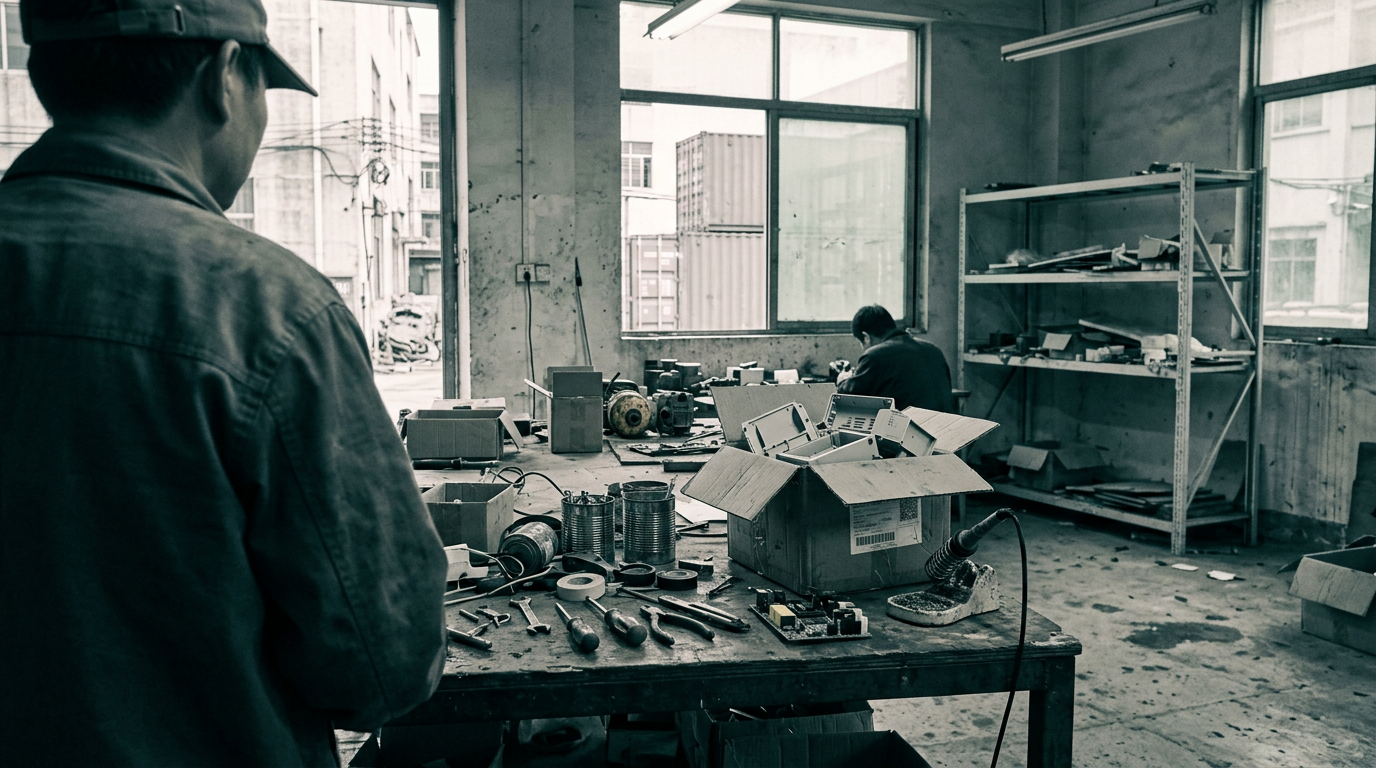
Every experienced buyer knows the polished facade: a comprehensive Alibaba storefront, an impressive English catalog, and a corporate video displaying rows of computer numerical control machines and surface-mount lines. The communication is fast, the unit pricing is competitive, and the representative claims their family has run the plant in Dongguan or Ningbo for twenty years. Yet in dozens of industrial zones across Guangdong and Zhejiang, an uncomfortable number of these operations are pure fabrications. A ghost factory in China is an entity that presents itself to overseas importers as a direct original equipment manufacturer while possessing zero production machinery, zero assembly workers, and zero physical control over the manufacturing process. Falling into business with a fake factory supplier introduces compounding layers of operational and compliance risk that rarely surface until production schedules collapse.
Understanding what a ghost factory looks like on paper requires looking past English-language pitch decks to Chinese administrative filings. On its face, a corporate registration can look entirely legitimate. The Chinese business license may show an active unified social credit code, a respectable registered capital figure, and an address inside a recognized industrial district. However, registered capital in China is often pledged rather than paid-in, meaning a registered capital of ten million RMB may represent almost no actual capital committed to physical assets. Crucially, the registered business scope on the official National Enterprise Credit Information Publicity System filing often reveals the truth. While genuine manufacturers list production, assembly, and processing, a fake factory supplier frequently holds a scope restricted to wholesale, trade, information consulting, or domestic commerce, masking their structural inability to touch raw materials.
Consider a hypothetical scenario involving an industrial equipment buyer sourcing custom cast-iron valve housings. The buyer selects an outfit in Foshan after reviewing glossy equipment lists and high-resolution photographs of automated pouring lines. The buyer pays a thirty percent deposit for dedicated tooling and pre-production samples. In reality, the counterparty is a three-person brokerage operating out of an office park five miles away from any heavy industry. The broker takes the buyer's computer-aided design files, shops them around an informal network of unregulated suburban foundries, and awards the job to the cheapest operator willing to cut corners on metallurgy to hit the margin. When the first mass-production container arrives at the port of Hamburg, the casting walls display severe porosity and fail pressure ratings. The buyer attempts to enforce quality agreements, only to discover their counterparty owns no fixed assets, holds no scrap insurance, and cannot compel the actual subterranean workshop to rectify the defect.
Many overseas procurement teams believe that photographic and video proof neutralizes this exposure. In practice, visual media submitted by the vendor proves very little. Industrial photography in China is an established sub-industry where staging is routine. Intermediaries routinely photograph public areas of genuine manufacturing facilities during weekend shifts, utilize stock media libraries, or capture video walkthroughs in plants operated by upstream component partners who have agreed to act as temporary hosts. A live video call offers no greater guarantee. A representative wearing branded workwear can easily walk an overseas buyer through a working stamping facility in Bao'an by arrangement with the actual plant owner, who tolerates the theater in exchange for a cut of potential subcontracts. The lens only captures what lies within the frame; it does not reveal whose company name appears on the lease, who pays the electric bill, or whose payroll the machine operators belong to.
Showroom-only operations represent the most sophisticated variation of this dynamic. These facilities exist inside genuine industrial parks, often occupying an entire floor of a standard multi-story factory block. Visitors step off the freight elevator into an immaculate lobby featuring branded reception desks, organized sample racks, wall-mounted patents, and international management certifications. Well-dressed project managers discuss tolerances, lead times, and bill-of-materials adjustments with genuine technical literacy. Yet behind the showroom doors lies nothing more than administrative desks, repackaging stations, and rows of empty storage shelving. The physical products on display were either purchased from external vendors or manufactured as one-off engineering samples by third-party model shops. No tooling maintenance occurs on site. There is no raw material staging, no scrap bins, and none of the ambient heat, industrial vibration, or chemical odor that accompanies active mass manufacturing.
Distinguishing a real production plant from an intermediary shell requires cross-referencing documentary filings with physical operational signals. Several direct indicators separate authentic producers from intermediaries: 1. Business scope alignment: The official municipal business registration must explicitly state manufacturing or processing rather than simple domestic distribution and wholesale. 2. Utility load metrics: Operating heavy industrial machinery requires high-voltage three-phase industrial electrical connections; an active manufacturing facility generates municipal power and water utility bills running into tens of thousands of RMB monthly, which an administrative office cannot replicate. 3. Physical plant logistics: Legitimate factories feature dedicated inbound loading areas receiving bulk raw materials like plastic resin pellets, steel coils, or bare printed circuit boards, rather than just parcels arriving via domestic express couriers. 4. Environmental and safety filings: True production facilities must possess local Environmental Impact Assessment approvals and municipal fire safety registration certificates corresponding to their machinery installations. 5. Direct headcount documentation: Genuine producers maintain traceable social security contribution records for floor staff, contrasting sharply with trading brokers who employ only sales and administrative personnel.
The evidence that settles the matter once and for all is physical, documentary, and institutional. A ghost factory in China cannot survive a forensic examination of its fixed asset ledger, machinery depreciation schedules, and commercial lease contracts. In China, every operating factory must maintain an industrial lease agreement registered with the local housing management bureau, tied directly to the address on its production license. Furthermore, authentic manufacturers maintain comprehensive internal records that paper intermediaries cannot generate on demand: machine maintenance logs, incoming material inspection reports, batch traceability records, and employee rosters tied to local social insurance payments. When a buyer demands to review raw material mill test certificates alongside the machinery serial numbers specified in pre-production agreements, the facade begins to crack immediately.
Solving the fake factory problem requires implementing a rigid verification protocol long before capital moves. Importers must structure their supplier onboarding into clear gates. The preliminary phase must occur before any telegraphic transfer deposit or tooling payment is authorized. Buyers should obtain the Chinese-language business license, run independent corporate registry checks through official provincial platforms, and review the company's litigation history for debt disputes or contract fraud. The second phase requires validating physical execution before cutting steel or freezing component orders. This involves sending an independent, buyer-paid inspector to the physical site to verify that the plant address, production machinery, calibration equipment, and direct labor force precisely match the supplier's commercial claims. Verifying production capability after the initial deposit leaves your treasury is simply too late.
From an operational standpoint, a trading company is not inherently problematic, whereas a fake factory supplier is fundamentally toxic. An open trading company provides consolidation, localized communication, and credit terms while acknowledging its role as an intermediary. A ghost factory, by contrast, operates through active deception. When an intermediary lies about its production status, it systematically deprives the buyer of visibility over quality control, social compliance, material authenticity, and intellectual property protection. You cannot audit labor conditions under the Corporate Sustainability Due Diligence Directive, manage Restriction of Hazardous Substances compliance, or trace conflict minerals when you do not know the physical address where the goods are melted, stamped, or soldered. The supplier who conceals their factory floor will invariably conceal component substitutions, unauthorized secondary subcontracting, and production yield failures.
Uncovering whether a prospective partner operates a legitimate industrial facility or an empty showroom requires boots on the ground and independent data verification. Procubility conducts comprehensive supplier investigations, business registry analyses, and on-site factory audits across Shenzhen, Dongguan, Foshan, Ningbo, and wider industrial China. Because Procubility works strictly for the overseas buyer on a fixed-scope basis and accepts zero commissions or kickbacks from Chinese suppliers, our audit teams deliver clear, uncompromised intelligence on actual factory ownership, machinery capacity, and manufacturing legitimacy before your capital is put at risk.