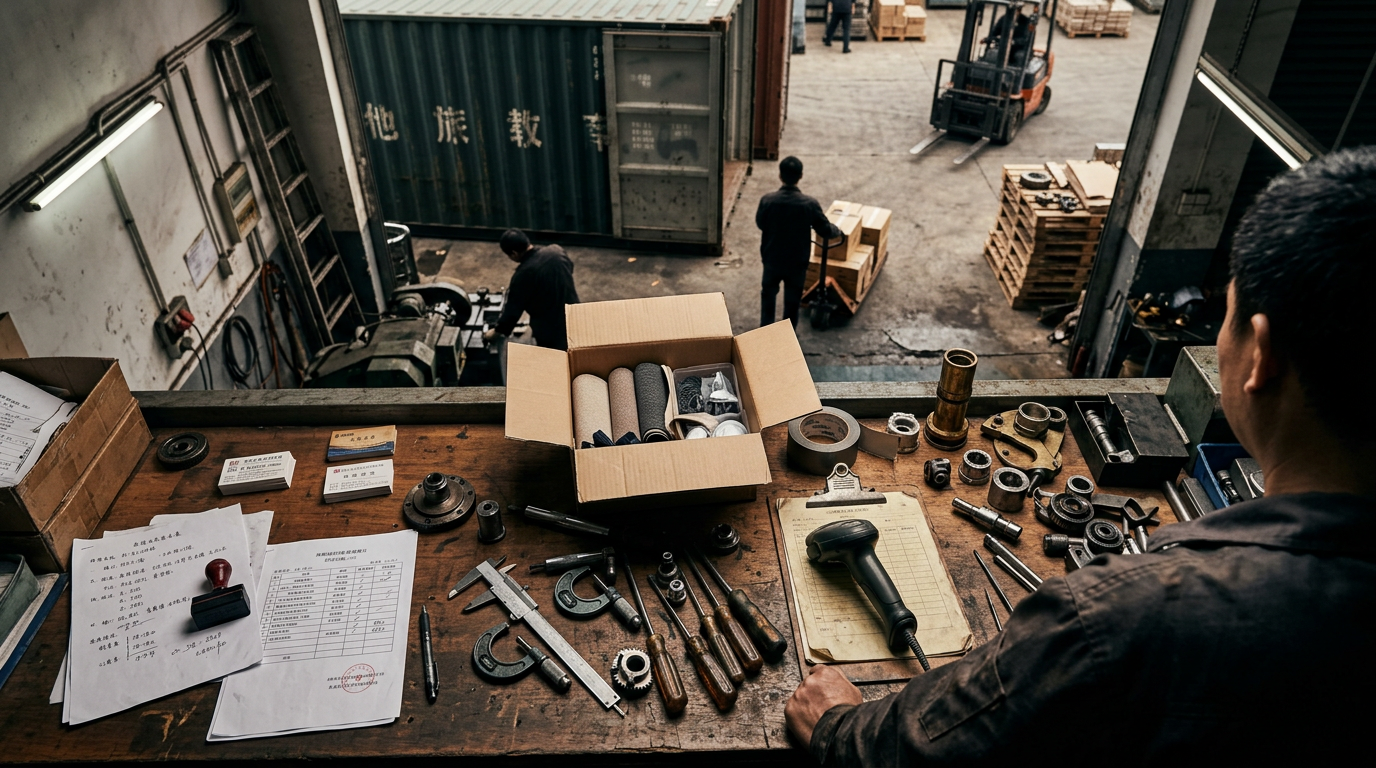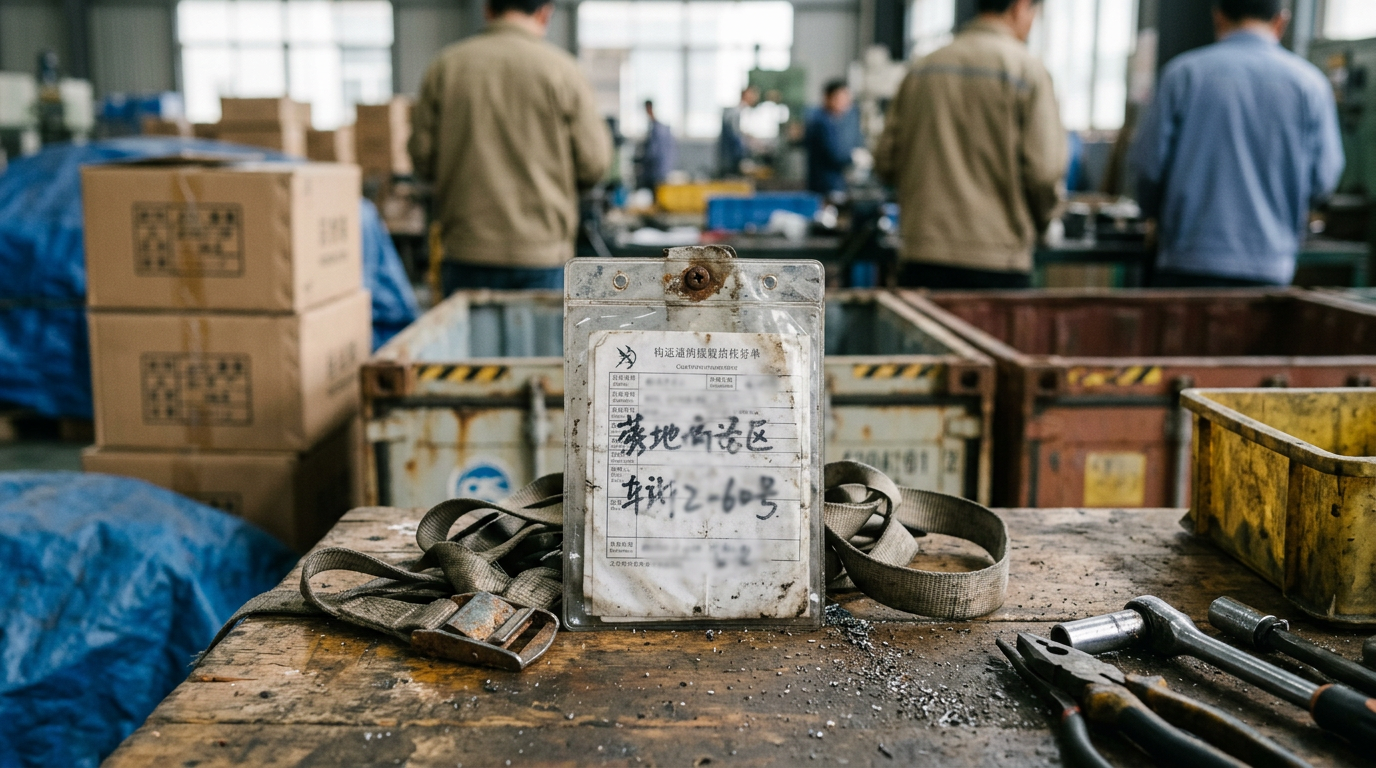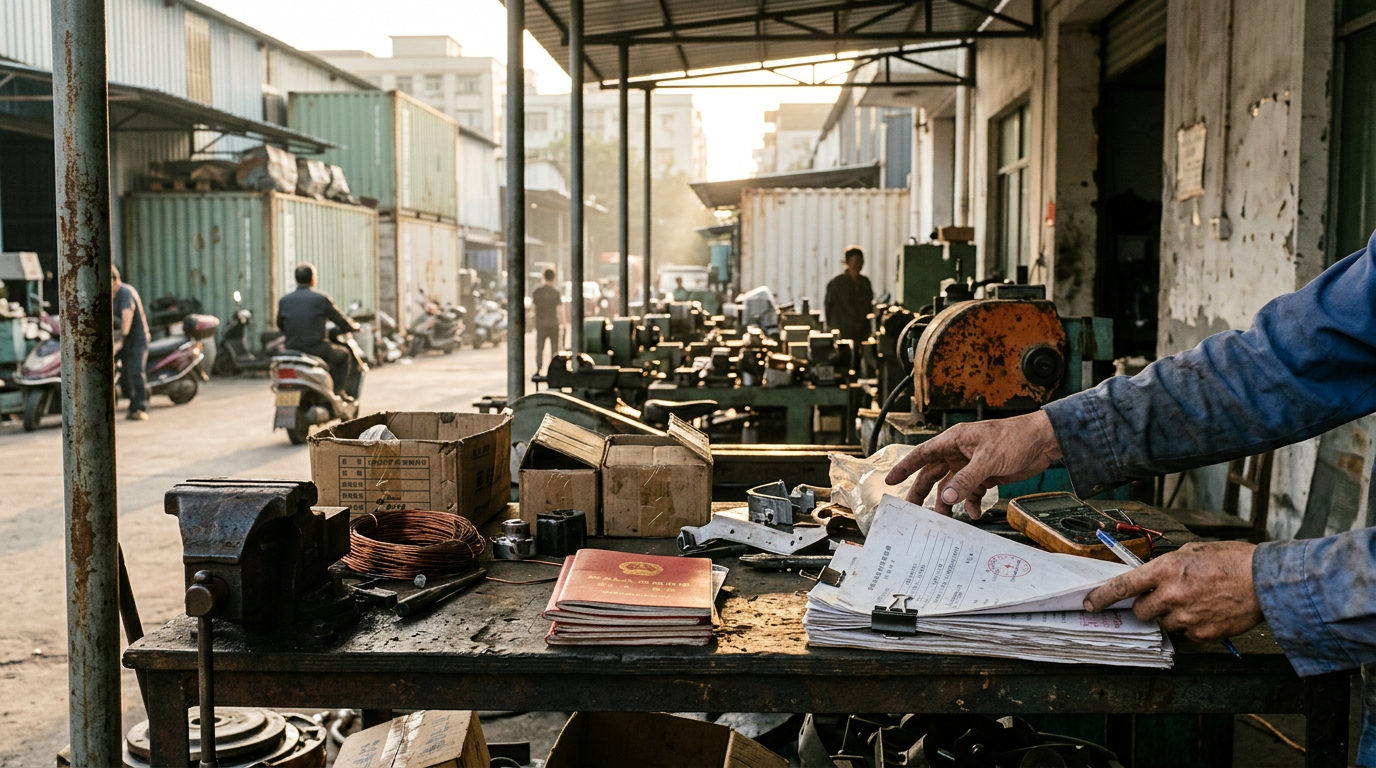
An invoice arrives from an export sales representative who claims to run a precision manufacturing facility in Dongguan. The product catalogue looks clean, the quotation sits comfortably below regional market averages, and the email signature features a photograph of a modern assembly hall. Before transferring a deposit or initiating tooling discussions, the importer must run a rigorous china company registration check. Skipping this initial baseline leaves overseas buyers vulnerable to shell entities, unlicensed trading intermediaries, and corporate entities whose legal charters do not permit manufacturing operations.
Every legitimate commercial enterprise in mainland China is registered with the State Administration for Market Regulation, commonly abbreviated as SAMR. The administrative registry maintains records that define a supplier legal identity, corporate permissions, and regulatory standing. When foreign buyers seek to verify chinese business licence details, they frequently accept an unverified PDF attachment sent over messaging channels or paste company details into consumer translation tools. Doing so misses crucial structural markers that separate a genuine production plant from a broker operating out of a residential apartment in Shenzhen.
Consider a hypothetical scenario involving a home goods importer based in Manchester sourcing stainless steel drinkware. The vendor presents itself as an established production facility in Foshan, quoting custom deep-draw tooling and food-grade electropolishing. The buyer transfers a thirty percent tooling deposit directly to an offshore account without validating the domestic corporate file. Eight weeks later, pilot samples arrive with visible pitting, wall-thickness variations, and non-compliant material certification. When the buyer requests an on-site quality review, the supplier stops answering emails. A subsequent investigation of the corporate record shows the vendor is not a manufacturer at all, but a trading firm registered four months prior with minimal capital. The tooling had been subcontracted to a low-tier workshop in Jieyang, leaving the buyer with defective steel molds and no direct legal claim against the real workshop.
To verify chinese business licence validity, an importer must first understand the anatomy of the official document itself. The modern paper license consolidates tax registration, organization coding, and commercial filing into a single public document. Central to this system is the Unified Social Credit Code, an eighteen-digit alphanumeric identifier that serves as the official identity number of the enterprise. This number is permanent and mathematically structured. The first digit identifies the registration authority, the second identifies the enterprise category, the subsequent six digits indicate the administrative district, the next nine digits represent the organization code, and the final digit functions as an error-checking character. Querying this eighteen-digit sequence through the National Enterprise Credit Information Publicity System confirms whether the enterprise exists in active government databases.
A thorough china company registration check requires a disciplined review of the registered business scope, known locally as jingying fanwei. This section defines the specific commercial and industrial activities the entity is authorized to conduct. Chinese law binds enterprises strictly to their registered scope. An entity approved exclusively for wholesale distribution, software consulting, or export agency work cannot legally manufacture physical products on its premises. If the registered text does not contain explicit terms indicating industrial production, such as shengchan (production) or jiagong (processing), the supplier is not legally operating a manufacturing plant. When a vendor claiming to own twenty automated injection moulding presses presents a business scope restricted to domestic trade and logistics consulting, subcontracting is not an incidental risk; it is an administrative certainty.
Registered capital creates widespread confusion during a china company registration check. Importers often observe a registered capital figure of fifty million RMB and assume the factory possesses substantial liquidity and heavy production assets. This assumption is inaccurate. Under the capital subscription framework established in 2014, registered capital represented a pledged commitment payable across several decades rather than liquid capital deposited into a bank. Although the 2024 revisions to the PRC Company Law introduced a mandatory five-year transition window requiring subscribed capital to be paid up, public records still distinguish sharply between subscribed capital (renjiao) and paid-in capital (shijiao). An enterprise can declare fifty million RMB on paper while holding less than fifty thousand RMB in paid-in equity. Verifying actual paid-in capital provides genuine insight into corporate scale, whereas relying on the declared headline figure provides very little.
When evaluating documentation prior to contract signing, procurement teams should methodically cross-examine public filings against physical reality. A rigorous document review follows five practical verification steps:
1. Verify the official Chinese legal name. Legal entities in mainland China are registered exclusively in simplified Chinese characters. English names are marketing aliases and carry no formal statutory authority on domestic government registries. 2. Confirm the operational status using the Unified Social Credit Code. The official registry status must indicate active operations (cunxu or zaiying), rather than revocation, liquidation, or suspension. 3. Identify the registered legal representative and equity holders. Mapping corporate officers helps uncover related-party trading shells and frequent ownership turnover that signal underlying instability. 4. Examine the official registered address. An industrial park zone corresponds to real production capability, whereas an address registered in a shared commercial tower or virtual business cluster indicates an office-only operation. 5. Match the corporate entity name against the receiving bank account. Payment beneficiaries must match the exact domestic Chinese character name on the business license, not personal accounts or third-party offshore entities.
Executing this verification sequence requires disciplined timing across the sourcing lifecycle. Importers must complete official corporate record reviews before issuing any telegraphic transfer, before signing production contracts, and well before approving custom tooling fabrication. Begin by requesting a high-resolution scan of the business license alongside the enterprise domestic bank account opening permit. Next, cross-check the Unified Social Credit Code directly against the relevant provincial SAMR database to ensure the registered address, legal representative, establishment date, and business scope match the vendor's commercial claims. Finally, query the Supreme People's Court public judgment enforcement databases to confirm the enterprise and its legal representative are not subject to outstanding enforcement orders, debt freezes, or major commercial contract disputes.
A factory audit verifies physical operational capabilities; a corporate registration check verifies legal standing. Understanding this boundary is critical when evaluating China supply chains. An official registry record confirms that an enterprise exists in law, that its business scope encompasses manufacturing, and that its business license remains active. Yet public records cannot show whether the CNC machines in the workshop are owned outright, leased under debt stress, or idle. Public filings cannot verify whether the factory runs an effective ISO 9001 quality management system, maintains raw material traceability, or subcontracts proprietary assemblies to uninspected neighboring workshops in Foshan. Public filings establish the legal baseline, but physical on-site evaluation proves actual production competence.
Confirming legal registration is the necessary first step in managing China supplier risk. While official registry analysis eliminates paper trading intermediaries and scope mismatches, complete supply chain security requires validating that physical factory reality matches the corporate file. Procubility provides independent, buyer-paid supplier verification, comprehensive supplier investigations, and on-site factory audits across Shenzhen, Dongguan, Foshan, Ningbo, and major industrial centers across China. By evaluating factory production lines, verifying corporate filings, and inspecting quality systems without taking supplier commissions or agent markups, Procubility delivers the objective operational clarity international buyers need before committing capital.