When evaluating potential manufacturing partners in China, buyers frequently confuse two distinct due diligence tools. Comparing a factory audit vs supplier verification is not an academic debate. It is a practical decision about risk management, capital preservation, and sequencing. Importers often order an expensive on-site audit for a vendor that is legally compromised, or they rely on a basic corporate registry check when their product requires tight tolerances on a five-axis CNC machine. Conflating these two assessments wastes time, bleeds engineering budgets, and leaves buyers vulnerable to supply chain disruptions.
The core distinction rests on the questions each process answers. A supplier verification establishes corporate identity, legal legitimacy, ownership structure, and financial standing. It confirms whether the entity on the contract actually exists, holds an authentic unified social credit code, maintains proper export licensing, and owns the bank accounts receiving funds. A factory audit verifies operational capability, quality control systems, shop-floor machinery, labor practices, and technical capacity. Supplier verification asks whether you are dealing with a legitimate, solvent legal entity. A supplier audit in China asks whether those people can actually build your product to specification at production volume.
Consider a hypothetical scenario involving an importer of commercial LED drivers based in Rotterdam. The buyer shortlists a prospective supplier in Dongguan through a trade directory. Impressed by a slick corporate catalog, sample units shipped via express courier, and competitive pricing, the European procurement team books an on-site factory audit through a local technical consultant. The auditor arrives at the Dongguan industrial park, evaluates the SMT lines, checks the burn-in testing chambers, reviews calibration logs, and signs off on the quality management system. The buyer wires a thirty percent tooling deposit to a Hong Kong offshore entity named on the proforma invoice. Production stalls eight weeks later. The Dongguan plant manager tells the buyer that they only ran paid prototyping work for a domestic middleman and never received funds for high-volume raw materials. The offshore invoicing entity was an undercapitalized shell company with no legal ties to the Dongguan manufacturing premises. A proper initial verification would have stopped the transaction before the audit took place.
To determine which assessment is appropriate at a given stage, examine the operational and documentary markers that separate administrative integrity from workshop capability. When evaluating prospective partners, look for these specific warning signs across both corporate records and shop floor indicators:
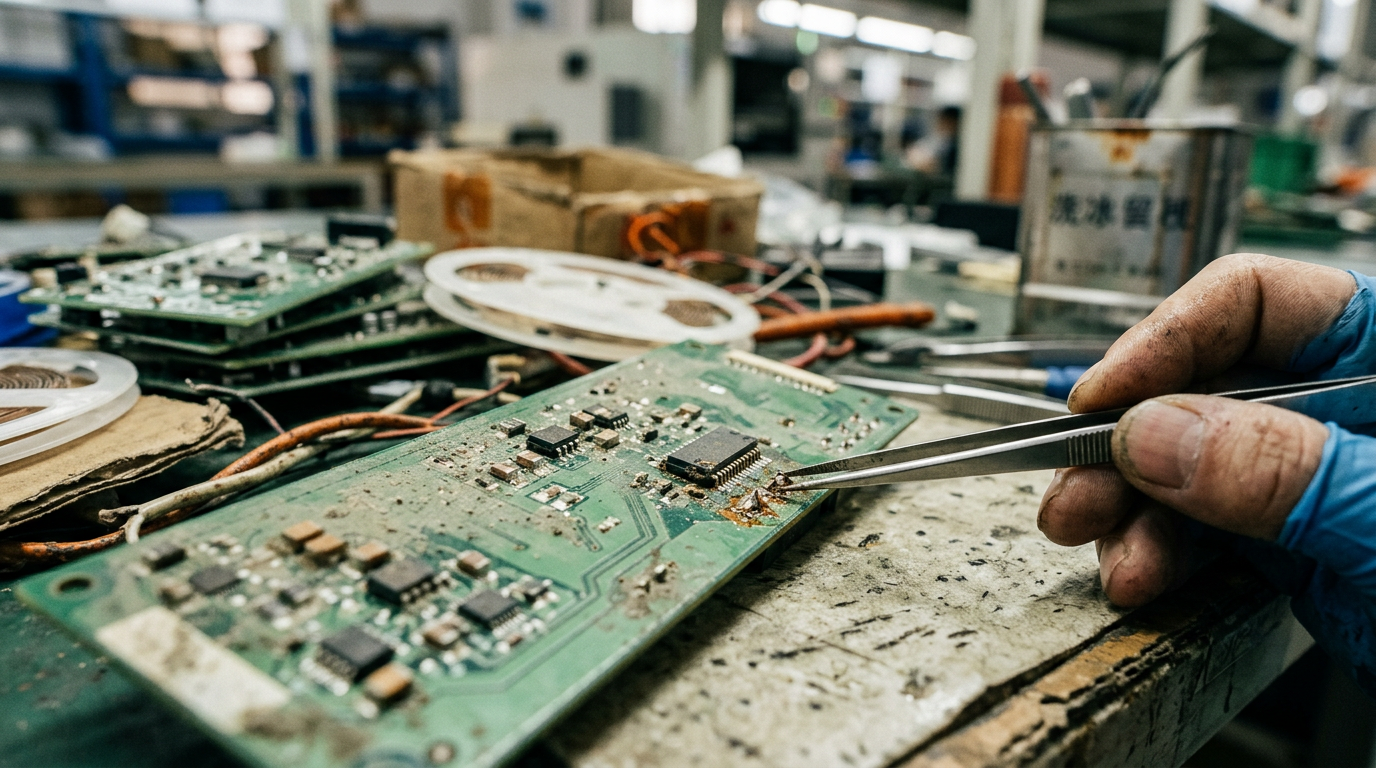
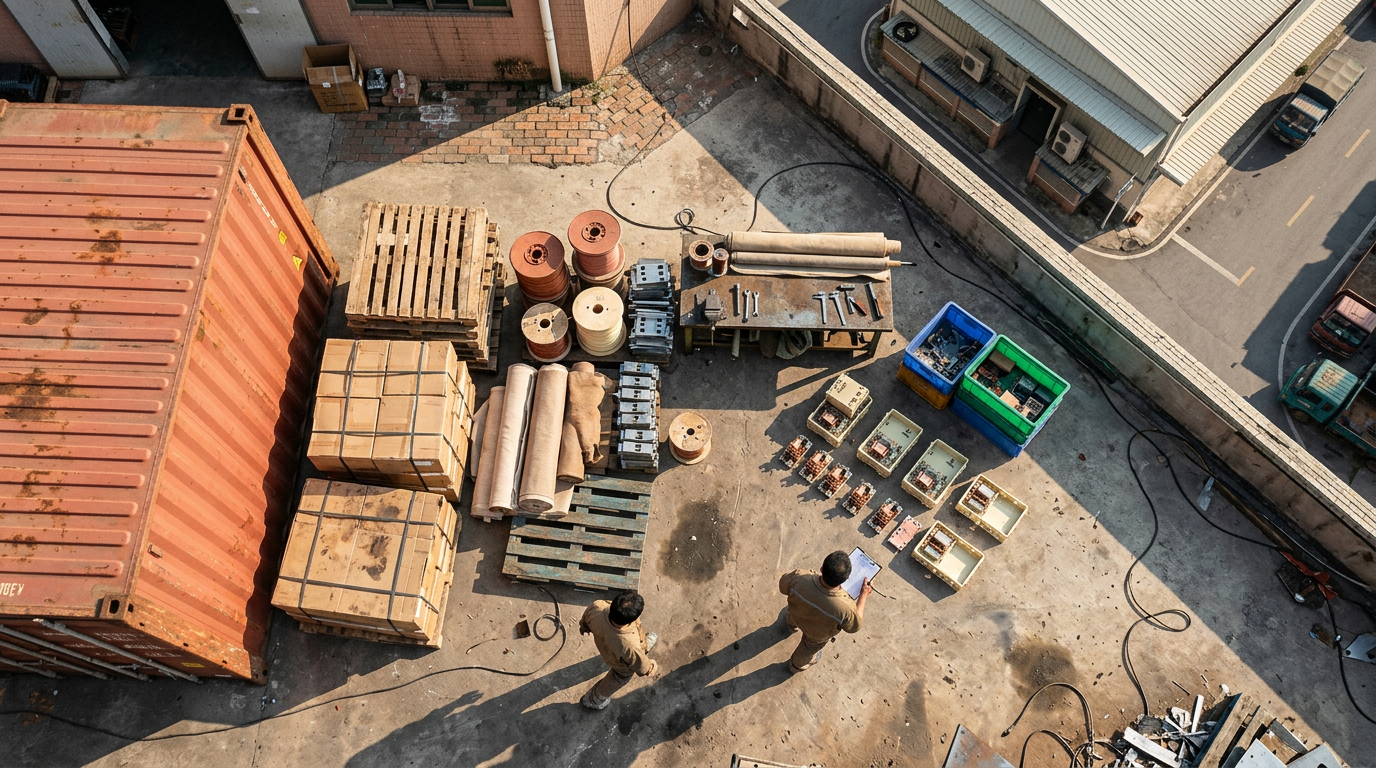
1. Discrepant corporate registration details: The company name on the Chinese business license does not match the English trade name, the bank account holder, or the registered operational address. 2. Incongruent business scope: The official business scope listed on the National Enterprise Credit Information Publicity System shows wholesale or consulting rather than manufacturing, assembly, or processing. 3. Missing capital or active litigation: The registered capital is unpaid, or the entity shows high-risk enforcement records, labor arbitrations, or frozen bank accounts. 4. Ghost machinery: An audit reveals machinery idling during peak shifts, uncalibrated instruments, or tooling lacking maintenance records. 5. Uncontrolled warehouse handling: Raw materials lack batch tracing, incoming component inspection is undocumented, or rejected parts sit mixed alongside ready-to-ship stock. 6. Undisclosed subcontracting: Critical manufacturing steps, such as injection moulding or specialized surface treatments, occur off-site at unvetted third-party facilities.
Solving these qualification risks requires a disciplined, chronological sequence. You should never send an engineering auditor to a plant before you have verified the corporate entity that owns it. Begin supplier verification at the initial screening stage, long before negotiating commercial contracts or releasing sensitive design files. This corporate check examines the official Chinese business license, unified social credit code, shareholder structure, operational status, export rights, registered capital, and any history of legal disputes or tax irregularities. If the corporate checks reveal unresolved litigation, frozen assets, or a disconnect between the invoicing party and the factory, walk away. You eliminate non-viable candidates at low cost without deploying field personnel.
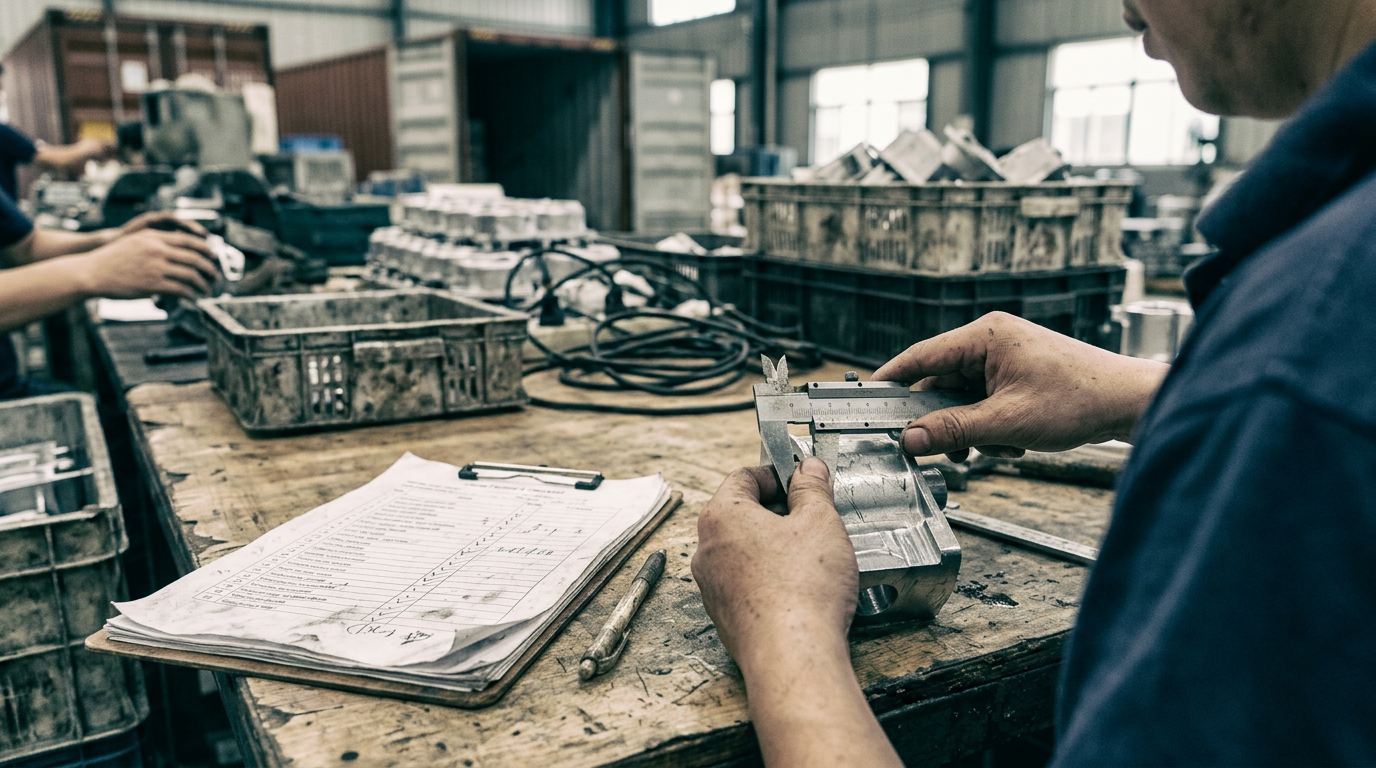
Once the corporate entity passes verification, schedule a factory audit before signing tooling agreements, releasing production deposits, or initiating mass runs. A qualified supplier audit in China evaluates factory capacity, technical machinery, incoming material quality controls, in-process assembly standards, final inspection procedures, and ISO 9001 compliance. In terms of cost and timing, supplier verification is fast and desk-based, typically completed within two to three business days at minimal expense. A factory audit requires boots on the ground in cities like Shenzhen, Foshan, or Ningbo. It demands travel coordination, an entire day on-site by an experienced quality engineer, and detailed technical reporting. Running these tools out of order wastes budget; running them in sequence protects your project balance sheet.
Certain procurement situations demand both assessments conducted in parallel or in rapid succession. When you are transferring proprietary tooling, executing high-value purchase orders, developing customized mechanical products, or satisfying strict regulatory regimes like CE, RoHS, or the European Union Corporate Sustainability Due Diligence Directive, relying on a single check introduces unacceptable blind spots. A legitimate corporate entity can still run an unsafe, chaotic assembly line that yields catastrophic defect rates. Conversely, a clean, modern manufacturing floor might be leased by an indebted operator about to enter bankruptcy court. Layering a corporate verification over an operational audit creates a comprehensive view of operational reliability and commercial stability.
A frequent operational trap in Chinese manufacturing centers on trading companies masquerading as direct factories. In industrial clusters across the Pearl River Delta and Yangtze River Delta, trading entities routinely lease a small office inside a shared manufacturing compound or maintain an informal partnership with an independent workshop. During an informal buyer visit, the host leads the visitor through the workshop floor as if it belongs to them. A factory audit inspects the physical machinery, but unless the auditor cross-checks the factory business license against the nameplate on the building, the supplier employee contracts, and the electrical utility bills, the audit report may evaluate a workshop that has no legal relationship with your counterparty. Supplier verification cross-references these identity records, preventing the buyer from paying factory direct prices to an unregulated broker.
Navigating factory audit vs supplier verification comes down to knowing which operational risk you are attempting to mitigate. If you are validating whether a prospective partner is a genuine, solvent legal entity with clean commercial standing, begin with structured supplier verification. If you are ready to commit capital to production and must verify technical capacity, machine maintenance, and process control systems, deploy a formal supplier audit in China. Procubility provides independent, buyer-funded supplier verification and on-site factory audit services across mainland China, delivering objective risk intelligence without commercial kickbacks or vendor conflicts of interest.