A shipment arrives from China. Your team opens the cartons, and the mood sinks. A critical dimension is off, the colour is inconsistent, or the finish scratches too easily. The immediate reaction is to blame the final quality inspection. Why wasn't this caught? But this view is shortsighted. In our experience on factory floors across the Pearl River Delta, the vast majority of quality failures are not born on the assembly line. They are conceived months earlier, in the unglamorous, often-rushed phase of supplier selection and pre-production planning.
Relying on a final inspection to guarantee quality is like trying to edit a book into existence on the printing press. It’s the last, most expensive, and least effective place to find problems. True supplier quality control is not a policing action; it is a preventative discipline. It requires a fundamental shift in focus from catching defects to building a process where defects are unlikely to occur in the first place. This work begins the moment you start evaluating potential partners, making your supplier selection in China the single most important quality decision you will make.
Consider the experience of a German appliance brand we worked with. They were sourcing a high-end coffee grinder and chose a new supplier in Foshan that offered a 15% lower price than their established partner. The initial samples looked perfect. They paid the deposit and approved the tooling. The problem was, the supplier’s low price was achieved through weak internal systems. They lacked a formal Design for Manufacturability (DFM) process. A small clearance issue between the plastic housing and the steel burr grinder—an issue a proper engineering review would have flagged—was missed. In mass production, this led to inconsistent grinding performance and motor strain, causing a 25% failure rate. The resulting arguments over rework, air freight, and launch delays erased the initial 15% cost savings many times over.
So, how do you identify a supplier’s process maturity before committing? It requires looking beyond the sales pitch and the pristine sample room. You need to probe the factory's underlying systems and engineering culture. The goal is not to find a 'perfect' supplier—they are rare—but to find one whose process maturity matches the complexity of your product. A simple promotional item has a different risk profile than a medical device or a piece of industrial equipment.
You can spot the warning signs of low process maturity through a few key checks. 1. Vague Engineering Dialogue. When you query specific tolerances, material compositions, or finishing standards, do they give a vague “no problem” or do they engage their engineering team to provide a detailed response? A mature supplier treats your technical pack as the start of a conversation, not a finish line. 2. A Disorganized Sample and Tooling Process. A factory that rushes to make a mould without formal, signed-off 2D and 3D files is a factory that courts disaster. They should insist on a rigorous approval loop. Part of this is establishing a “golden sample.” A golden sample is the single, perfect reference unit, approved by you, against which all mass-produced units will be judged. 3. Weak Documentation. Ask to see their ISO 9001 certificate, but also ask for a recent Material Test Certificate (MTC) or Certificate of Analysis (COA) for a production run. A factory with mature processes has these documents organized and readily available. 4. Price as the Only Response. If a supplier's only answer to negotiation is to lower the price, be wary. Ask them *how* they are achieving the reduction. The answer often reveals a willingness to compromise on material grades or skip essential process steps, which is a direct threat to quality.
To solve this, you must front-load your quality assurance efforts. The first step, before any tooling deposit is paid, is to conduct a collaborative engineering review. This is the DFM process. It means your engineers and the supplier’s engineers meet (virtually or on-site) to go through every aspect of the design: the CAD files, the bill of materials (BOM), the finishing specifications, and your quality standards. The output should be a set of confirmed drawings and a clear understanding of all critical-to-quality features. A good supplier in Shenzhen or Dongguan will welcome this scrutiny; a weak one will resist it.
Next, you must enforce absolute discipline around tooling and samples. Before a single piece of steel is cut for an injection mould or stamping die, you need written confirmation from the supplier’s lead engineer that they are working from the final, approved version of your design files. Once first-off-tool samples are produced, one unit must be designated as the golden sample. It should be physically tagged, signed, and dated by both you and the factory manager. This sample stays at the factory as the ultimate reference. A second, identical sealed sample should be held by you or your agent in China. This simple, physical artifact is your most powerful tool in any future dispute over production quality.
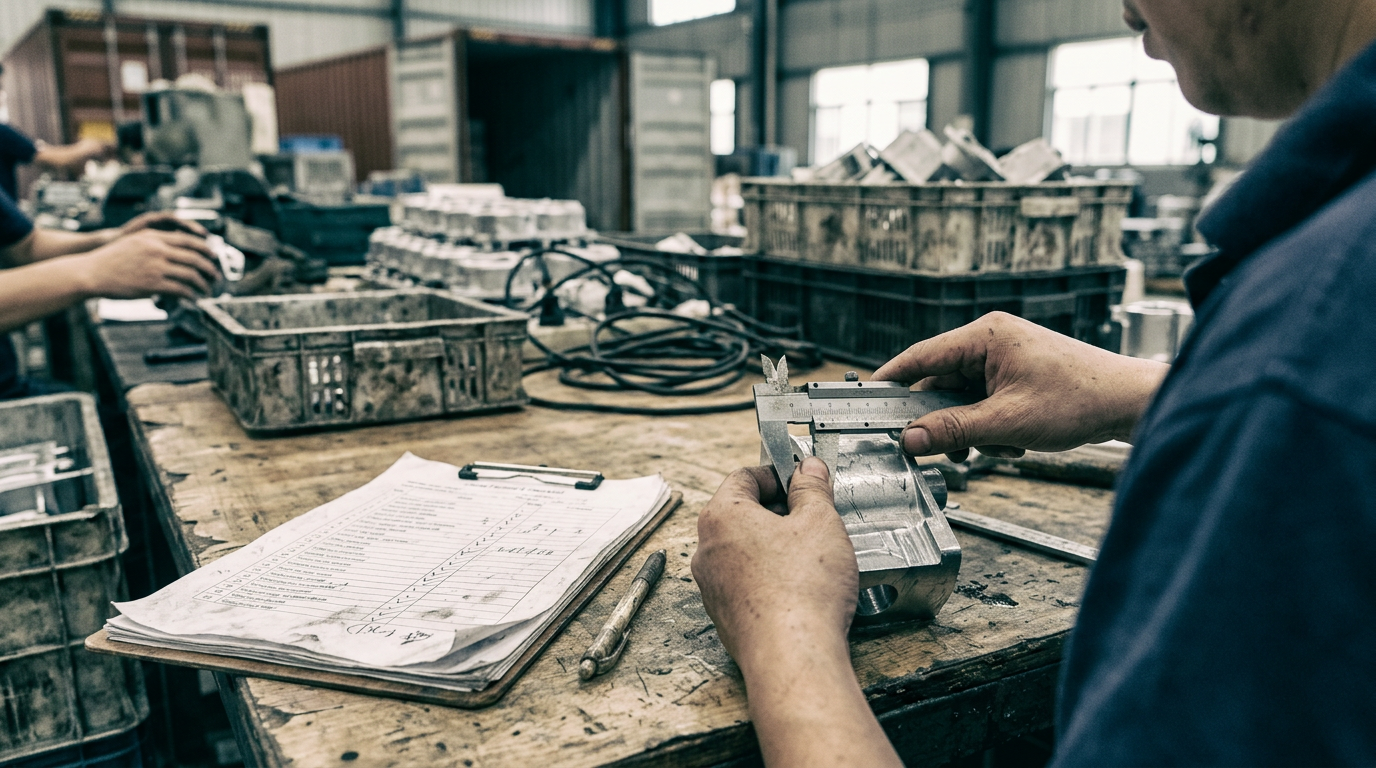
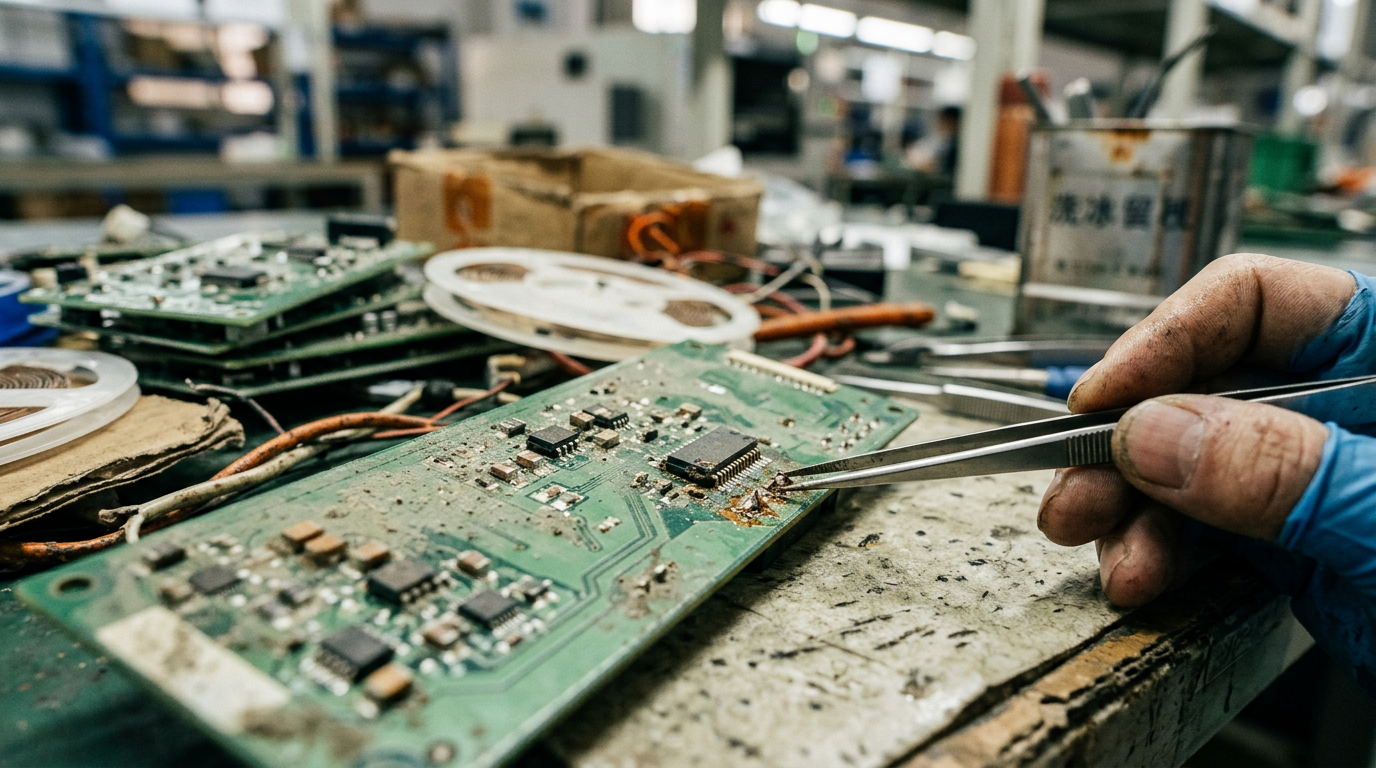
Third, you must define the quality control plan before mass production begins. This is more than just a final inspection checklist. It involves identifying all the key process points where checks must happen. For an electronics product, this could mean testing PCBs after the SMT line but before they are installed in the housing. For furniture, it might be checking frame welds before powder coating. This is the practical definition of process maturity in China: building quality into the line, not just inspecting for it at the end. The best suppliers have robust internal QC at every stage. For others, you must define and enforce this process for them.
Here is an insight from years of factory audits: an impressive machine park does not guarantee quality. Buyers are often impressed by gleaming new CNC centers or fully automated assembly lines. But the single greatest predictor of supplier quality is not the hardware; it’s the people and the systems. I have seen a 100-worker factory with older, well-maintained Taiwanese injection presses consistently outperform a massive, highly automated competitor. The difference was a stable team of experienced line leaders and a quality manager who was empowered to halt production if a deviation was found. High process maturity is a human achievement.
This is why a key, often overlooked, part of supplier selection in China is evaluating human factors. During an on-site visit, observe the stability of the workforce. Is there high staff turnover? Does the engineering team seem experienced and confident, or are they junior and deferential? Factories that compete aggressively on price often do so by suppressing wages, which leads to a revolving door of staff. A transient workforce cannot maintain the discipline required for consistent output. A good supplier quality control framework recognizes that process stability depends on people stability.
Executing this level of front-loaded due diligence is challenging from thousands of miles away. Evaluating a supplier's engineering depth, process discipline, and staff stability requires an on-the-ground presence. This is precisely where a partner like Procubility provides value. Our Shenzhen-based team acts as our clients' local engineering and sourcing extension. We conduct the technical audits, manage the DFM process with supplier engineers, oversee the golden sample approval on-site, and verify the implementation of in-process quality controls. We build the foundation for quality long before the first product comes off the line, ensuring the shipment that arrives is the one you expected.