The proforma invoice arrives. The terms are clear: 30% T/T deposit to begin production, 70% balance against the bill of lading. For many importers, this is the moment of truth. Sending that first wire transfer feels like a point of no return. The nagging question in the back of your mind is whether you have done enough to verify the Chinese supplier on the other end. Once the money leaves your account, your leverage changes dramatically.
A deposit is more than a simple down payment. It is a powerful signal of commitment that locks you into a relationship. By paying it, you are not just funding the purchase of raw materials. You are implicitly accepting the supplier’s timeline, their interpretation of quality standards, and their chosen communication channels. Exiting the relationship after a deposit is paid is costly, time-consuming, and often impossible without significant financial loss. This makes robust China supplier due diligence before paying a deposit one of the highest-leverage activities an importer can undertake.
Consider a hypothetical scenario. A European buyer of specialized hardware components finds what appears to be a perfect supplier on a B2B platform. The prices are competitive, the salesperson is responsive, and the website shows a modern, well-equipped factory. After a brief video call where the sales rep walks through a clean-looking workshop, the buyer feels confident. They sign the PI and wire the 30% deposit. The problems begin almost immediately. Communication becomes sporadic. Promised production updates fail to materialize. When the first production samples finally arrive weeks late, they are out of spec and made from the wrong grade of steel. The buyer discovers the entity they paid was a trading company in Shenzhen that subcontracted the order to a low-cost, unqualified factory in a different province. The deposit is gone, the production schedule is in ruins, and they have no direct relationship with the facility actually making their parts.
The risk of this scenario can be substantially mitigated. The key is to shift your mindset from trusting online presentations to verifying offline realities. A video call is not verification; it is a sales presentation. A slick website and a responsive sales team are signs of good marketing, not necessarily good manufacturing. Anyone can rent a desk in a shared office, create a convincing digital storefront, and point a smartphone camera at borrowed samples. To truly verify a Chinese supplier, you must look past the surface and examine the underlying corporate and operational records.
You can catch the majority of common problems by checking a few fundamental points before you even think about authorizing a payment. This basic China supplier due diligence is not optional. It should be a standard part of your procurement workflow. Before paying a deposit in China, confirm the following:
1. Entity and Payee Match. The company name on the proforma invoice must be an exact match to the beneficiary name on the bank account. It must also be an exact match to the legal name on the company’s business license. Any discrepancy, even a seemingly minor one, is a serious red flag that could indicate a fraudulent setup or a payment diversion.
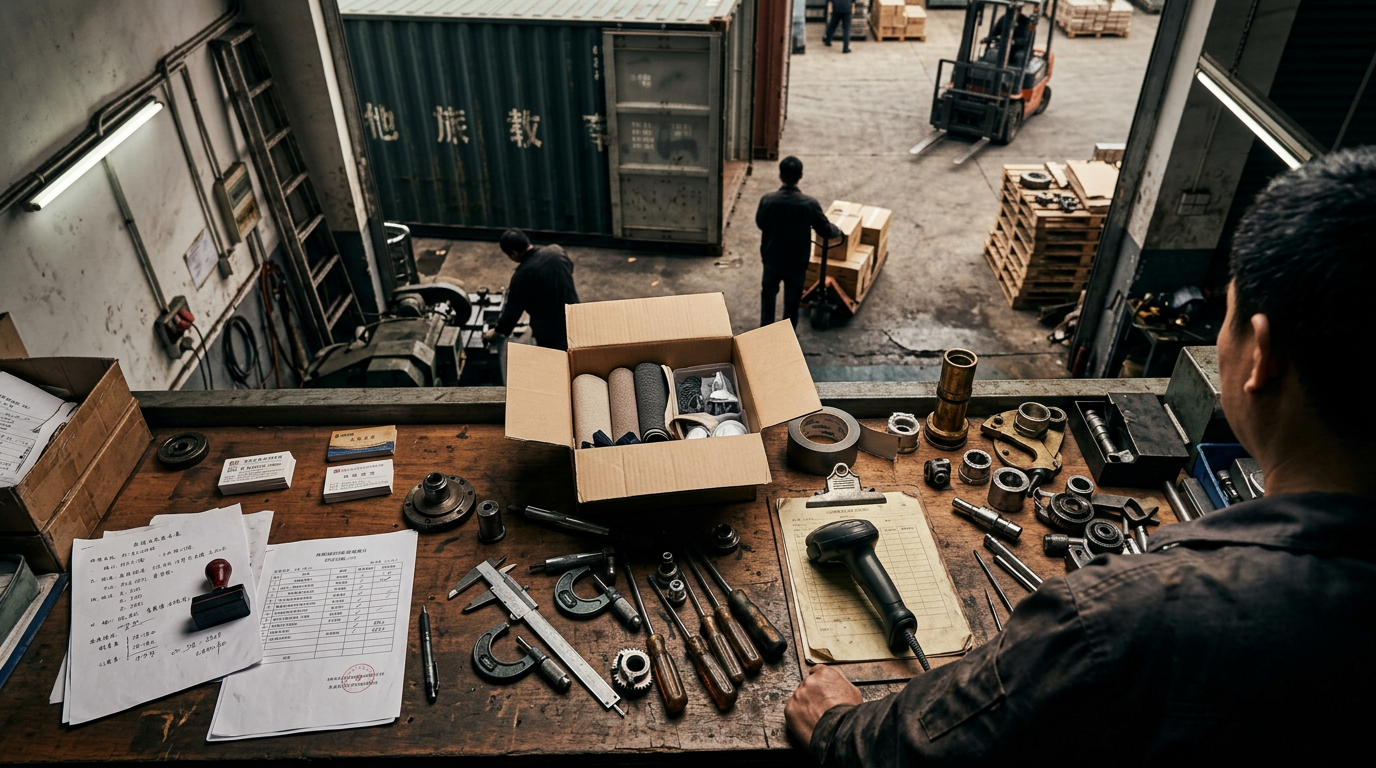
2. Business License Scope. Obtain a clear, current copy of their Chinese business license (营业执照, Yíngyè Zhízhào). Check the registered “business scope” (经营范围, Jīngyíng Fànwéi). Does it explicitly include “manufacturing” (生产, Shēngchǎn) or “processing” (加工, Jiāgōng) of the products you are buying? If the scope is limited to “wholesale,” “trade,” or “retail,” you are dealing with a trading company, not a manufacturer.
3. Bank Account Legitimacy. Confirm that the beneficiary bank account is a corporate account located in mainland China, not a personal account or an offshore account in Hong Kong or elsewhere. Paying a mainland factory via an offshore account severs the legal link between your payment and the registered manufacturing entity, making any future dispute resolution nearly impossible.
4. Address Corroboration. Cross-reference the registered address on the business license with the factory address claimed on their website, invoices, and B2B profiles. While minor variations are common, significant mismatches between cities or provinces suggest the company is not being transparent about its physical location.
The solution is to embed these checks into a formal, pre-transaction process. Do not allow a supplier’s claims of urgency to bypass your own diligence. First, get all critical specifications in writing on a formal purchase order. This should include not just part numbers and prices, but also material grades (with specific standards like AISI 304 or AL 6061-T6), critical tolerances, required compliance certifications (e.g., CE, RoHS), and the specific inspection criteria that will be used to accept or reject the goods. This document sets the objective standard for performance.
Next, make the initial payment conditional on the successful verification of the supplier's legal and operational identity. Inform the potential supplier that it is your company's standard policy to conduct independent, third-party verification before remitting funds to any new partner. A legitimate, well-run factory will almost never object to this. They understand the need for due diligence. A scammer, a disorganized trader, or a factory with something to hide, however, will often react defensively. They might create artificial urgency, claim the process is unnecessary, or simply cease communication. Their reaction to your request to verify is often as informative as the verification report itself.
It is also important to have realistic expectations about what verification can and cannot promise. To be clear, supplier verification is a process that confirms existing facts. It answers questions like: Is this a legally registered company? Is it licensed to manufacture my product? Is the bank account I'm paying tied to this legal entity? Does a physical facility exist at the claimed address? This due diligence is fundamental for mitigating fraud and basic counterparty risk.
However, verification is not a guarantee of future quality or on-time delivery. A legally compliant factory can still have poor process controls, use substandard materials, or struggle with project management. Verifying a supplier's existence and legal status is the foundational first step. The next level of risk mitigation involves a factory audit, which assesses systems and capabilities (like ISO 9001 compliance), and pre-shipment inspections, which verify the quality of the goods themselves before the final payment. Verification confirms who they are; audits and inspections confirm what they can do and what they have made.
The most common point of failure for international buyers is treating the initial deposit as a simple administrative step. It is the most critical risk-management checkpoint in the entire sourcing process. An upfront, fixed-cost engagement to verify a Chinese supplier's identity, business scope, and financial legitimacy transforms the transaction. It moves your decision from one based on hope and a salesperson's promises to one based on independently verified facts. This allows the deposit to function as it should: a clear, calculated signal of commitment to a verified and vetted partner.