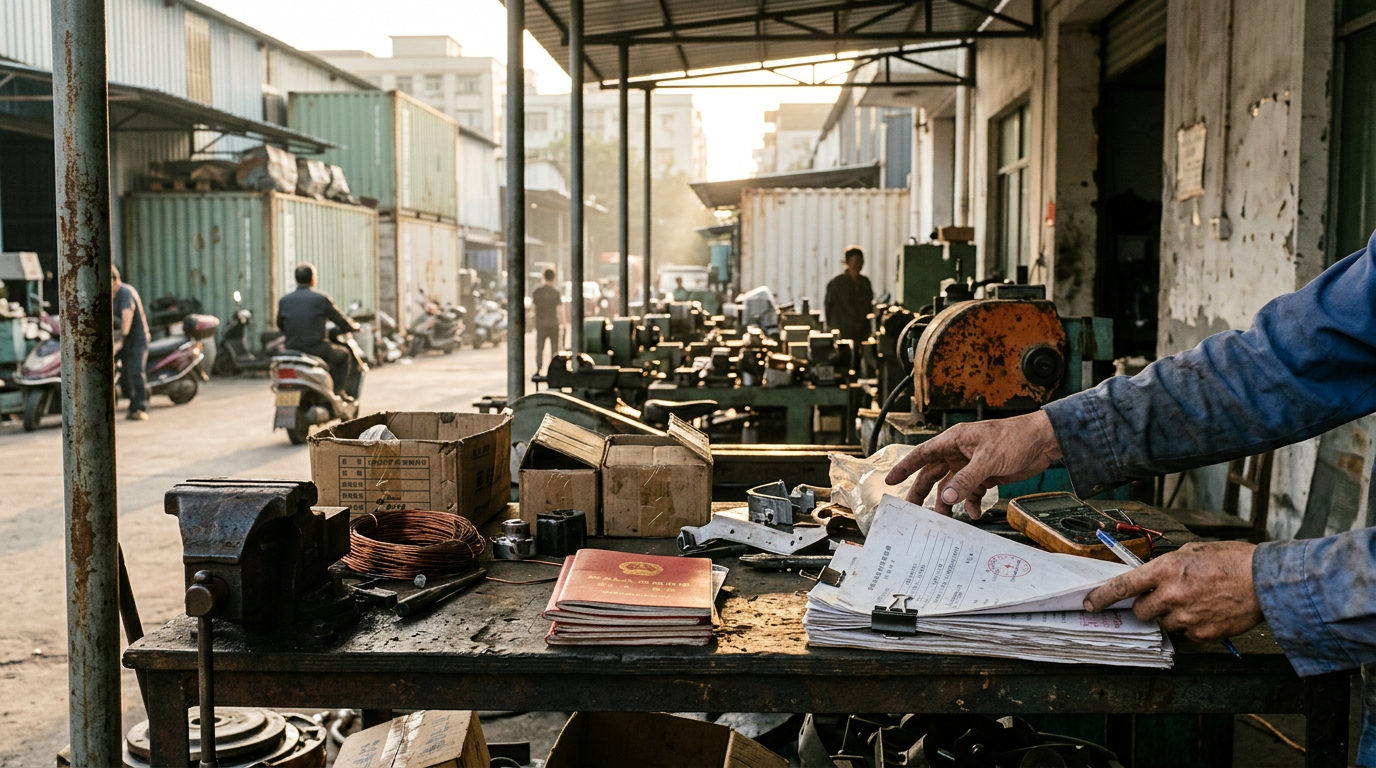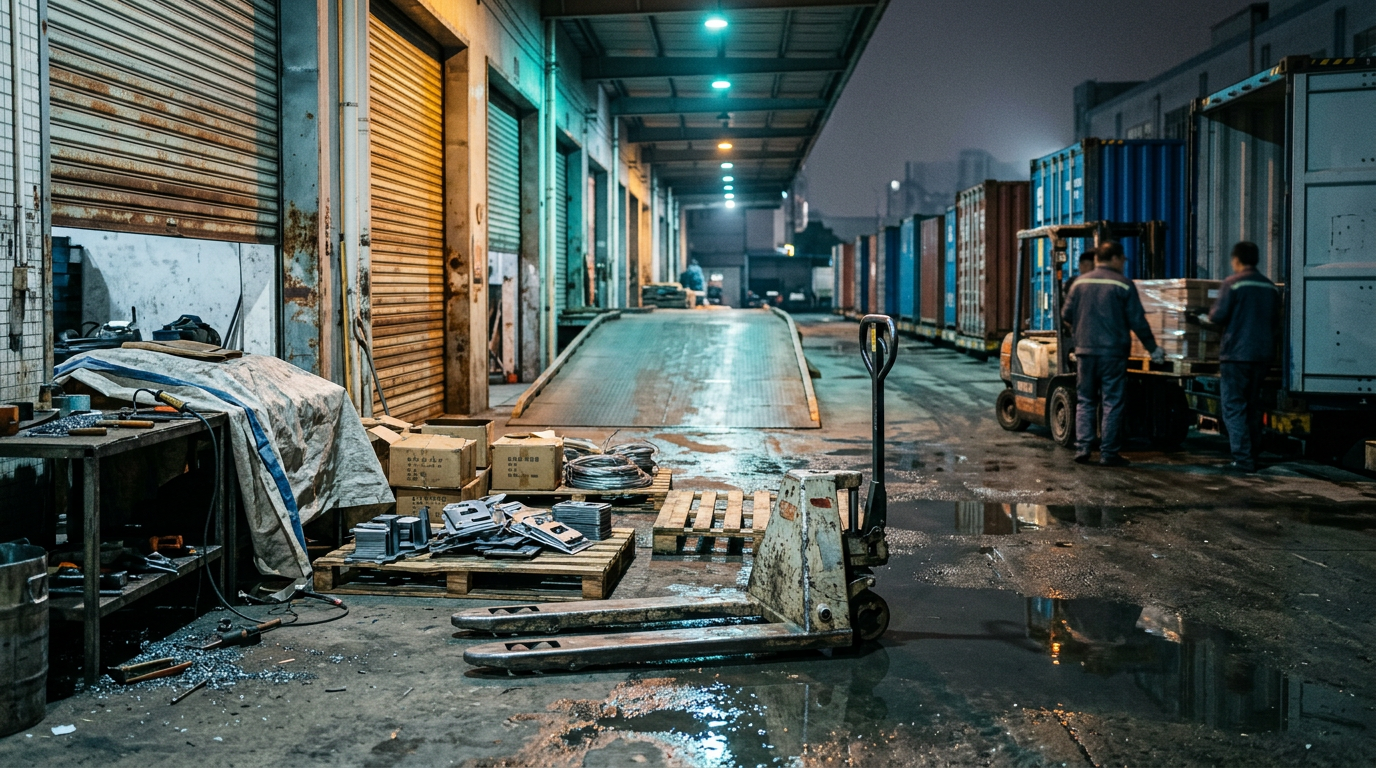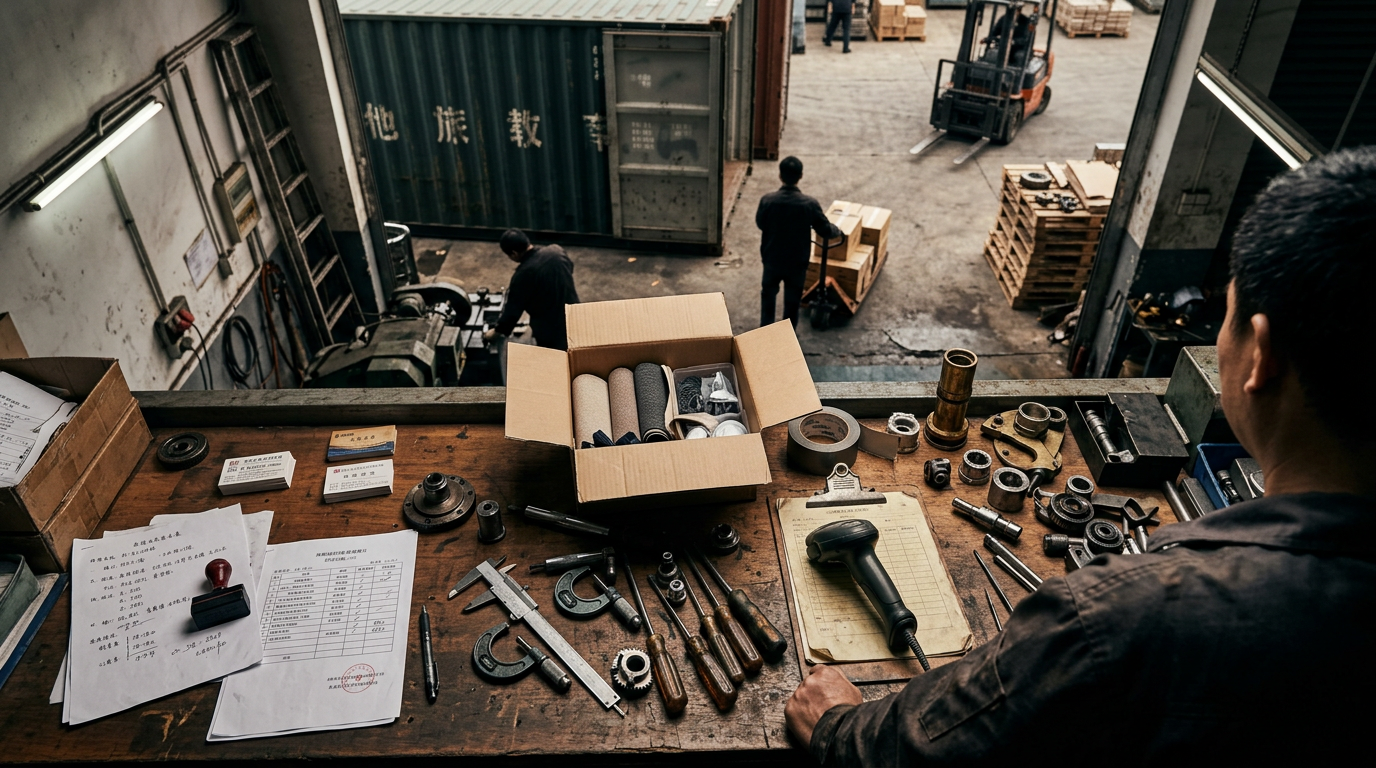
Every international buyer sourcing from mainland China eventually encounters the challenge of locating where goods are actually made. When an overseas importer reviews a commercial quotation or opens an initial dialogue on a B2B platform, the supplier profile often presents an impressive manufacturing facility complete with clean room images, high-speed automated lines, and a neat address in Dongguan, Ningbo, or Shenzhen. Relying on these self-reported details without independent verification is hazardous. Knowing how to verify factory address China suppliers list on commercial invoices is an indispensable operational safeguard for overseas brands. Without a rigorous China factory location check, an importer cannot know whether they are contracting with an authentic original equipment manufacturer, a domestic trading intermediary, or an unvetted broker operating out of a residential apartment.
The core problem stems from the persistent disconnect between paperwork, digital marketing, and physical reality. In Chinese manufacturing hubs like Bao'an, Shunde, or Kunshan, commercial entities register corporate structures rapidly and maintain online storefronts with borrowed workshop photographs. A commercial invoice or business card often displays an address inside a high-end commercial office tower in downtown Shenzhen or Guangzhou. While that office exists, it contains only a sales team, a showroom, and a few laptops. The actual die-casting presses, injection moulds, or surface-mount assembly lines could be eighty kilometers away in an unlicensed back-alley workshop, or outsourced across several unaccountable cottage subcontractors.
The risk of unverified premises is tangible and costly. Consider a hypothetical scenario involving a European distributor sourcing commercial LED luminaires. The buyer contracted with an entity claiming to operate an integrated aluminum casting and assembly facility in Ningbo. Relying on digital maps and website photos, the buyer skipped an independent China factory location check and wired a thirty percent tooling deposit via telegraphic transfer. Months later, after the supplier missed three production milestones and delivered pre-production units with severe thermal defects, the buyer commissioned an independent physical assessment. The representative arrived at the address on the invoice only to find a logistics depot that had never produced lighting hardware. The seller was a two-person trading outfit renting a sales suite across town, brokering parts through fragmented, informal workshops that lacked electrostatic discharge controls and basic ISO 9001 quality management systems.
When an importer seeks to verify factory address China operations, separating the declared legal home from the manufacturing floor is the critical first step. In Chinese commercial administration, a company's registered address on its business license (yíngyè zhízhào) frequently differs from its operating address where physical manufacturing occurs. Under Chinese company law, enterprises may establish their registered legal seat within an economic development zone, an urban incubator, or a preferential tax district to secure administrative advantages, while establishing their physical production lines in an industrial town miles away. This distinction is legitimate under specific administrative filings, but it creates profound opacity for foreign buyers. If a supplier is evasive about providing their exact workshop location or if their documentation reveals conflicting premises, the buyer is almost certainly dealing with a trading entity or an unmanaged subcontracting arrangement.
When conducting a China factory location check remotely, buyers can spot several observable signals that point to misrepresentation. The following indicators warrant an immediate pause before releasing funds: 1. Discrepancies between the business license address, the address listed on environmental impact assessments, and the facility name printed on official fire safety permits. 2. Room or suite designations (such as Unit 1608, Building B) presented as heavy manufacturing workshops, stamping plants, or chemical formulation facilities. 3. Resistance to sharing the physical address in simplified Chinese characters, relying exclusively on pinyin or translated English descriptions that obscure administrative district, town, and village boundaries. 4. Vague location descriptions inside vast industrial estates where the vendor provides the park name but refuses to specify the precise building number, floor, or internal bay. 5. Discrepancies between the factory location and the origin address declared on customs export declarations, bills of lading, or domestic value-added tax invoices.
Many buyers attempt to bypass physical verification by relying on digital mapping platforms and satellite photography, but this approach has severe structural limitations. In mainland China, international mapping tools such as Google Maps suffer from the GCJ-02 datum shift, an intentional cryptographic offset applied by Chinese national mapping regulations. This shift displaces satellite overlays from street coordinates by several hundred meters, frequently placing a factory building into an adjacent canal, a public highway, or a neighboring empty lot. Just as importantly, satellite imagery cannot pierce the walls of multi-tenant industrial properties. In industrial hubs across Dongguan, Foshan, and Zhongshan, modern manufacturing parks consist of shared multi-story concrete buildings. A satellite photograph can confirm that a massive industrial roof exists, but it cannot reveal whether your prospective supplier occupies a full five-story manufacturing plant or merely rents a temporary corner storage bay on the third floor.
A structured, sequential methodology is necessary to verify factory address China production facilities before capital exposure occurs. Importers should execute the following verification steps: - Step 1: Before signing binding purchase orders or paying deposits, demand the supplier's official Chinese business license and extract the legal corporate entity name and registered seat directly from the document. - Step 2: Cross-examine this data against the official State Administration for Market Regulation (SAMR) National Enterprise Credit Information Publicity System to confirm business status, scope of operations, and registered premises. - Step 3: Require the vendor to submit copies of their current commercial lease agreement, municipal utility invoices (water or industrial three-phase power statements), and fire safety compliance certificates for their physical operating premises. - Step 4: Validate that the corporate name on the commercial lease and utility bills matches the legal entity name receiving telegraphic transfer payments. - Step 5: Commission a dedicated physical visit to the operating address to authenticate equipment and staff before releasing any tooling capital or starting mass production.
A vital practitioner insight lies in understanding the operational and regulatory significance of shared industrial parks. In modern Chinese manufacturing centers, local governments increasingly mandate that small and medium enterprises relocate into standardized industrial developments. These parks house dozens of independent enterprises under a single master address. Within these compounds, informal sub-leasing is pervasive. An unauthorized trading broker or assembly shop may sub-lease a small area from a legitimate, licensed manufacturer without being recorded on park management registries or environmental permits. When municipal authorities execute unannounced environmental or safety inspections, sub-leased workshops lacking their own operating licenses and fire approvals face immediate padlocking. If your supplier's physical presence in a shared park is informal, your production line can vanish overnight without legal recourse.
This regulatory vulnerability highlights precisely what an on-site visit confirms that desk research cannot. An on-site China factory location check validates that the supplier possesses genuine possessory rights over the workshop floor, that corporate signage matches the commercial license, and that permanent workers operate tooling dedicated to your product category. A field auditor observes whether production managers recognize the sales contact handling your account, whether raw material inventory matches the current order schedule, and whether machinery—such as CNC machining centers, automated SMT lines, or plastic injection presses—is active and maintained. Crucially, physical presence determines whether products are manufactured inside a controlled, audit-ready environment or quietly transferred over the loading dock to secondary subcontractors down the street.
Verifying where your goods are manufactured is not a routine administrative chore; it is the cornerstone of supply chain integrity, intellectual property protection, and regulatory compliance. Overseas buyers carrying obligations under Western corporate due diligence frameworks cannot afford the legal and financial exposure of phantom production sites. Procubility provides independent, buyer-paid supplier verification, comprehensive supplier investigations, and on-site factory audits across Shenzhen, Dongguan, Ningbo, and all major industrial regions of China. Operating entirely on behalf of the importer without supplier commissions, our teams verify physical premises, assess operational legitimacy, and confirm machinery capacity on the ground, delivering objective ground truth before you commit capital.